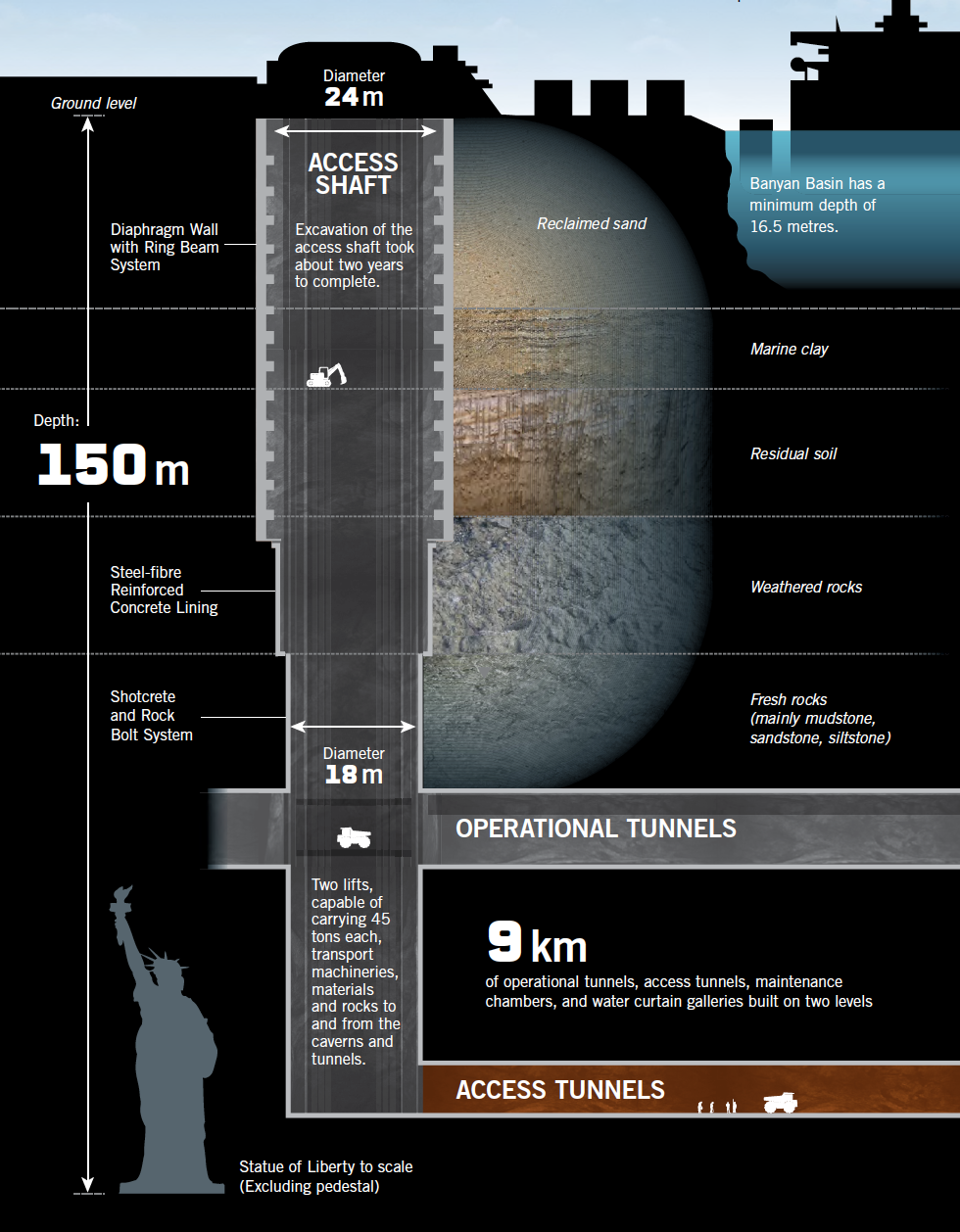
Somewhere beneath Singapore Island, five caverns the size of nine story buildings sit 150 meters underground, holding enough crude oil and condensate to fill 600 Olympic swimming pools. Most people walking around Singapore have no idea it's down there.
That's kind of the point.
From oil storage caverns and wastewater tunnels to shared utility corridors, Singapore has spent decades building downward not for novelty, but because there was nowhere else left to build.
Building a New Layer Beneath the City
Singapore covers roughly 735.6 square kilometers and holds close to 6 million people, making it one of the most densely populated places on Earth. There's very little room left to expand outward, so the government has increasingly looked down instead.
The Urban Redevelopment Authority (URA) treats underground space as a core part of long term planning. Successive editions of the country's Master Plan point to underground infrastructure as a way to free up valuable surface land for housing, parks, businesses, and community facilities.
More Than Just MRT Tunnels
Most visitors only ever see Singapore's underground through its MRT stations. The real scale of what's down there goes far beyond that.
The clearest example is the Jurong Rock Caverns, sitting about 150 meters beneath Jurong Island. Opened in 2014, it was Southeast Asia's first commercial underground rock cavern facility built for liquid hydrocarbon storage, crude oil, condensate, and similar products with room for up to 1.47 million cubic meters.
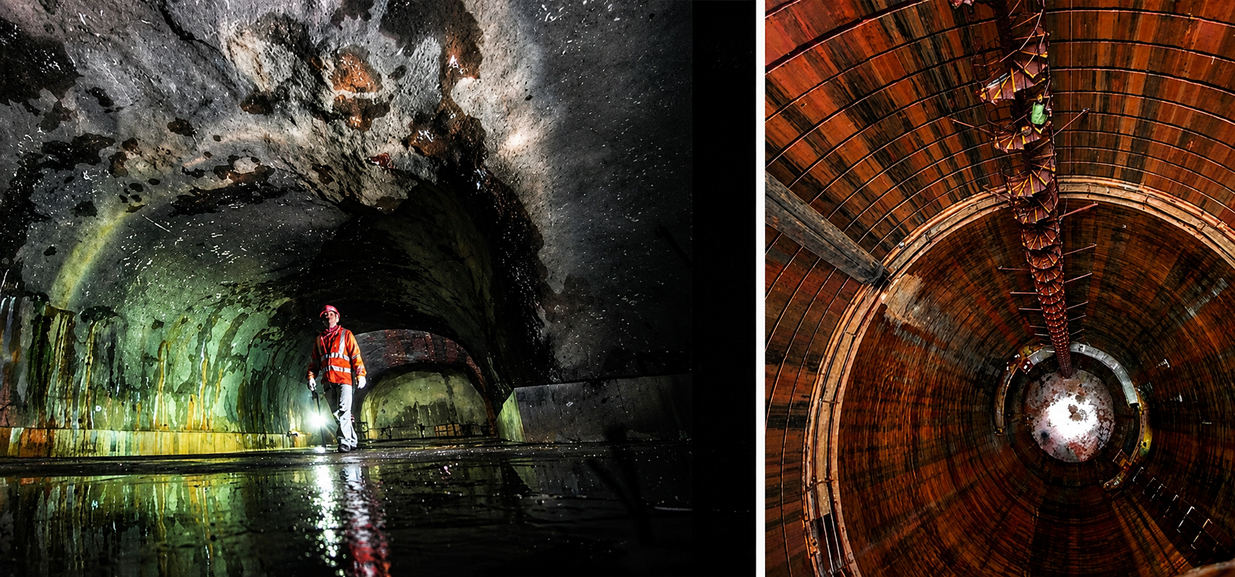
According to JTC, building the storage underground also freed up around 60 hectares of surface land for higher value industrial use.
Then there's the Deep Tunnel Sewerage System (DTSS), PUB's answer to relying on scattered pumping stations across the island. Instead, used water moves entirely by gravity through a network of deep tunnels and link sewers that, across both phases, stretches roughly 206 kilometers to three centralized water reclamation plants.
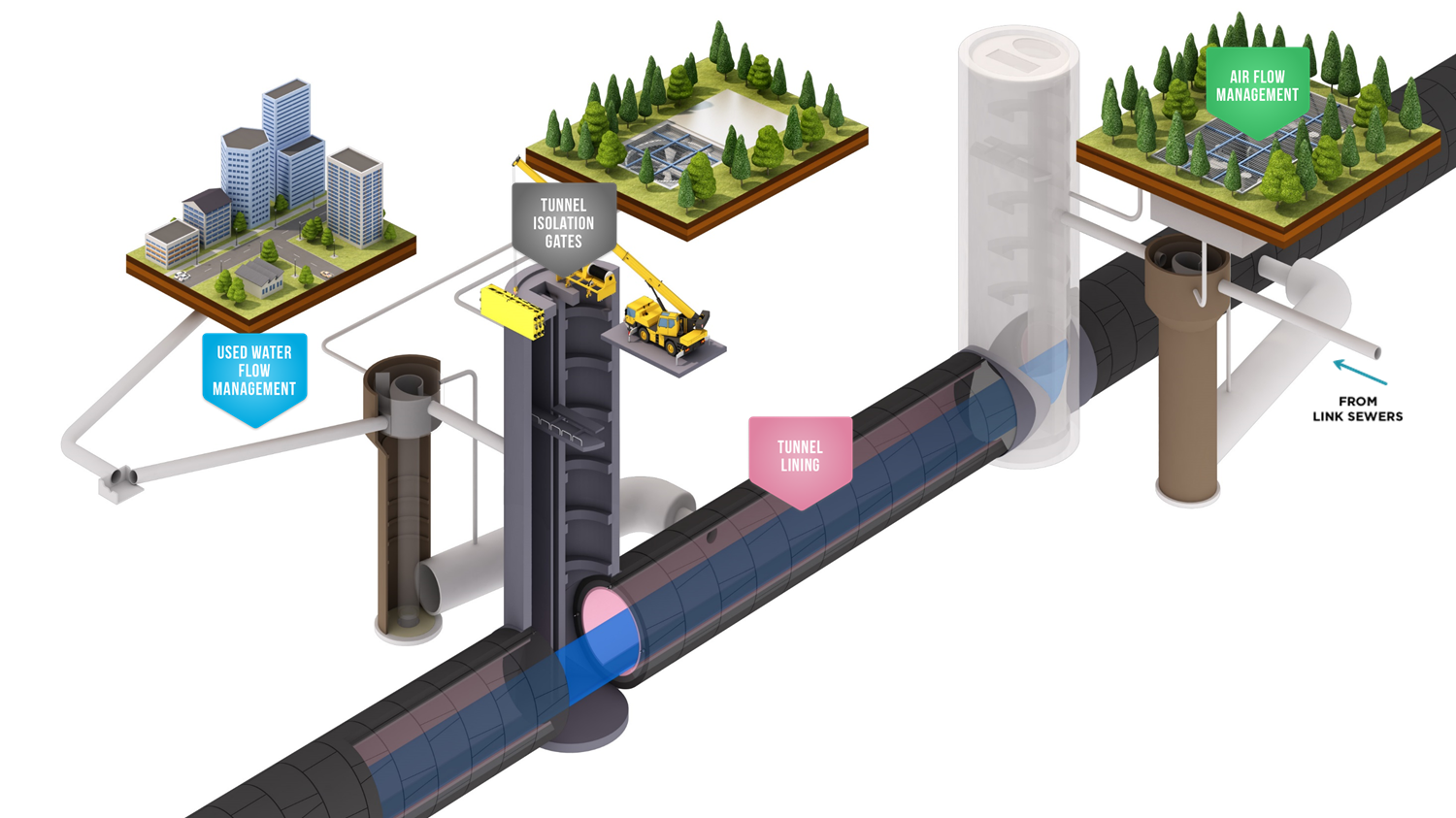
It's built to support Singapore's long term water security rather than patch it station by station.
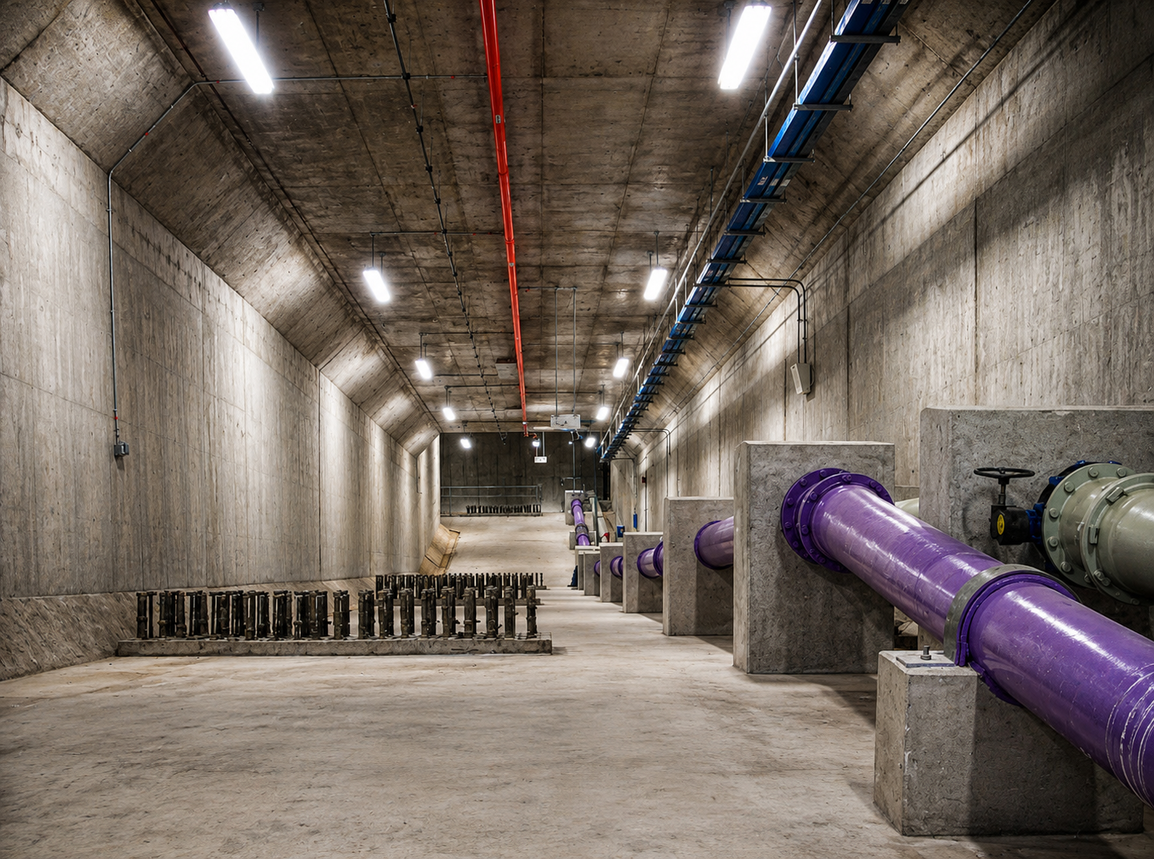
Alongside that, Singapore has built Common Services Tunnels, shared underground corridors where electricity, water, telecoms, and cooling pipes run together instead of each getting its own trench under the road.
The Underground Is Still Growing
None of this is finished yet. URA keeps finding new things to bury, deeper caverns for industrial storage, utility infrastructure, entire logistics systems.
The logic never changes whatever people don't need to see gets sent underground, so the little space left on the surface can go to homes, workplaces, and green areas instead.
You won't find any of this on a postcard. There's no observation deck for a sewage tunnel or a cavern full of crude oil. But if you're standing in Singapore right now, chances are something essential to keeping the city running is quietly at work more than 100 meters beneath your feet.