Brunei is the only ASEAN member state with zero operational railway route length, while all other countries in the region maintain active rail infrastructure for passenger and/or freight transport, according to the ASEAN Statistics Data Portal.
Although Brunei has no operational railway today, the country did operate several industrial railways in the past.
The first was built in the 1880s at the Brooketon Colliery in Muara. The approximately 2.5 kilometer narrow-gauge railway transported coal from the mine to a nearby deep water port. Steam locomotives were introduced in the 1890s after the original wooden tramway was upgraded with steel rails.
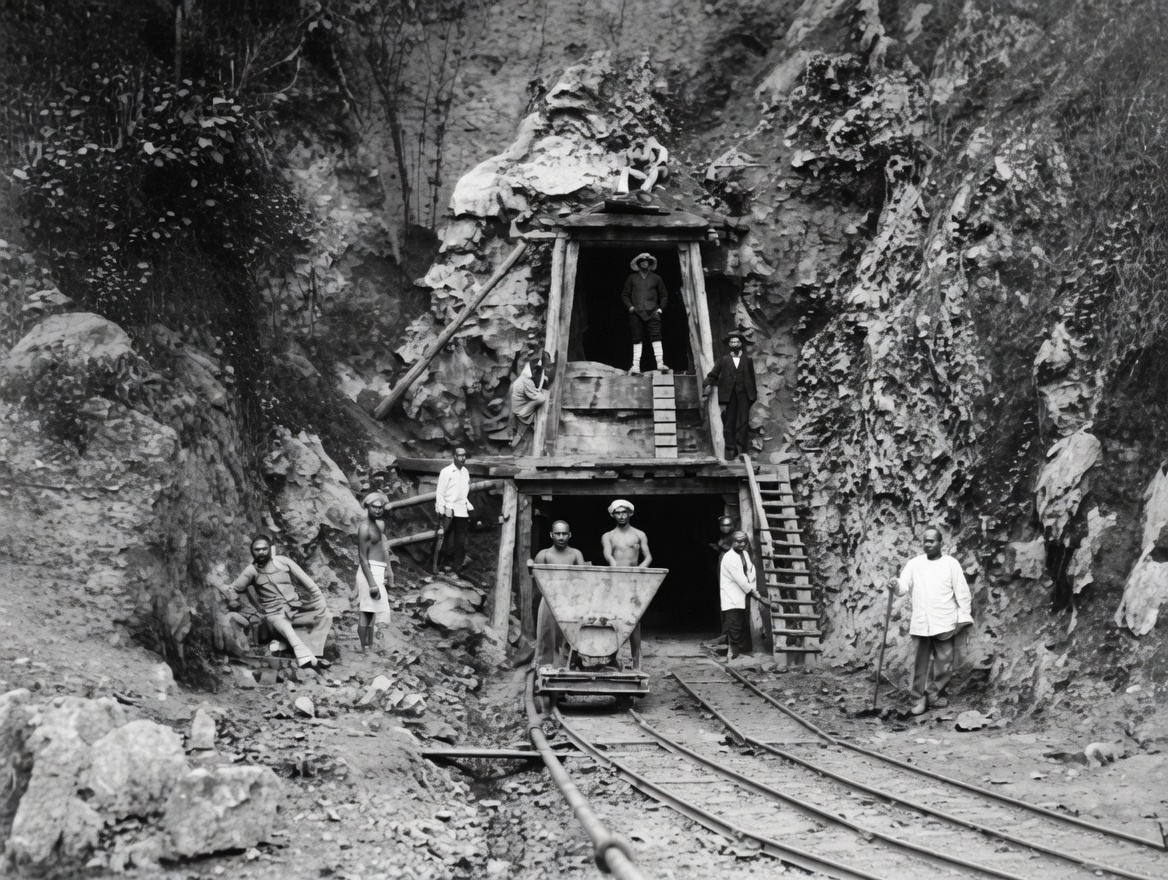
The railway ceased operation when the coal mine closed in 1924.
Another railway was later constructed by Brunei Shell Petroleum during the early 1930s. This approximately 19 kilometer industrial line connected the Seria refinery with a pumping station at Badas, transporting water and construction materials. It was dismantled during World War II.
Neither railway formed part of a national public rail network.
Why Brunei Never Developed a National Railway
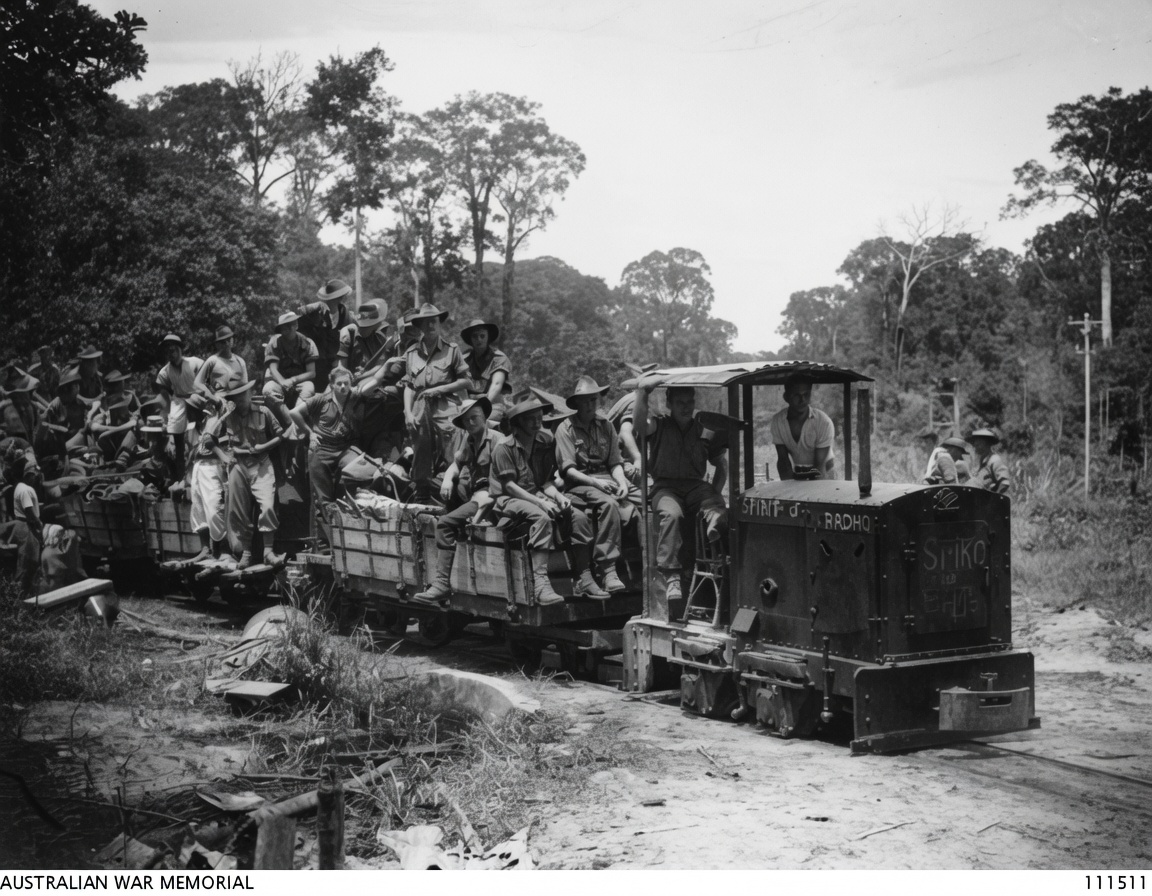
Brunei covers an area of 5,765 square kilometers and had an estimated population of approximately 458,000 in 2025. The country’s relatively small land area and population mean that major urban centres are connected by comparatively short road journeys.
Road transport dominates the country’s mobility system.
Brunei’s road network spans approximately 3,167 kilometers, and the country holds the highest vehicle ownership rate in Southeast Asia at around 805 vehicles per 1,000 people, according to data from the International Organisation of Motor Vehicle Manufacturers (OICA).
That figure is roughly two and a half times the Asia Pacific average of 317 vehicles per 1,000 people, based on Asian Transport Observatory data. Malaysia ranks a distant second regionally at 490 vehicles per 1,000 people.
Official transport statistics published by Brunei’s Department of Economic Planning and Statistics also show that the country continues to expand and maintain its road infrastructure while recording annual vehicle registration data, with no operational railway included in the national transport system.
Rail Proposals Have Been Discussed
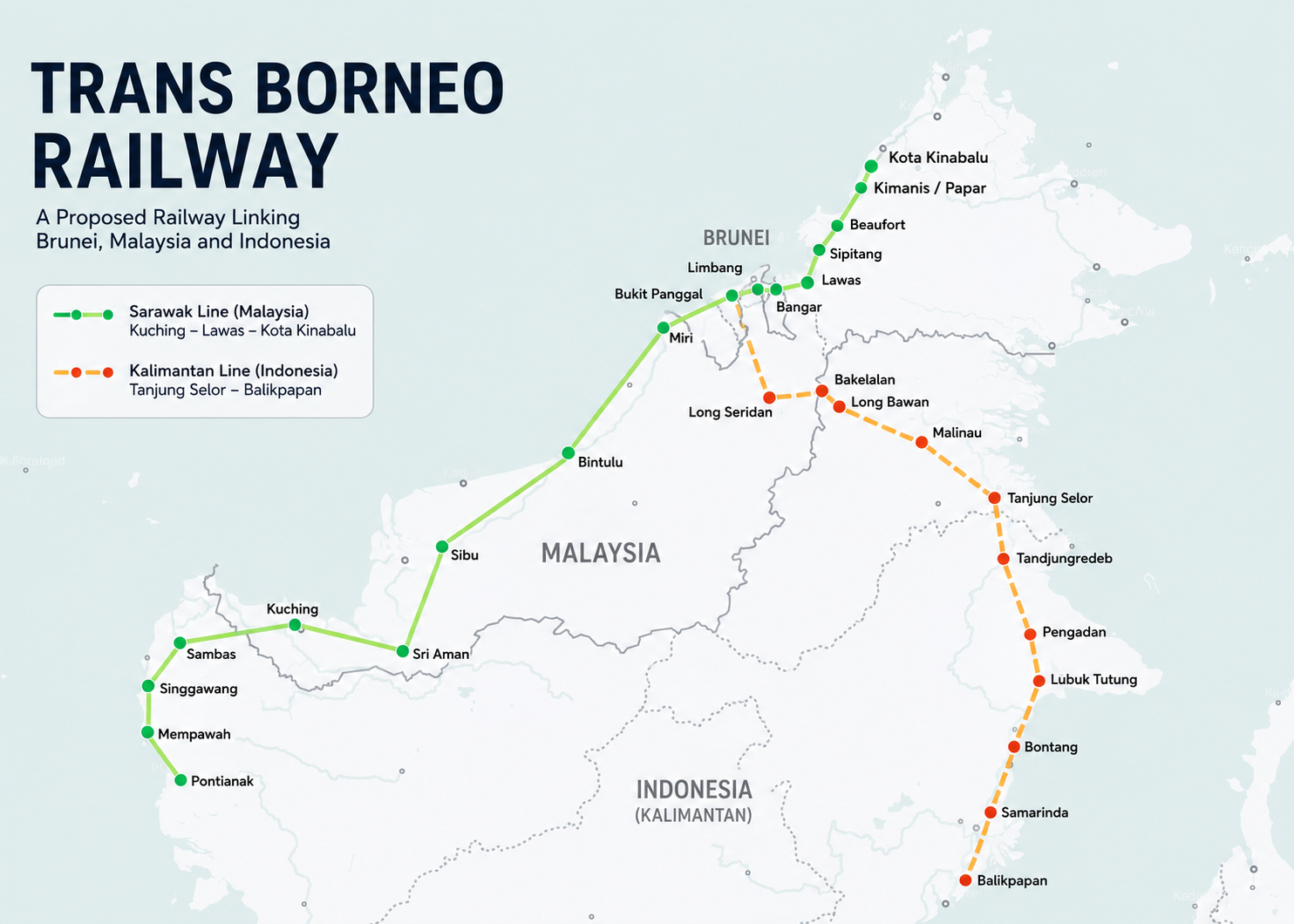
Brunei has periodically been mentioned in discussions surrounding the proposed Trans-Borneo Railway, a concept that would connect Brunei with Malaysia’s Sabah and Sarawak states and Indonesia’s Kalimantan.
However, in April 2024, Brunei’s Ministry of Transport and Infocommunications clarified that the government had not offered or appointed any company to undertake such a project and that no official government level discussions had taken place regarding its implementation.
The Only ASEAN Country Without Operational Rail
Today, Brunei remains the only Southeast Asian country without an operational railway network.
Its historical railways were built exclusively for industrial purposes and ceased operation decades ago. Modern transportation relies almost entirely on roads, supported by one of the region’s highest private vehicle ownership rates and a nationwide highway network.
According to the latest ASEAN transport statistics, Brunei continues to record zero kilometres of operational railway, making it unique among all ten ASEAN member states.