


When extreme heat closes classrooms or floods interrupt the rice harvest, climate change becomes a question of everyday security. Across Southeast Asia, protecting food, livelihoods and homes increasingly depends on cooperation beyond national borders. Brunei’s push to host the ASEAN Centre for Climate Change offers a timely opportunity to strengthen that response.
A Small Nation with a Regional Ambition
Proposed during Brunei’s ASEAN chairmanship in 2021, the ASEAN Centre for Climate Change, or ACCC, is designed to connect research, strengthen national capabilities and support coordinated climate policies. Housed at Universiti Brunei Darussalam, it could help translate regional knowledge into decisions that protect communities.
Brunei signed its instrument of ratification in May 2026. An August update from the ASEAN Centre for Energy reported an initial US$1.5 million commitment for the centre’s first three years, while noting that the agreement requires six member states’ ratifications to enter into force. These are significant steps, but they should not be confused with confirmation that the centre is fully operational.
For a country closely associated with oil and gas, hosting the centre offers an opportunity to broaden its regional contribution. Its credibility will ultimately depend on sustained resources, accessible science and practical benefits for people facing climate risks.
Turning Climate Evidence into Protection
Recent experience shows why stronger coordination is urgent. World Weather Attribution found that human-induced climate change made the Philippines’ April 2024 heatwave approximately 1.2°C hotter. Across affected parts of Asia, extreme heat disrupted education, damaged crops and exposed outdoor workers to dangerous conditions.
“This generation is experiencing more frequent and intense extreme weather events,” Philippine climate scientist Rodel Lasco said at a November 2024 briefing organised by the country’s Climate Change Commission.
Flooding presents another immediate challenge. According to the World Bank, major floods displaced more than 100,000 people in Malaysia in 2024. That same year, Typhoon Yagi brought destruction across Vietnam, the Philippines, Laos, Thailand and Myanmar, demonstrating how a single weather system can become a regional emergency.
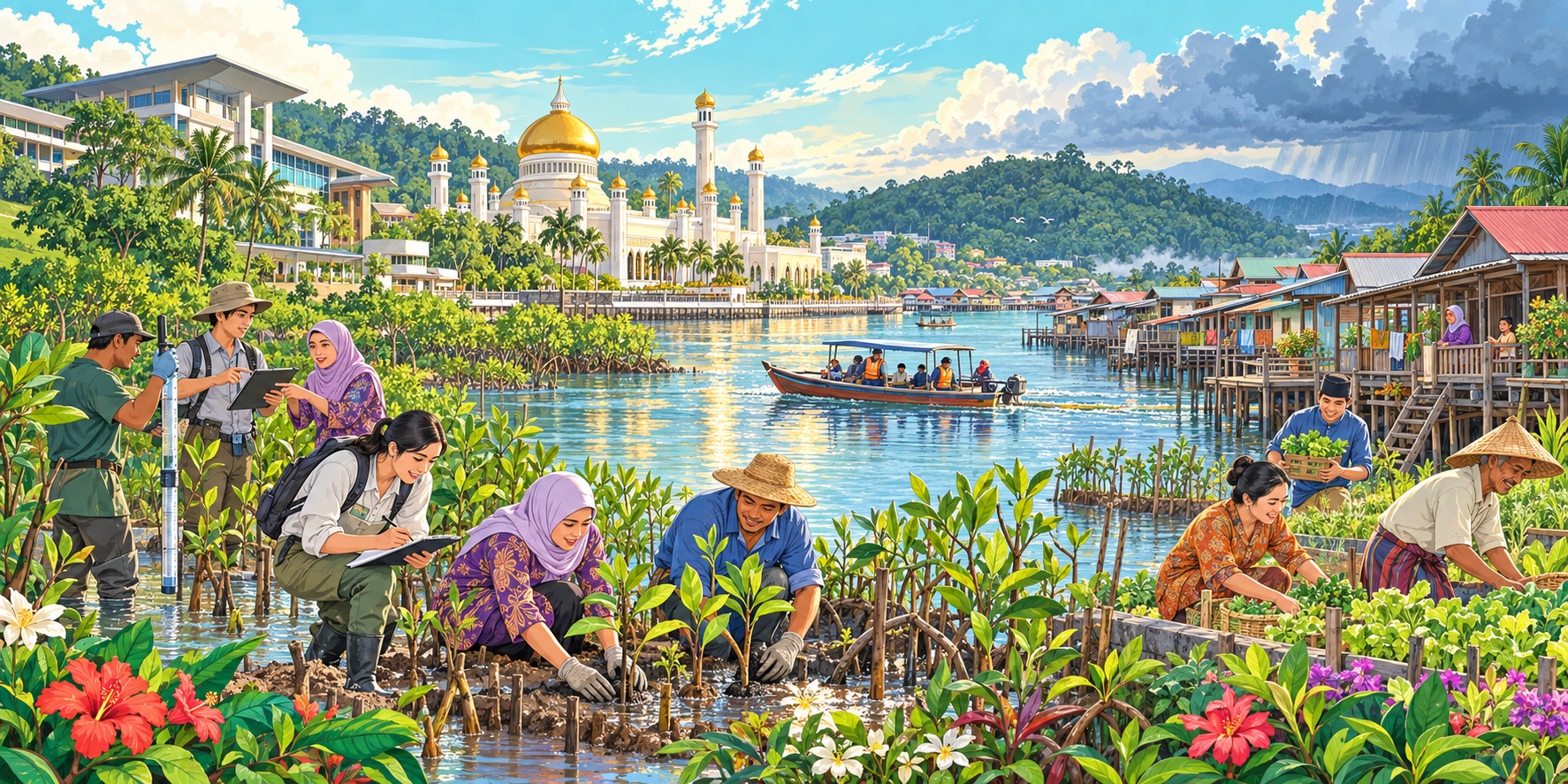
These events give climate security a tangible meaning: keeping schools functioning, protecting incomes and ensuring families can access food and safe shelter.
Connecting Local Solutions Across Borders
Regional cooperation must accommodate different landscapes. Indonesia’s exposure to floods, droughts and forest fires calls for stronger land management and risk-informed planning. In Vietnam’s Mekong Delta, saltwater intrusion threatens agricultural livelihoods, while water management decisions connect the delta’s future with Cambodia, Laos and Thailand upstream. Climate pressures interact with development choices; neither can be addressed in isolation.
There are useful solutions to share. In December 2025, officials from Cambodia and other countries visited Vietnam’s Mekong Delta to study approaches including shrimp–forest cooperatives and coastal protection combining mangroves with engineered structures. Such exchanges illustrate the practical learning that a regional climate centre could strengthen.
Timor-Leste, which became ASEAN’s eleventh member in October 2025, also brings valuable experience. UNDP-supported irrigation improvements show how relatively modest infrastructure can help rural communities secure water and diversify production. Regional inclusion should help these experiences travel alongside scientific expertise.
Building Resilience with Communities
“Grassroots (activity) is a critical ingredient for successful climate adaptation to happen,” Singaporean urban climate expert Winston Chow told The Straits Times in 2024.
That principle should guide the ACCC’s development. Shared research becomes useful when farmers can act on seasonal forecasts, local authorities can identify vulnerable neighbourhoods and communities can influence adaptation spending. The centre could connect institutions and close knowledge gaps, but national implementation and community participation will remain essential.
Brunei’s opportunity is to help turn regional ambition into everyday protection. Success would be visible in better-informed decisions, stronger local preparedness and Southeast Asian communities better equipped to face a hotter, less predictable future.


