


Indonesia and Morocco may be separated by thousands of kilometers, yet their relationship has long been expressed through familiar cultural languages: faith, music, poetry, education, hospitality, and the shared memory of anti-colonial solidarity.
Those connections came together on July 28, 2026, when the Embassy of the Kingdom of Morocco in Jakarta, in partnership with Indonesia’s Ministry of Culture, presented the Indonesia–Morocco Cultural Evening at the ministry’s auditorium. The event was attended by numerous foreign dignitaries, diplomats, Indonesian officials, cultural figures, and invited guests.
Hospitality Before the Performance
Before the concert began, guests and invitees were served a local Indonesian dinner accompanied by traditional Moroccan tea.
The meal added another cultural dimension to the gathering. Moroccan tea is closely associated with generosity, welcome, and conversation, while Indonesia’s diverse culinary traditions similarly place shared meals at the center of social life.
Together, food and tea created an informal space where diplomats, officials, artists, and guests could speak beyond the ceremonial setting.
A Friendship Rooted in the Bandung Spirit
In his opening remarks, Morocco’s Ambassador to Indonesia, H.E. Redouane Houssaini, highlighted the enduring friendship between the two countries and the importance of culture in bringing their peoples closer together.
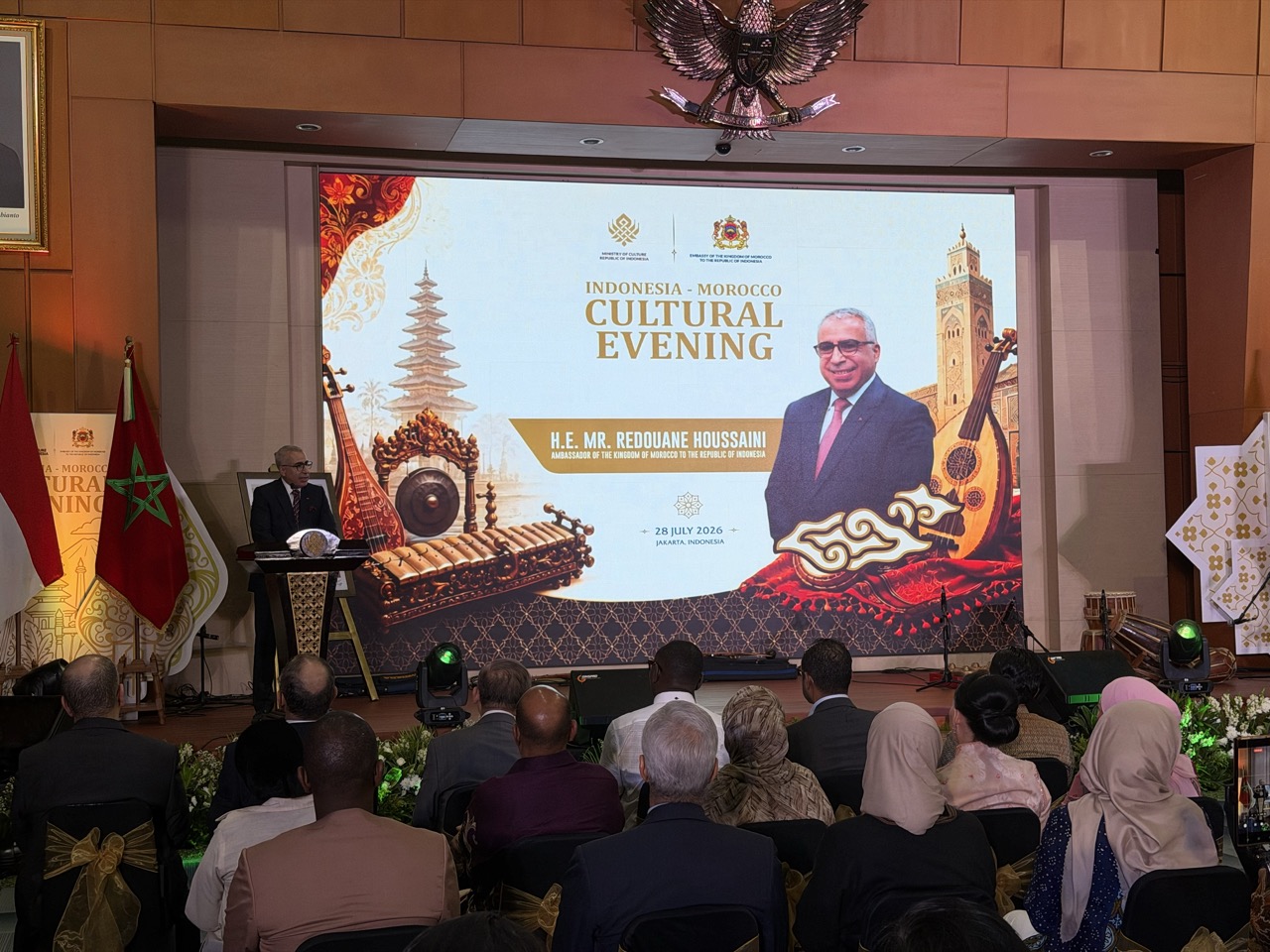
The modern relationship is deeply connected to the 1955 Asian-African Conference in Bandung, where Indonesia supported the aspirations of nations still struggling against colonial rule, including Morocco. After gaining independence, Morocco honored Indonesia’s first president by naming a major road in Rabat Rue Soukarno.
President Sukarno’s visit to Morocco on May 2, 1960, further strengthened the relationship. In Jakarta, Jalan Casablanca remains a visible reminder of the connection, while Jakarta and Casablanca have maintained a sister-city partnership since 1991.
In 2026, Indonesia and Morocco marked 66 years of diplomatic relations, supported by growing cooperation in education, tourism, religion, creative industries, and engagement between Morocco and ASEAN.
Poetry Opens a Journey Between Two Nations
The evening opened with Indonesian poet, poetry performer, author, and theater lecturer Peri Sandi Huizche, who recited works by renowned Indonesian poet Taufiq Ismail depicting the historical and emotional ties between Indonesia and Morocco.
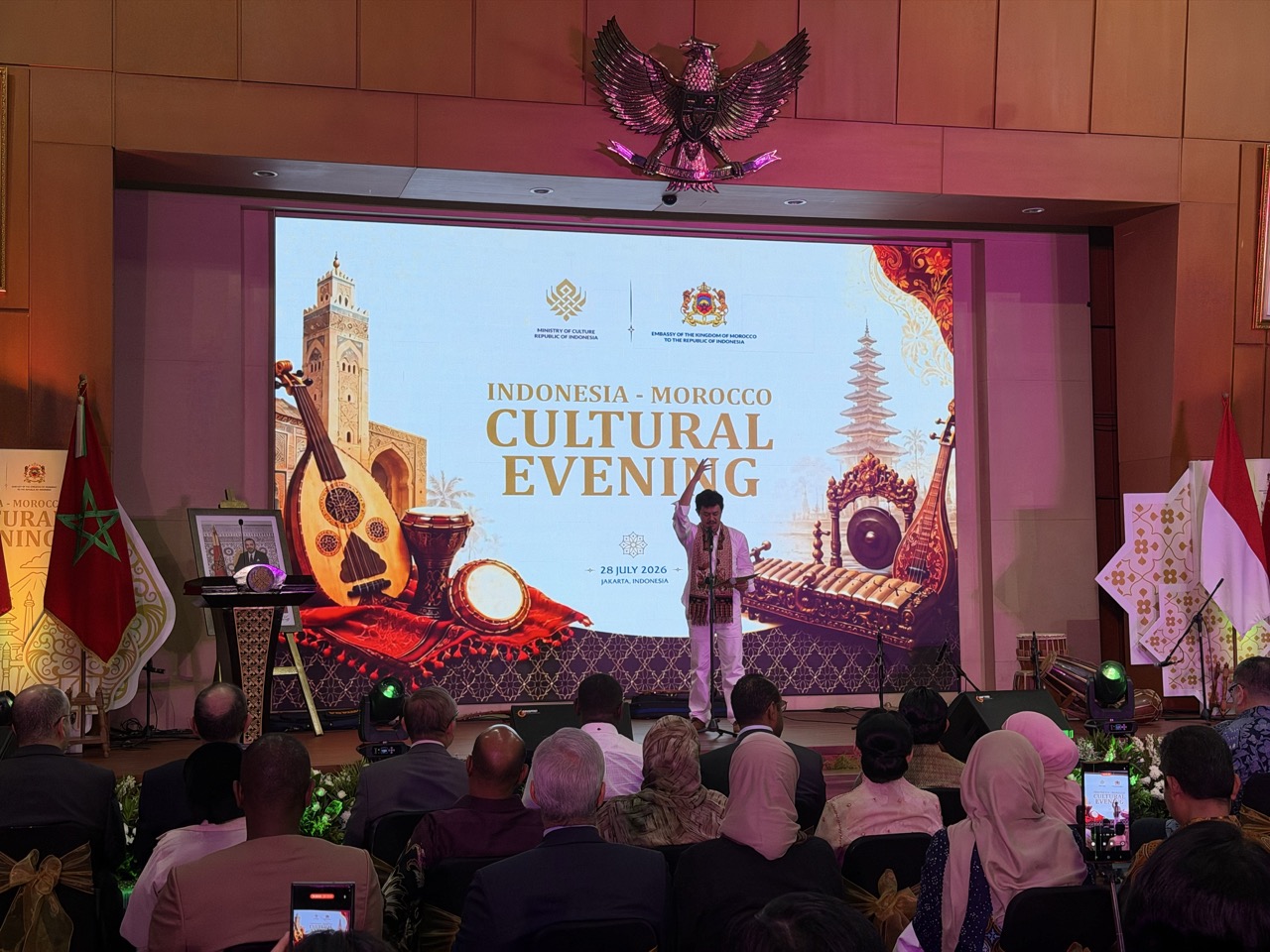
His performance gave the gathering a reflective beginning, transforming diplomatic history into spoken words and reminding the audience that relations between nations are not built only through treaties and official meetings, but also through stories, memory, and artistic expression.
Peri Sandi returned at the end of the program to close the evening with another poetry recital, creating a poetic frame around the entire celebration.
Muara Brings Indonesia’s Musical Diversity to the Stage
The concert began with a performance by the Indonesian group Muara Performing Arts, which presented several compositions reflecting the diversity of Indonesia’s musical traditions.
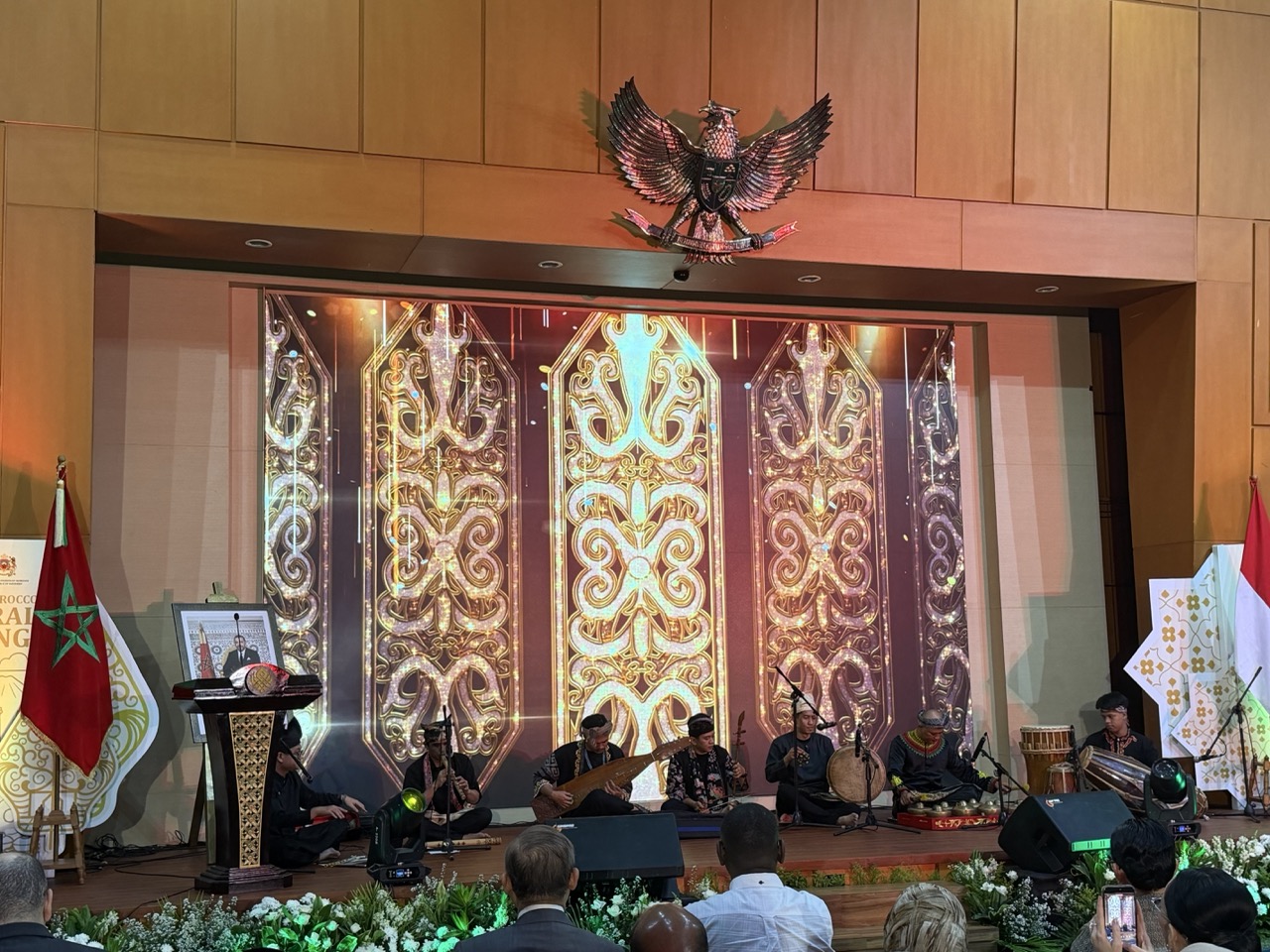
Through traditional instruments, percussion, vocals, and contemporary arrangements, Muara introduced the audience to the layered sounds of the Indonesian archipelago. Its performance reflected how Indonesian music has been shaped by local traditions, maritime exchange, Islamic influences, and encounters with cultures from across Asia and beyond.
Muara’s presentation provided a natural opening for the evening’s cross-cultural conversation, demonstrating how traditional heritage can remain alive when interpreted by contemporary musicians.
Melodies Al-Andalus Carries Morocco’s Living Heritage
The stage then welcomed the Moroccan ensemble Melodies Al-Andalus, whose performance introduced the audience to the richness of Moroccan Andalusian music.
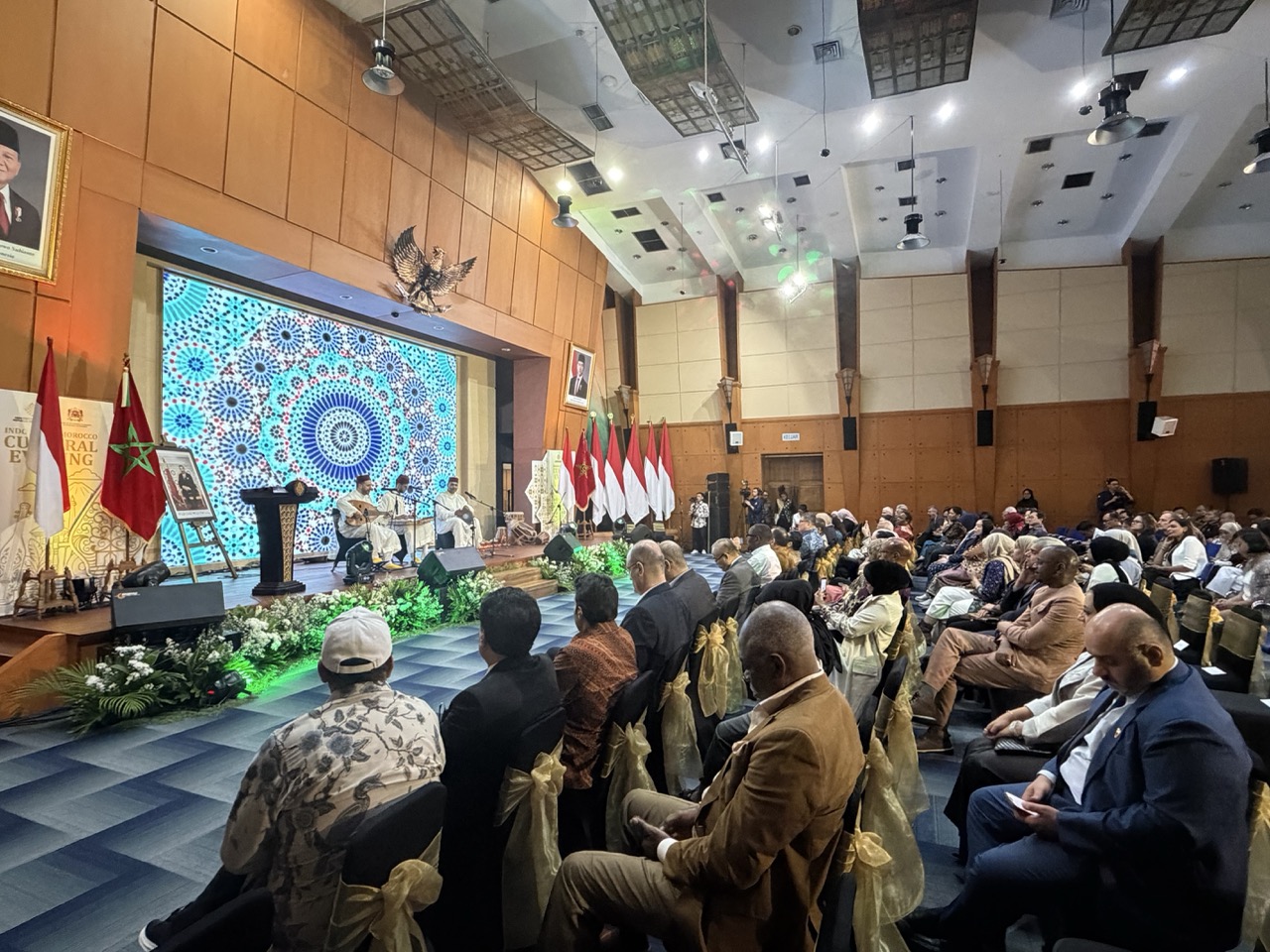
This musical tradition developed from the cultural legacy of Al-Andalus and was preserved across Moroccan cities such as Fez, Rabat, Tetouan, and Chefchaouen. Its repertoire brings together Arabic poetry, refined melodies, intricate rhythmic patterns, and influences from Arab, Amazigh, Mediterranean, and Andalusian civilizations.
Rather than functioning simply as entertainment, Andalusian music carries generations of historical memory. Its songs often express spirituality, love, longing, beauty, and the relationship between humanity and the divine. Through voices, string instruments, and hand percussion, Melodies Al-Andalus created an atmosphere that was both ceremonial and intimate.
Two Musical Traditions, One Shared Stage
After presenting their respective repertoires, Muara and Melodies Al-Andalus joined together for several collaborative performances.
The collaboration became the heart of the cultural evening. Indonesian rhythms met Moroccan melodic traditions, while musicians listened and responded to one another across different musical systems. Their performance demonstrated that cultural diplomacy works most powerfully when artists do more than appear on the same program—they create something together.
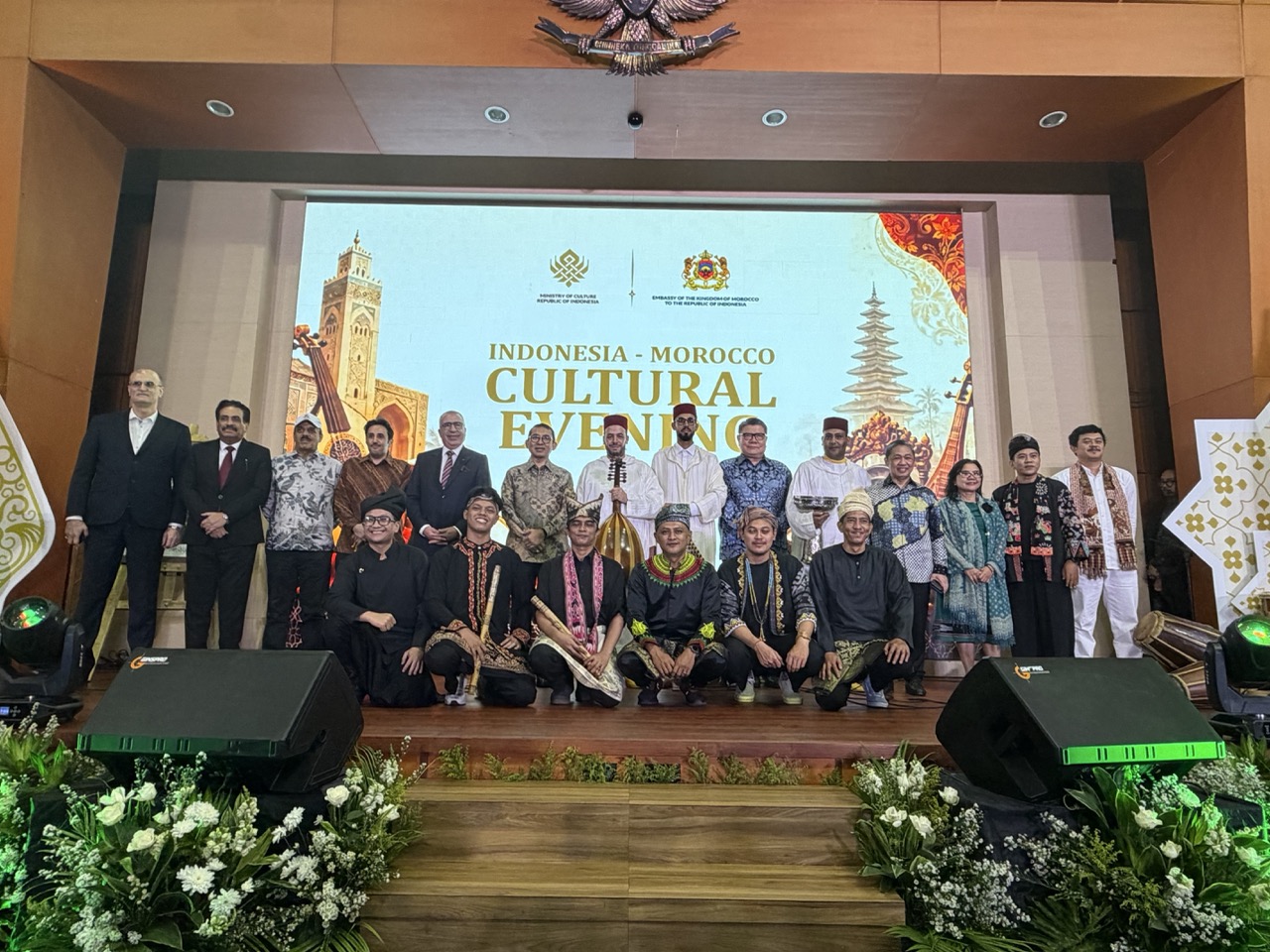
The Moroccan ensemble continued playing later into the evening, including as guests welcomed Indonesian Minister of Culture Fadli Zon, who arrived after completing an official visit to Nias Island.
In his closing remarks, Minister Fadli Zon emphasized the importance of cultural cooperation and the potential for Indonesian and Moroccan traditions to inspire new forms of artistic exchange. His presence reinforced the government’s commitment to expanding partnerships in music, heritage, museums, education, and the creative industries.
A Friendship Finding New Rhythms
The Indonesia–Morocco partnership is no longer sustained only by historical memories or formal diplomatic exchanges. It is being renewed through musicians, poets, students, artists, universities, cultural institutions, and shared traditions of hospitality.
By bringing Muara and Melodies Al-Andalus together, the cultural evening showed how two distant countries can recognize something familiar in each other’s artistic heritage.
The evening began and ended with poetry, but between those recitations, Indonesia and Morocco allowed music to speak—transforming 66 years of friendship into a living dialogue of rhythm, memory, and mutual respect.


