


Fashion’s next chapter may be shaped as much in workshops, classrooms, and textile laboratories as on the runway.
That idea guided the Indonesian-French Seminar on Fashion and Craftsmanship: Rethinking the Fashion of Tomorrow, held at Institut français d’Indonésie in Jakarta on July 28, 2026. Bringing together designers, researchers, educators, artisans, and creative entrepreneurs, the event examined how craftsmanship, circular production, and textile innovation can build a more responsible fashion industry.
The seminar formed part of PINTU Focus Week 2026 and the France–Indonesia Year of Innovation 2026. It was organized through PINTU Fashion Incubator, an initiative led by the Embassy of France–Institut français d’Indonésie, LAKON Indonesia, and JF3 Fashion Festival to deepen cooperation between the two countries’ fashion ecosystems.
A Fashion Partnership Built to Last
Since its creation in 2022, PINTU has developed into a professional bridge between French and Indonesian fashion communities. The program has supported more than 120 designers, entrepreneurs, and fashion professionals through international mobility, mentoring, residencies, and collaborative projects.
Its fifth edition brought together French and Indonesian designers, educators, and industry experts through a week-long program of fashion shows, mentoring sessions, professional exchanges, and public discussions. The partnership reflects a wider cultural momentum between Jakarta and Paris, particularly through the Joint Cultural Strategy adopted by Presidents Prabowo Subianto and Emmanuel Macron in 2025.
French Ambassador Fabien Penone described PINTU as a platform that fosters lasting collaboration between the French and Indonesian fashion scenes while creating opportunities for professional growth and access to international markets.
French and Indonesian Creativity Meets on the Runway
Before the seminar, PINTU Focus Week brought the collaboration to the runway at JF3 Fashion Festival in Summarecon Mall Kelapa Gading on July 23.
The afternoon show featured collections by PINTU Incubees, students from École Duperré Paris, and Future Fashion Designer participants, presenting emerging talent from both countries. The evening program showcased contemporary French fashion through collections by Rohan Mirza, Louise Marcaud, TAREET by Etienne Diop in collaboration with DENIMITUP by Vincent Mickael, and Fengyuan Dai for 30%70.
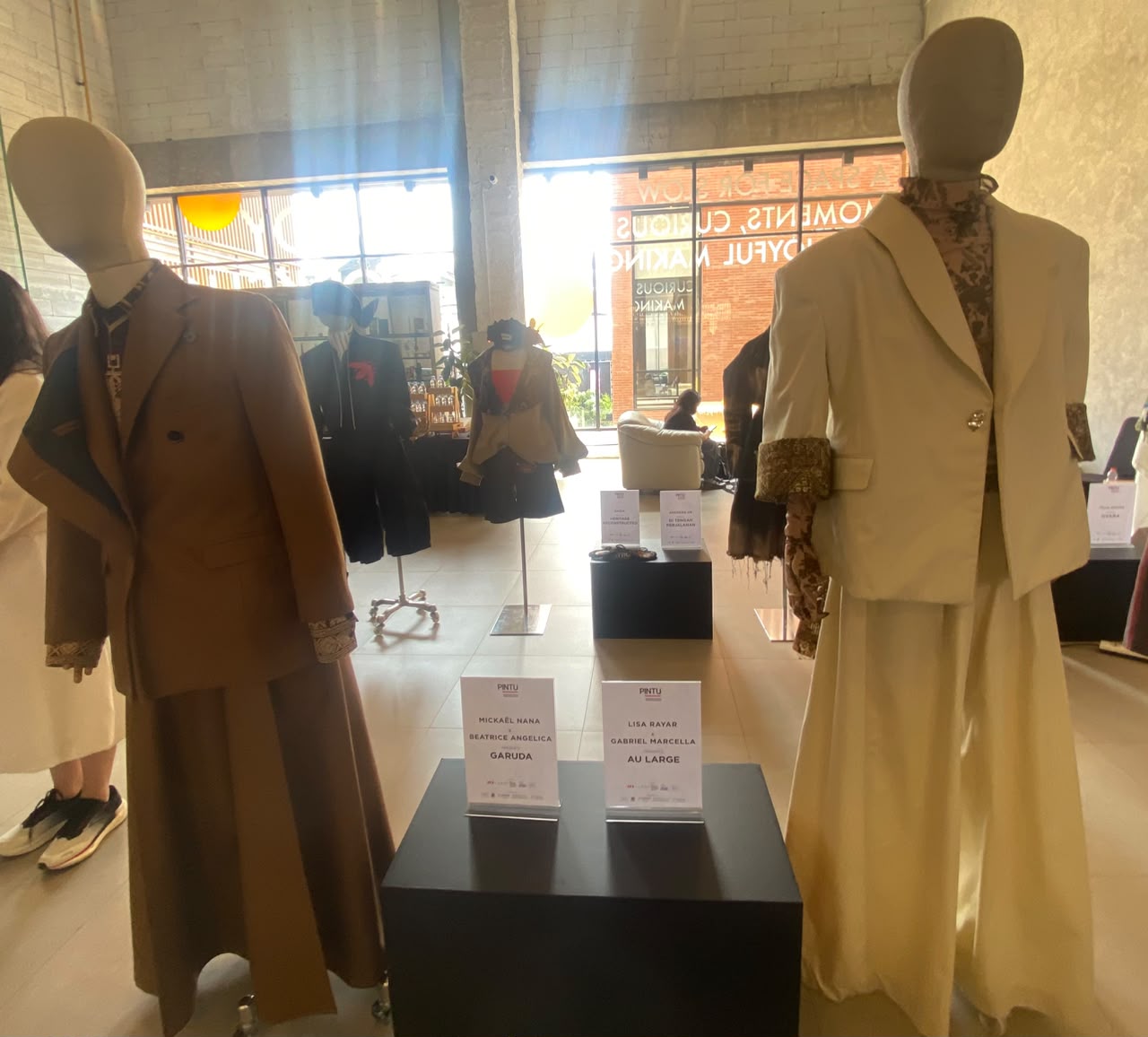
The runway also unveiled GARUDA and AU LARGE, the first collections produced through the Franco-Indonesian PINTU Residency. French designers Mickaël Nana and Lisa Rayar worked with Indonesian designers Beatrice Angelica and Gabriel Marcella Budiono after exploring batik and weaving traditions in Jakarta, Mojokerto, and Lombok. The resulting collections blended contemporary experimentation with the textile heritage of both countries.
Can Craftsmanship Challenge Fast Fashion?
The seminar’s first panel addressed one of the industry’s most urgent questions: can traditional craftsmanship offer a viable alternative to fast fashion?
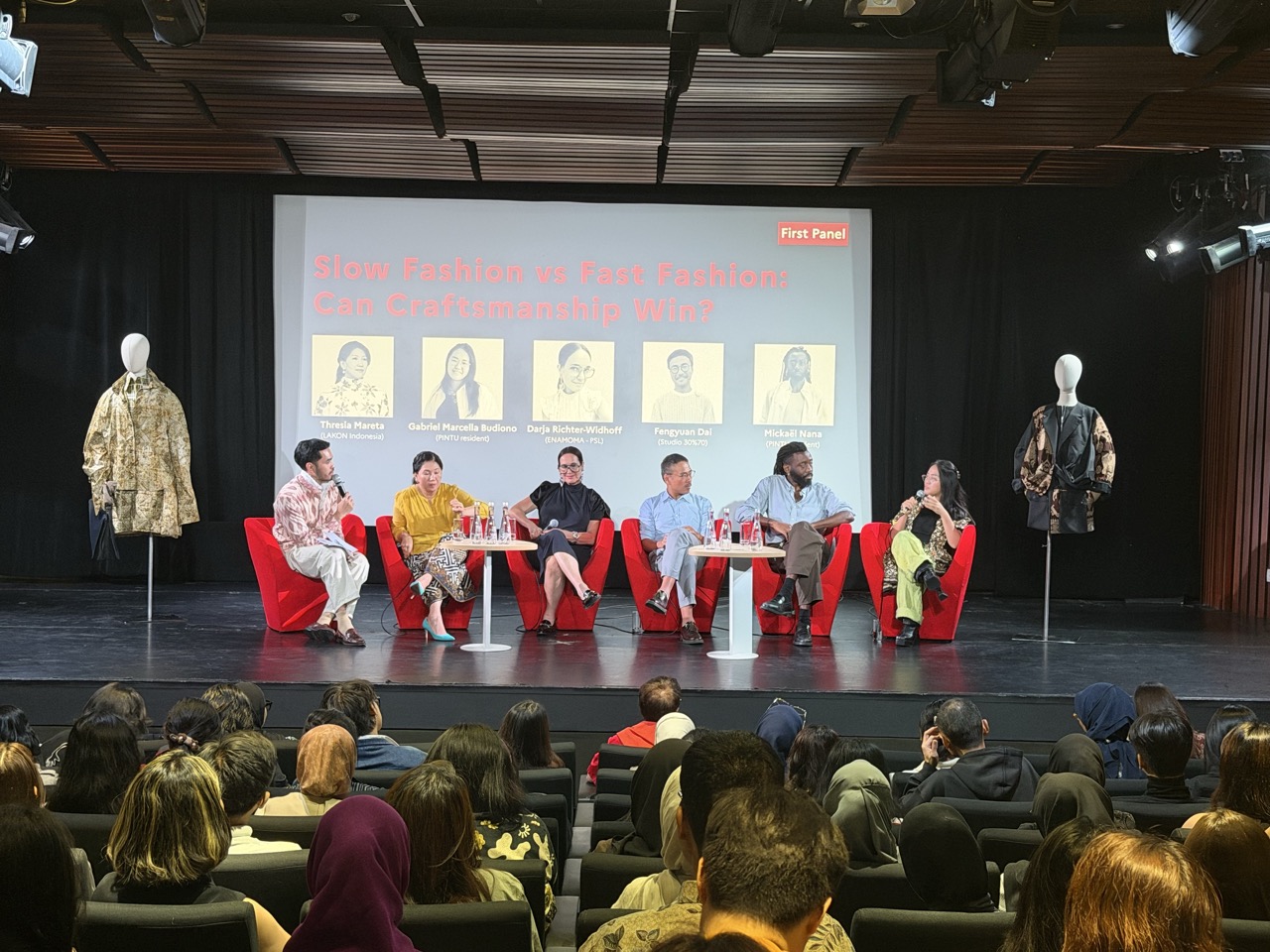
Speakers explored how artisanal knowledge, local materials, heritage techniques, and slower production systems can create garments with stronger cultural and environmental value. The discussion brought together LAKON Indonesia founder Thresia Mareta, ENAMOMA-PSL’s Darja Richter-Widhoff, designers Fengyuan Dai and Mickaël Nana, and PINTU resident Gabriel Marcella Budiono.
Indonesia provided a particularly relevant setting for the conversation. Batik, weaving, embroidery, natural dyeing, and handmade textile traditions remain closely connected to communities across Java, Sumatra, Bali, Nusa Tenggara, and other regions. The challenge is preserving those skills while adapting them to contemporary markets and ensuring artisans receive fair recognition and economic benefits.
Mareta said PINTU was created as “a vibrant forum that brings together a new generation of fashion actors from both Indonesia and France.” Her vision extends beyond producing collections to empowering participants and creating meaningful impact through fashion.
Textile Innovation Moves Beyond the Laboratory
The second panel examined how scientific research, circular design, education, and new production methods can reduce fashion’s environmental footprint.
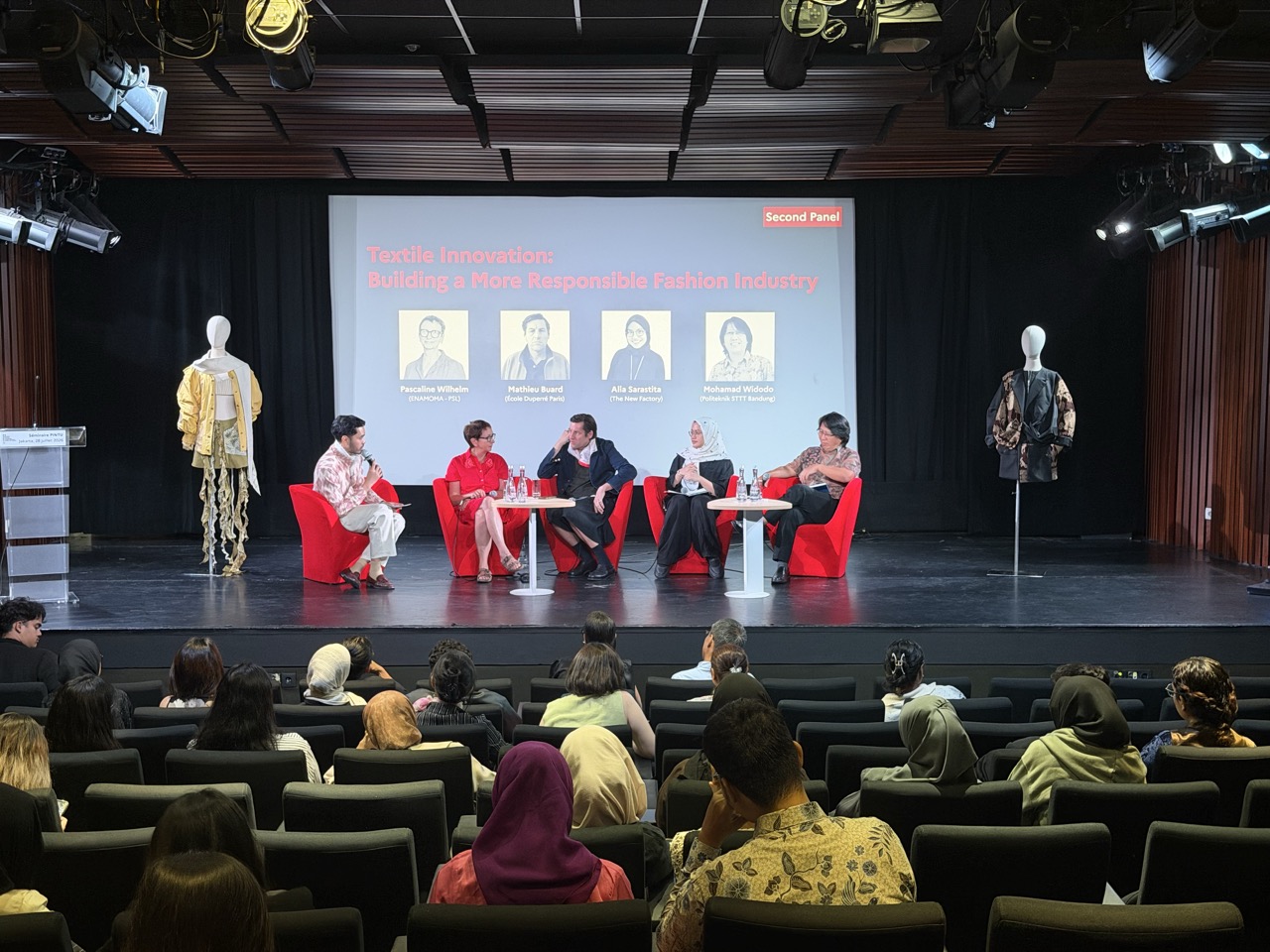
Experts included Pascaline Wilhelm of ENAMOMA-PSL, Mathieu Buard of École Duperré Paris, Alia Sarastita of Bandung-based circular fashion laboratory The New Factory, and Professor Mohamad Widodo of Politeknik STTT Bandung. Their participation emphasized the importance of collaboration among designers, academic institutions, manufacturers, and workers.
Sarastita’s work offers a localized example of circular fashion in practice. The New Factory combines textile upcycling, worker ownership, sustainable design, and fair labor. Professor Widodo, meanwhile, has contributed to Indonesia’s National Circular Economy Roadmap 2025–2045 and brings nearly three decades of experience in functional textiles and responsible manufacturing.
These examples demonstrate that sustainability is not limited to replacing one fabric with another. It requires changes in how garments are designed, produced, used, repaired, and eventually recycled.
Where Heritage Meets the Future
Moderated by sustainable-fashion advocate Dino Augusto, the seminar transformed France and Indonesia’s complementary strengths into direct professional exchange. France contributed internationally recognized design institutions, fashion education, and industry expertise, while Indonesia brought extraordinary textile diversity, artisanal knowledge, and creative traditions rooted in local communities.
Beyond the panels and runway presentations, PINTU created opportunities for mentoring, networking, and market access among emerging designers, established professionals, educators, and institutions.
The future of fashion will not be shaped by speed alone. Through PINTU, France and Indonesia are showing that innovation can also emerge from patience, cultural respect, scientific collaboration, and the hands of artisans who carry knowledge across generations.


