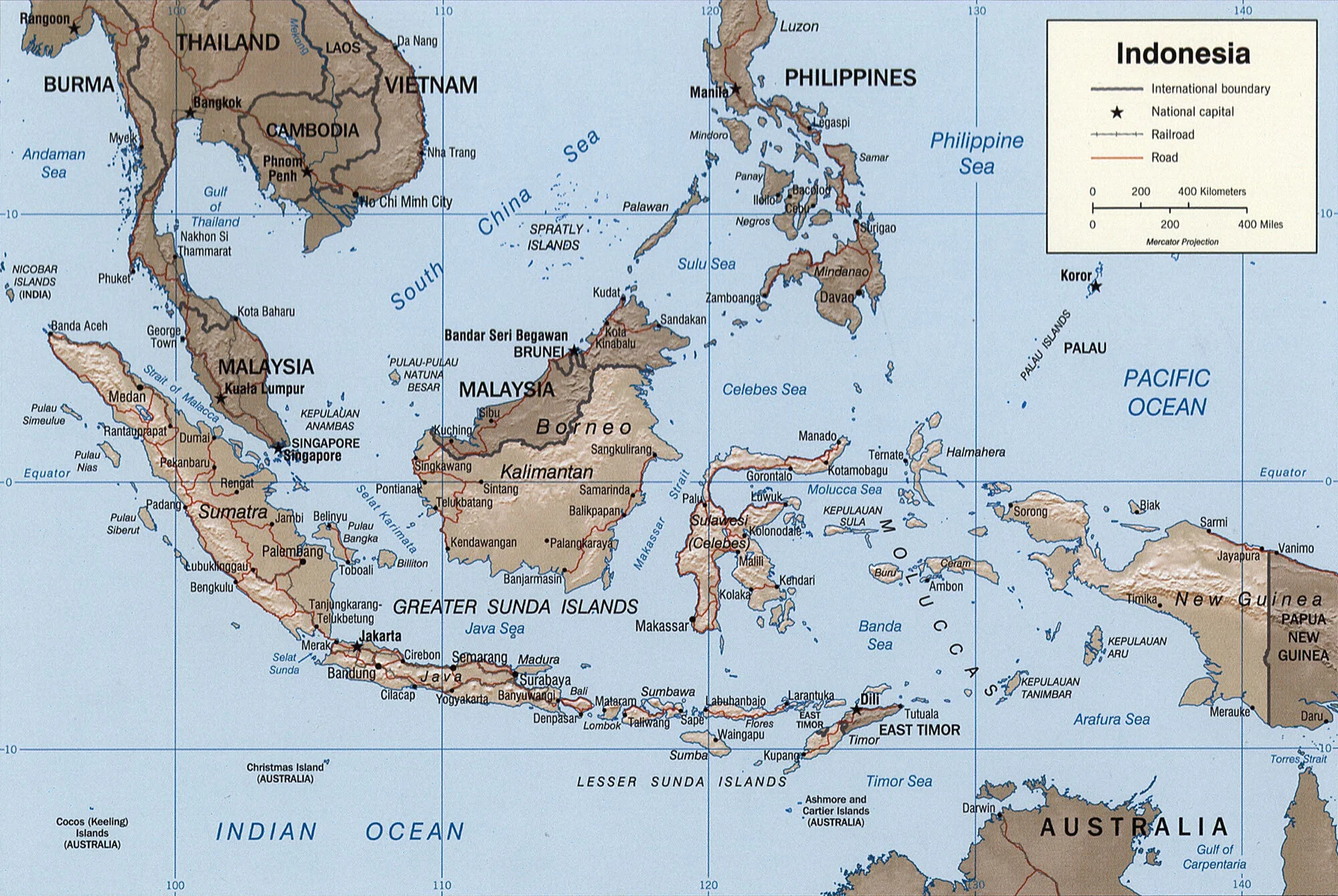
Indonesia stretches more than 5,100 kilometers from west to east and consists of more than 17,000 islands. Maintaining military operations across an archipelago of that scale presents different operational requirements from those of continental countries.
That geography helps explain Indonesia's move to acquire the former Italian Navy aircraft carrier ITS Giuseppe Garibaldi, a transfer still being finalized. Army Recognition reports the formal process is expected to conclude around December 2026, following the Italian Senate's approval of the free cession between March and April 2026.
Rather than serving primarily as a platform for fighter jets like the U.S. Navy's nuclear-powered supercarriers, the vessel is expected to support helicopters, unmanned aerial vehicles (UAVs), amphibious operations, logistics, and humanitarian missions across the archipelago.
A Gift, Not a Purchase, But Not Free Either
The Giuseppe Garibaldi is not being sold to Indonesia. Army Recognition reports that Italy's Parliament approved the transfer as a government-to-government grant. The ship's residual accounting value is listed at roughly €54 million. Its annual upkeep also costs Rome about €5 million.
Indonesia, however, still carries a substantial cost. Militarnyi and Army Recognition report that Indonesia's Ministry of National Development Planning (BAPPENAS) has authorized foreign loans of up to $450 million for the ship's refit and equipment. It has also approved up to $550 million for transport and utility helicopters.
The carrier itself is free. Making it operational is not.
Not Every Aircraft Carrier Has the Same Role
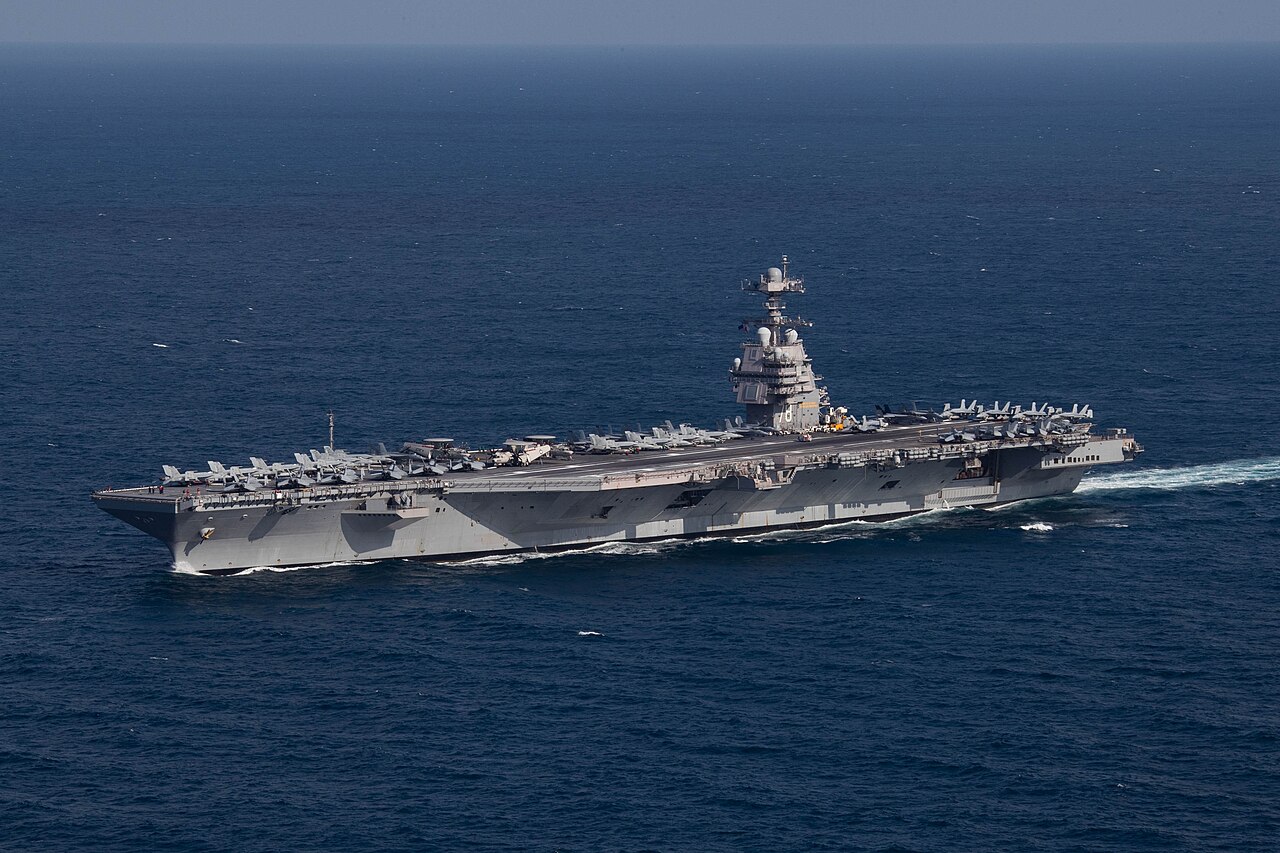
Aircraft carriers are often associated with fighter jets like the F/A-18 or F-35C flying off U.S. carriers such as the Nimitz and Gerald R. Ford classes. The Giuseppe Garibaldi was designed differently.
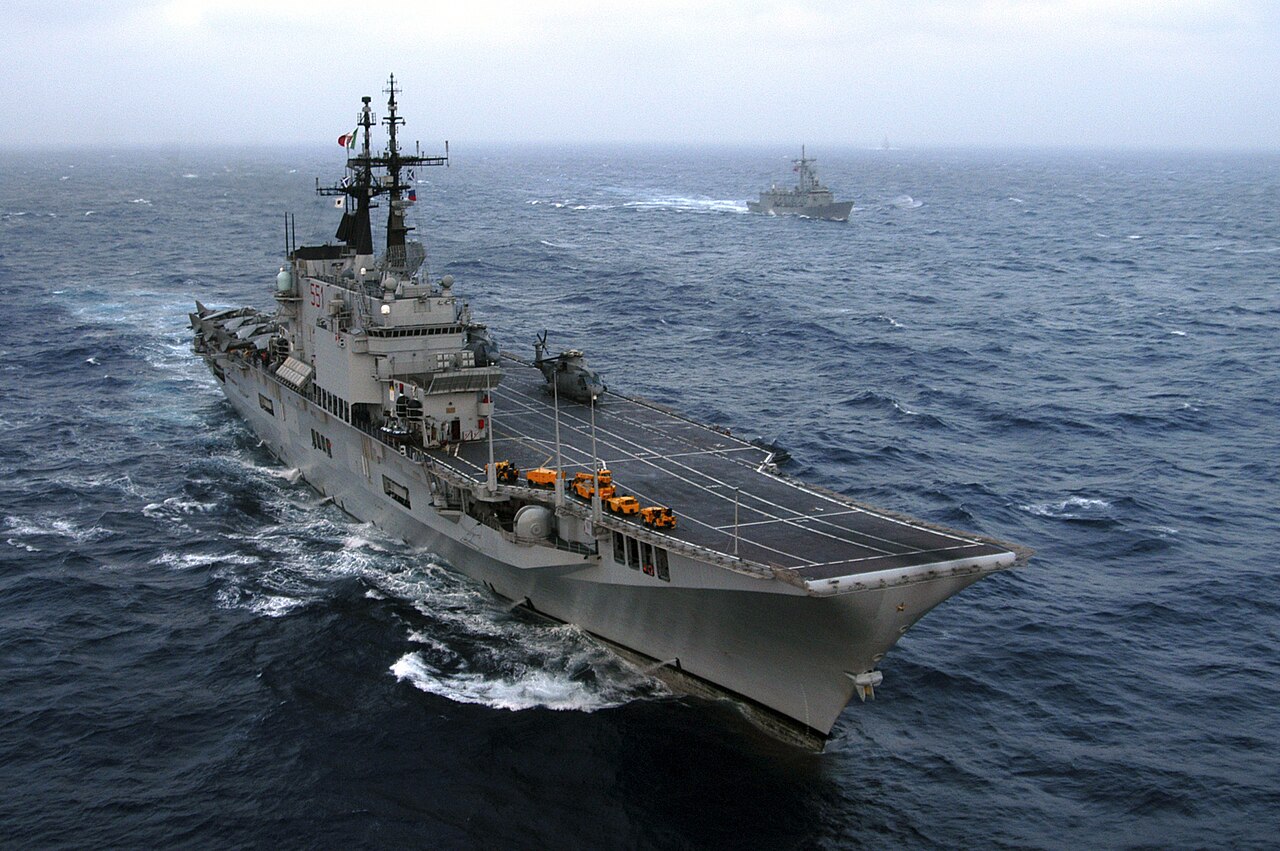
Commissioned in 1985, it displaces roughly 14,000 tonnes and was built as a STOVL (Short Take-Off and Vertical Landing) carrier, capable of operating up to 16 AV-8B Harrier II jets or 18 helicopters, per TheDefenseWatch.
During nearly 40 years in Italian service, it supported NATO deployments and humanitarian missions in the Balkans, Afghanistan, and the Mediterranean.
For Indonesia, though, the jets aren't part of the plan. Militarnyi reports that discussions have focused on converting the ship for UAVs, reportedly Turkish-made Bayraktar TB3 drones, rather than fixed-wing fighters, since Indonesia has no Harrier or F-35B fleet.
A Floating Air Base
Helicopters and military UAVs have limited range before needing refueling or maintenance.
A carrier extends that reach, letting aviation assets operate from a ship positioned near the mission area instead of from air bases hundreds of kilometers away. It also carries fuel, maintenance facilities, spare parts, and command systems, functioning as a mobile air base deployable wherever it's needed.
According to BIG, Indonesia's outer islands are often hundreds of kilometers from the nearest major air base or naval facility. A sea-based platform lets helicopters and UAVs stay closer to operational areas without relying entirely on land infrastructure, supporting maritime patrols, amphibious operations, troop transport, and logistics across remote regions.
Indonesia has repeatedly deployed its armed forces (TNI) during major disasters, including the 2004 Indian Ocean tsunami, the 2018 Sulawesi earthquake and tsunami, and numerous volcanic eruptions.
A carrier operating multiple helicopters can move emergency supplies, evacuate civilians, deliver medical teams, and act as a command center when ports or airports are unusable. Italy, Japan, Australia, and South Korea have used similar aviation ships for disaster response.
Not a Signal Aimed at Neighbors
Given Indonesia's size, a new carrier naturally raises the question of whether it's meant to project strength regionally. The evidence points the other way.
A 2026 policy brief from Singapore's S. Rajaratnam School of International Studies (RSIS) states the carrier is likely to enter service carrying naval helicopters and serving as a flagship for humanitarian assistance and disaster relief, rather than traditional power projection, with room to evolve into a hybrid manned-unmanned platform later.
Defence Security Asia similarly reports the ship could bolster Indonesia's regional disaster response role and support ASEAN maritime cooperation or UN peace support missions, functions that benefit neighbors rather than threaten them.
Asia Times frames the upside in similar terms, a more capable navy could let Jakarta become a more self reliant regional security provider, in line with Indonesia's long standing "free and active" (bebas aktif) foreign policy, historically defined by non-alignment rather than projecting power against neighbors.
Projecting Power Through Presence
Power projection isn't only about long-range strikes. For Indonesia, it also means maintaining an aviation presence across distant islands, supporting amphibious forces, and rapidly deploying personnel throughout the archipelago.
The Giuseppe Garibaldi won't match U.S. supercarriers in size or aircraft capacity. But its ability to carry helicopters, UAVs, troops, and command facilities gives Indonesia a mobile platform that complements its existing land-based air bases.
As the world's largest archipelagic state, Indonesia's acquisition of the Garibaldi reflects operational needs shaped by geography, not an attempt to replicate the strike-carrier role of major naval powers, or to signal ambitions against its neighbors.