Gunung Mulu National Park is located in Sarawak, Malaysia. It is home to a vast primary rainforest with sharp limestone formations. The national park earned the area a place on the UNESCO World Heritage list in November 2000.
Gunung Mulu National Park area preserves a variety of unique landforms. Its main draws are divided into several physical exploration activities, starting from river navigation and cave exploration to steep cliff climbing.
Each section of the park presents a different terrain character. Here are four interesting spots to visit while in the area.
1. Deer Cave

Deer Cave is one of the largest cave passages in the world. The entrance width reaches approximately 175 meters, while the internal ceiling height reaches 120 meters.
Access to the location is about 3.8 kilometers from the national park headquarters. The route consists of a flat wooden boardwalk that is manageable for various fitness levels.
Inside the cave, wooden plank walkways lead past massive limestone formations. The natural scent of bat guano is quite noticeable throughout the passage.
Late afternoon is the main time to gather in the outdoor observation area. Thousands of wrinkled-lipped bats emerge periodically from the cave entrance. They form undulating black lines in the sky as they hunt for food.
2. Pinnacles Volcano (Gunung Api Pinnacles)

The Pinnacles are sharp and needle-like limestone formations on the slopes of Gunung Api. These natural stone spires reach an average height of 45 meters, standing in stark contrast to the surrounding green jungle canopy.
The trail to reach them is known to demand high physical endurance. The trek requires an overnight stay at Camp 5 before starting the main ascent.
The climb begins from Camp 5 with a distance of 2.4 kilometers. The distance may appear short, but the elevation gain reaches up to 1,200 meters. The terrain is dominated by slippery rocks and tree roots.
3. Boat Ride to Long Iman and Ba'Desai Waterfall
Exploration in Mulu is not limited to land or caves. The currents of the Melinau and Tutoh Rivers serve as vital water transport routes, navigated using long wooden boats.
The boat route passes local settlements along the riverbanks. One notable stop is the Penan community settlement in Long Iman. The place offers traditional handicraft activities of the Penan community.

From Long Iman, the journey continues to Ba'Desai Waterfall. A local guide from the village is required to lead the way along the trail.
The trail from the longhouse to the waterfall takes about 40 minutes on foot. There are no food stalls along the route, so bringing food and water is necessary.
4. The Botanical Heritage Trail
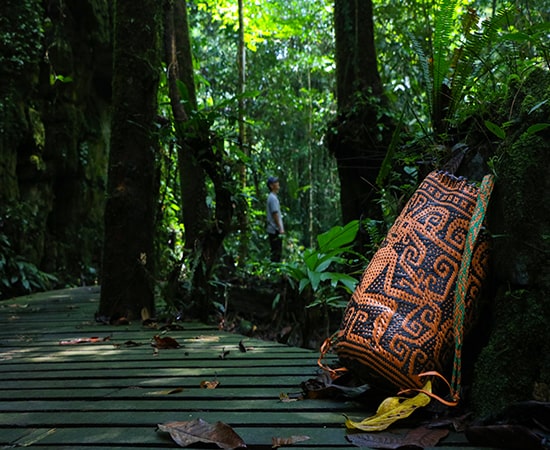
The Botanical Heritage Trail offers a lighter walking route located very close to the national park headquarters. The path is designed as a 1.5-kilometer loop.
The circular trail utilizes a flat wooden deck through primary tropical rainforest. Information boards along the trek detail the specific flora of the Mulu region, covering local tree species and plant adaptation methods.
Carnivorous plant species like pitcher plants (Nepenthes) grow along the trail edge, alongside various endemic palm varieties thriving in the limestone soil. It is an easy walk to learn about local flora without much physical effort.
The entire circuit can be completed in less than an hour.