The Snake Temple, also known as the Temple of the Azure Clouds, is a famous Chinese landmark in Bayan Lepas, Penang. It serves as a unique sanctuary for resident snakes said to be followers of a deified monk.
Built in 1805, this historic site honors Chor Soo Kong, a Buddhist monk from the Song Dynasty. It remains an active place of worship and a popular stop for travelers from around the world.
Live pit vipers roam freely within the temple grounds, resting on altars and statues. These reptiles are considered sacred protectors of the site and represent harmony between humans and nature.
Visitors come to experience the tranquil atmosphere and witness the unusual presence of these venomous creatures. This site offers a rare blend of spirituality and wildlife not found elsewhere on the island. The scent of incense often fills the air as guests explore the courtyard.
The Legend of Chor Soo Kong
Chor Soo Kong was born in Fujian, China, and entered the monkhood at a very young age. He attained enlightenment under the guidance of a Zen Master after years of spiritual cultivation.
This monk was highly respected for his medical knowledge and his kindness toward animals. He provided free medical services to the poor and helped many needy people in his community.
Legend says Chor Soo Kong prayed for rain during a severe drought, and the prayers were answered immediately. In gratitude, people built a monastery for him on Peng-Lai Mountain.
The temple in Penang was built on land donated by David Brown, a major landowner. Brown gave the land after being healed of a sickness through prayers to the monk.
After the temple was finished, wild vipers from the nearby jungle moved in and took shelter there. The monks protected these snakes, believing they were the guardians of the sacred site.
A "Home" for Snakes
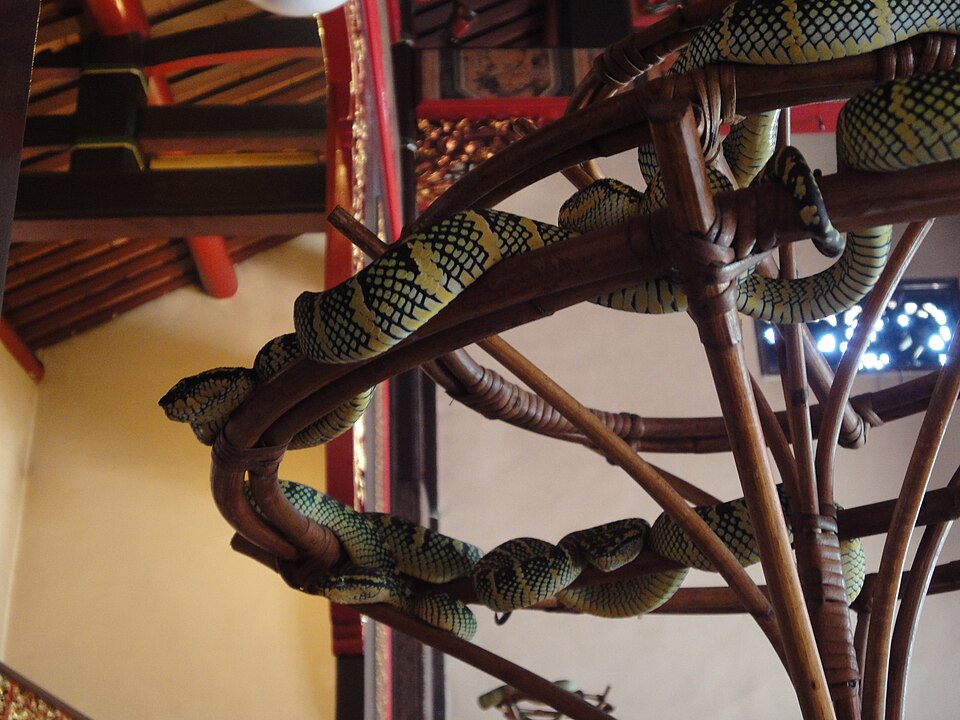
Most of the resident snakes are Wagler’s pit vipers, which are now often called temple vipers. These snakes are naturally nocturnal and stay very still during the daylight hours.
Thick smoke from burning incense is believed to keep the snakes in a calm and docile state. These vipers are naturally venomous. Thus, caretakers de-venom them to ensure visitor safety.
The temple features two brick wells known as the Dragon Eye Wells. Legend says they represent the eyes of a dragon that descended during the temple's consecration.
In 2005, a breeding center was established to help maintain the snake population on the grounds. This facility ensures that the tradition of having live snakes continues for future generations.
The temple holds a major celebration on Chor Soo Kong’s birthday during the Chinese New Year. Thousands gather for a flame-watching ceremony called Chneah Hoay to predict the year's economic outlook.
Visitors who are brave enough can visit a side room to take photos while holding a large python for a fee. This interactive experience allows people to feel the texture of the snake's skin up close.
Small gardens on the property grow local fruits like mulberry and chikhu for guests to see. Souvenir shops and eateries near the entrance serve the many people who visit every day.