Did you know that Laos is actually the most heavily bombed country in history? This small, landlocked nation has suffered more than any other in terms of explosives per person.
During the Vietnam War era, this small nation was part of a "Secret War". The United States military carried out an intense air campaign here for nearly a decade. Most of the world did not even know this was happening at the time.
The scale of the destruction is hard to imagine. Today, the people of Laos still live with millions of unexploded bombs hidden in their soil. This history has shaped how the country looks and how people survive today.
A Decade of Constant Bombing
Between 1964 and 1973, the U.S. military flew about 580,000 bombing missions over Laos. This is equal to a planeload of bombs being dropped every eight minutes, twenty-four hours a day, for nine years. Over 2.5 million tons of explosives were dropped across the countryside.
To put this in perspective, that is more than the total amount dropped on Germany and Japan combined during World War II. The main goal was to destroy supply routes like the Ho Chi Minh Trail. These paths were used by North Vietnamese troops moving through the jungle.
A large part of these explosives were cluster bombs. These are large canisters that open in mid-air and release hundreds of smaller explosives called "bombies". About 270 million of these small munitions were dropped on the land.
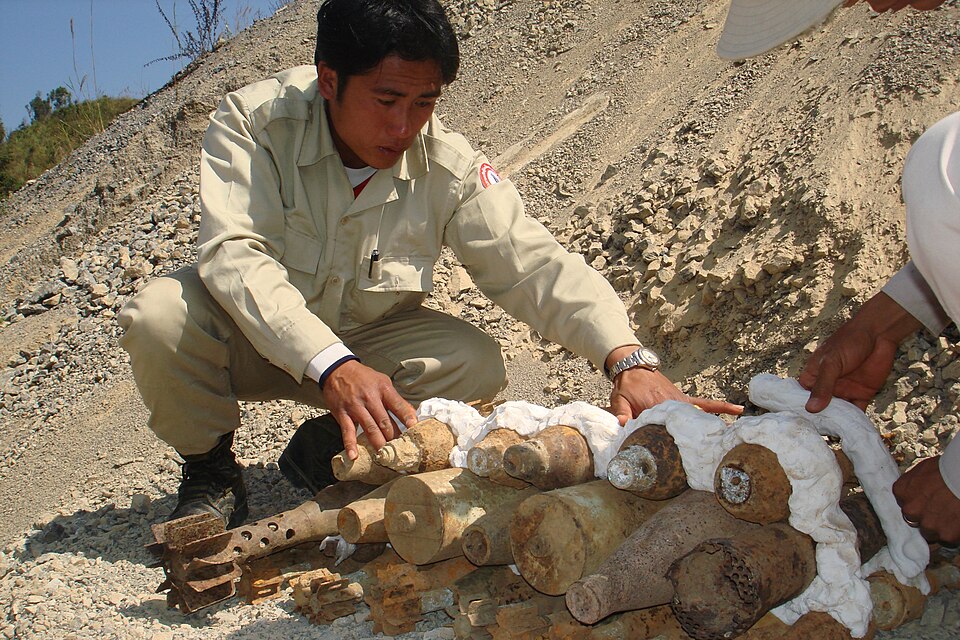
However, the biggest problem today is that many of these bombs did not explode as they were supposed to. Experts estimate that about 30 percent of the munitions were duds. This means around 80 million live "bombies" are still lurking in the ground.
These remnants are found in rice fields, school yards, and even in the centers of provincial towns. They look like small, rusty balls about the size of an orange, which often attracts curious children. Sadly, these items still cause about 300 casualties every single year.
Clearing these bombs is a slow, expensive, and very dangerous process. Currently, less than one percent of the contaminated land has been fully cleared.
Turning War Scrap into Daily Tools
Even though the bombs brought tragedy, the Lao people have found creative ways to survive. They often recycle the metal from large, defused bomb shells for everyday use. You can see fences, pillars for houses, and even vegetable planters made from old bomb parts.
In some river areas, people have even fashioned canoes out of old fuel tanks dropped by planes. Some guesthouses and restaurants decorate their rooms with defused munitions to show the local history. It is a unique way of turning objects of war into things that are useful for life.
One very famous spot is the "Plain of Jars" in Xieng Khouang Province. This is an ancient site with hundreds of giant stone jars that are over 2,000 years old.