


When Australian Prime Minister Anthony Albanese arrived in Bandar Seri Begawan in April 2026, the visit carried an urgency extending beyond diplomatic ceremony. Conflict in the Middle East had disrupted global fuel and fertiliser supply chains, placing Brunei’s role as a reliable regional producer firmly in focus.
During the two-day visit, Albanese met Sultan Haji Hassanal Bolkiah and signed a Joint Statement on Energy and Food Security. The agreement transformed a long-standing friendship into a practical commitment to maintain the flow of essential goods during periods of international uncertainty.
Securing Energy and Food Together
Brunei supplies nine percent of Australia’s diesel imports and 11 percent of its fertiliser-grade urea imports. Australia, meanwhile, is an important supplier of food and agricultural products to the Sultanate, creating a complementary relationship between energy and food security.
The joint statement committed both countries to maintain open, secure and resilient supply chains for petroleum, urea and agricultural products. They also agreed to avoid unjustified trade restrictions and consult each other when disruptions threaten energy or food supplies.
“Engaging with critical regional partners such as Brunei Darussalam and Malaysia will help ensure Australia’s energy supply remains secure during times of uncertainty,” Albanese said ahead of the visit.
At Brunei Fertilizer Industries, the Australian delegation explored opportunities to increase fertiliser supplies. The visit connected government commitments with the industrial capacity needed to support Australian farmers and food production.
Wong and Erywan Sustain the Diplomatic Momentum
Foreign Minister Penny Wong accompanied Albanese and held bilateral discussions with Brunei’s Second Minister of Foreign Affairs, Dato Erywan Yusof. Their April talks supported the leaders’ negotiations on fuel, fertiliser and supply-chain resilience amid disruption to shipping through the Strait of Hormuz.
“Working with our regional partners is more important than ever because energy security in our region is a shared challenge,” Wong said. Her meeting with Erywan demonstrated how the relationship operates across several diplomatic levels, linking strategic decisions with practical ministerial coordination.
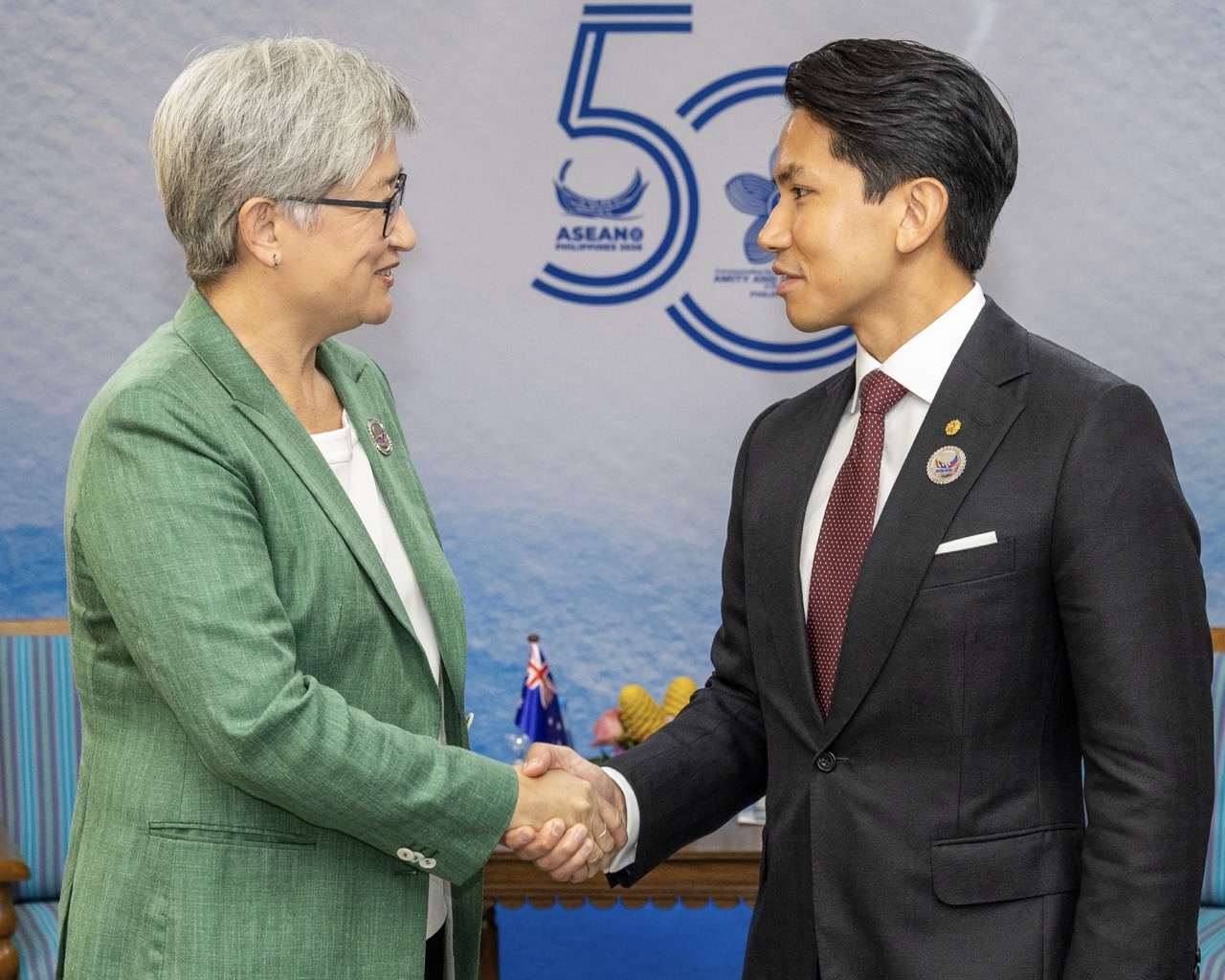
The two ministers met again during the ASEAN Foreign Ministers’ Meetings and related gatherings in Manila in July 2026. Their engagement took place as regional discussions focused on energy security, economic resilience and mounting tensions in the South China Sea.
The July meetings extended the partnership beyond bilateral supply concerns. They reinforced the importance of ASEAN-led dialogue, peaceful dispute resolution, maritime stability and cooperation under the broader Brunei–Australia Comprehensive Partnership.
A Partnership Built on Strategic Trust
The April agreement built upon the Comprehensive Partnership established in June 2023. Its three pillars cover economic cooperation, climate change and food security; defence, security and maritime affairs; and socio-cultural relations.
In their 2026 joint statement, Sultan Hassanal Bolkiah and Albanese described Brunei and Australia as “longstanding friends and Comprehensive Partners” whose relationship is grounded in “strategic trust, open markets, and rules-based trade.”
That trust has deep historical roots. In June 1945, Australian forces landed at Muara Beach during Operation OBOE VI as part of the Allied campaign to liberate Borneo. A permanent memorial now preserves the memory of a wartime connection that preceded formal diplomatic relations in 1984.
During his visit, Albanese paid tribute to the Australian personnel involved in the campaign, linking the sacrifices of the past with a modern partnership shaped by regional security and economic resilience.
Defence and Education Deepen the Connection
Australia and Brunei cooperate through military training, strategic dialogue, bilateral exercises and maritime-awareness activities. Their relationship also covers counter-terrorism, policing and immigration.
These links are increasingly relevant in the South China Sea, where both countries support stability, international law and freedom of navigation. ASEAN-led mechanisms, including the East Asia Summit and ASEAN Defence Ministers’ Meeting-Plus, provide wider platforms for that cooperation.
People-to-people ties offer an equally durable foundation. More than 12,000 Bruneians have studied in Australia, including ministers, senior officials and business leaders. Educational exchanges and programmes connecting Muslim communities add personal relationships to the partnership’s diplomatic and security frameworks.
From Hydrocarbons to a Shared Transition
Energy security extends beyond maintaining current fuel supplies. Brunei’s Wawasan 2035 seeks greater economic diversification, while Australia is expanding cooperation on renewable energy and the transition towards net-zero emissions.
Brunei’s energy expertise can be combined with Australian technology, research and investment in renewable energy, lower-emissions production, sustainable agriculture and aquaculture. AANZFTA, RCEP and the CPTPP provide established channels for expanding trade and investment.
From the wartime memory of Muara Beach to current discussions on diesel, fertiliser and renewable energy, Brunei and Australia have built a partnership capable of adapting to regional change. The April and July engagements showed that strategic trust becomes most valuable when it protects supply chains, supports dialogue and strengthens the stability of the wider region.


