Indonesian military institutions have spent years training Cambodian personnel. Cambodia and Indonesia do not share a border. They are not military allies in the way some countries are, either.
The scale became public in 2015, when Cambodian Prime Minister Hun Sen told President Joko Widodo that Indonesia had trained nearly 6,000 Cambodian Air Force personnel. The programme lasted four months and involved instructors from Indonesia's Presidential Security Detail (Paspampres).
The relationship traces back to the aftermath of the 1991 Paris Peace Agreements, when Indonesia deployed more than 3,900 peacekeepers as part of the United Nations Transitional Authority in Cambodia (UNTAC) mission in 1992-1993.
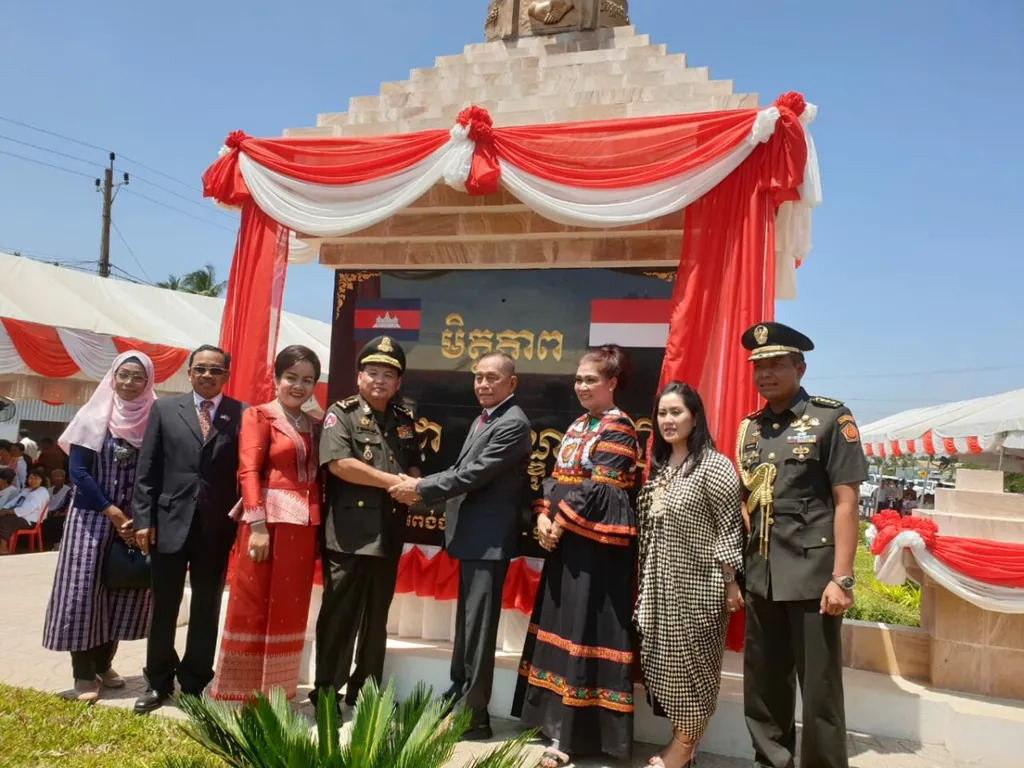
The peacekeepers were warmly received by Cambodians, and that goodwill helped rebuild ties between the two countries after years of Cold War era distance.
From Training to Military Cooperation
Indonesia and Cambodia formalised their defence relationship through a Defence Cooperation Agreement in 2017, signed on the sidelines of the ASEAN Defense Ministers' Meeting. The agreement covers military exchanges, defence dialogue, information sharing and defence-industry cooperation, as well as education and training.
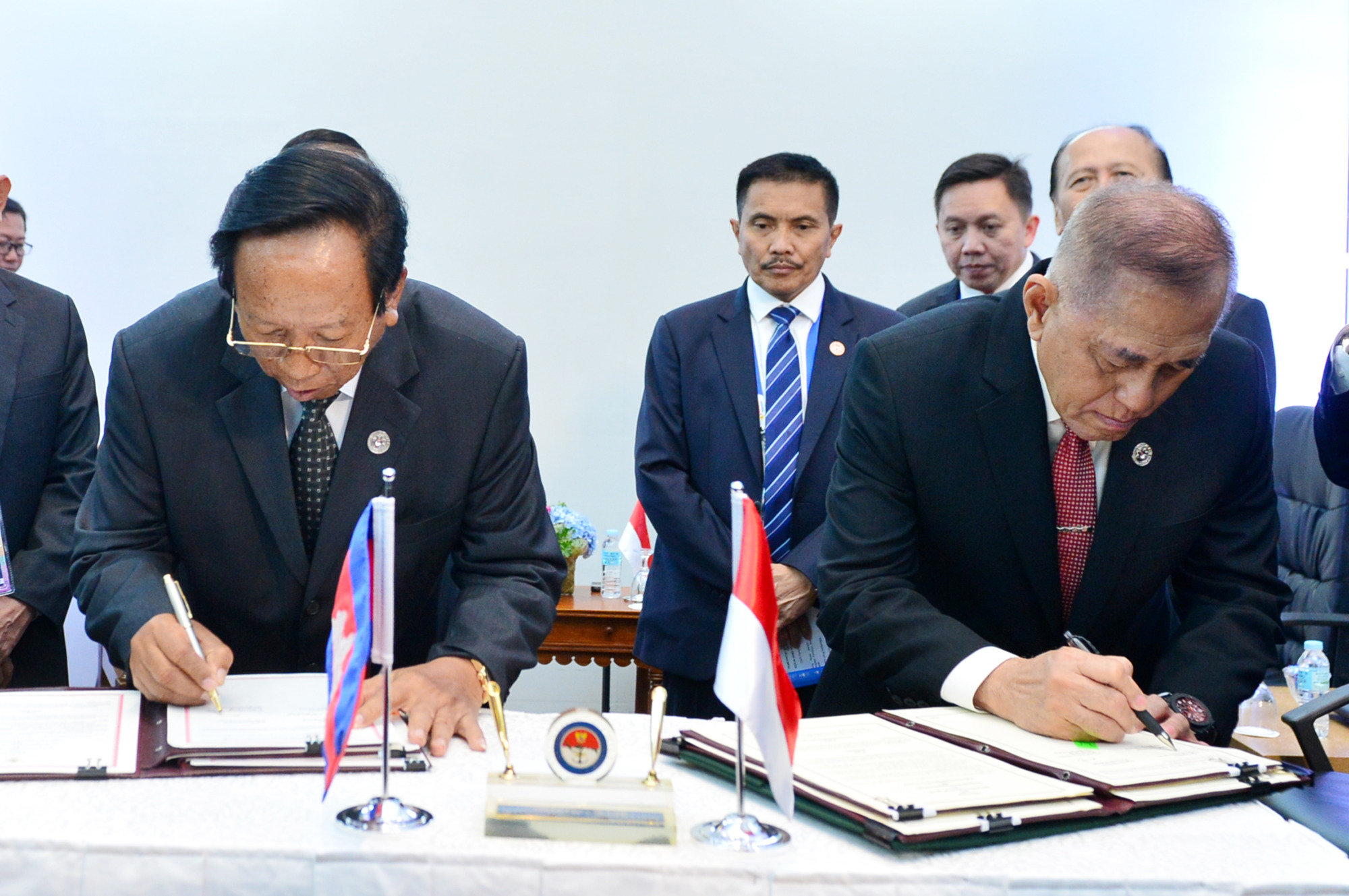
That formal signing was only the start. Under Indonesian law, defence agreements need parliamentary ratification to take full legal effect and that didn't happen until October 2024, when President Prabowo Subianto signed Law No. 70 of 2024 on Indonesia-Cambodia Defence Cooperation, alongside similar ratifications for India, Brazil, the UAE and France.
It took seven years for the 2017 agreement to become binding domestic law, even as military cooperation on the ground continued uninterrupted in the meantime. That framework has kept military education at the centre of the relationship.
Cooperation, in fact, predates the 2017 agreement by years. According to Indonesia's defence attache in Phnom Penh, Indonesia had already trained around 200 Cambodian troops since 2012, including personnel from Brigade 911 and Cambodia's National Counter Terrorism Special Forces.
Under the Army to Army Talks (ATAT) framework, taking roughly 20 soldiers a year through a six month commando course covering sniper training, anti-terrorism, military diving and other special forces skills.
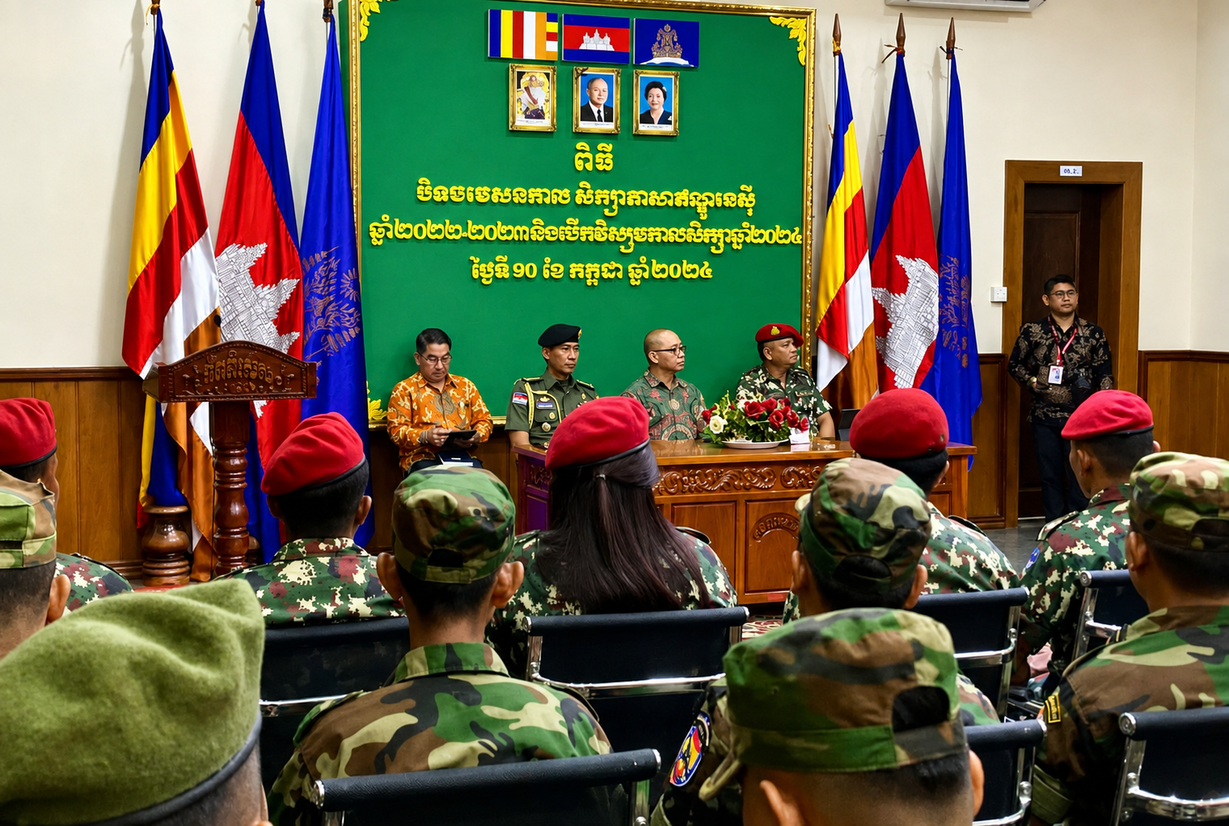
In 2024, 45 Cambodian Army personnel completed a four month Indonesian language course at Cambodia's 911 Special Forces Command in Phnom Penh. The course was designed for personnel who would later attend education and training programmes in Indonesia, according to the Indonesian military.
Why Indonesia?
Cambodia has several defence partners, including China, but its military cooperation is not limited to major powers.
Indonesia offers a regional partner with its own long-established military education system and specialised training institutions. For Cambodia, sending personnel to train in Indonesia also means working with another Southeast Asian military rather than relying entirely on countries outside the region.
The relationship has increasingly involved Cambodia's special forces as well. In 2024, Indonesia's Ministry of Defence officially delivered weapons and ammunition as a grant to the Cambodian Army's Special Forces Command. The shipment was transported from Indonesia to Phnom Penh using a TNI Air Force C-130J Super Hercules.
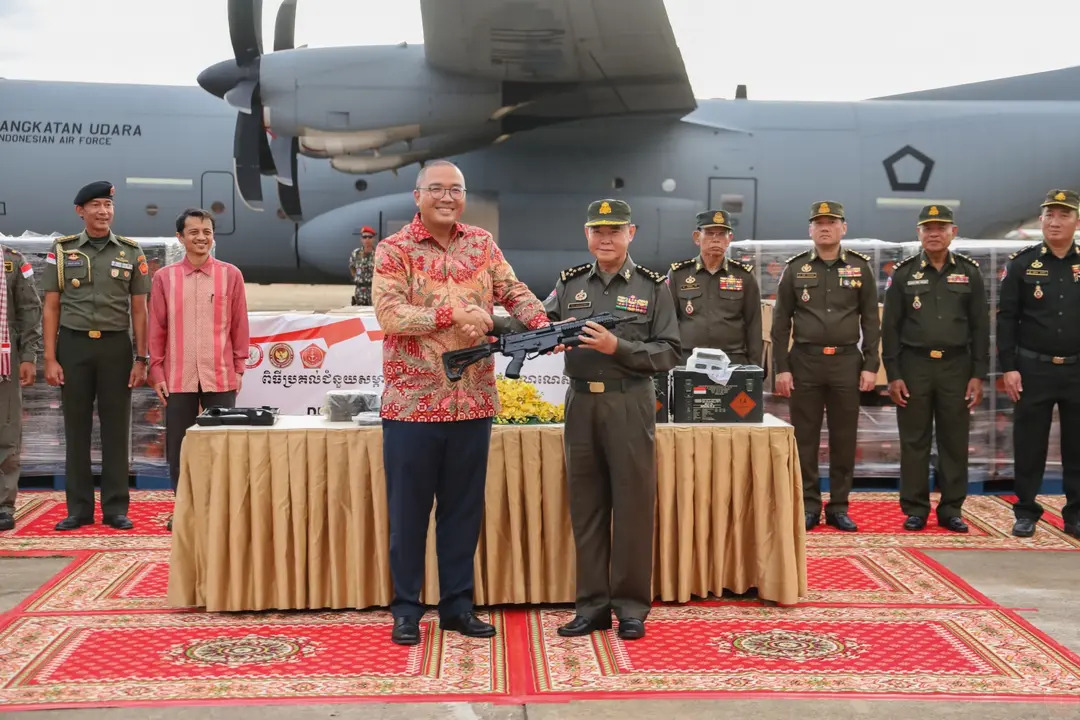
The transfer was followed by practical familiarisation. A 2025 TNI report said Indonesian and Cambodian personnel at the 911 Special Forces Headquarters conducted a weapons test involving equipment donated by Indonesia in 2024.
The Relationship Is Still Growing
The numbers illustrate the continuity. Cambodia reported nearly 6,000 Air Force personnel trained by Indonesia by 2015. In 2024, Cambodian Army personnel were still preparing for further training in Indonesia, while cooperation with the 911 Special Forces Command continued into 2025.
At the 4th Air Working Group between the Indonesian Air Force (TNI AU) and the Cambodian Air Force, held in Jakarta from July 28 to 31, the two air forces agreed to launch a reciprocal officer education programme starting in 2028.
Cambodian officers will attend Indonesia's Air Force Command School (Sekkau) and Staff and Command School (Seskoau), while Indonesian officers will, for the first time, pursue military education in Cambodia in return.
For most of the relationship's history, the flow of training ran almost entirely one way, with Cambodian personnel travelling to Indonesia to learn. Starting in 2028, that will change, with Indonesian officers training in Cambodia as well.