Thailand is the world's largest producer of natural rubber.
In 2024, Thailand produced about 33.5% of the world's natural rubber, according to Krungsri Research. Global production reached 14.9 million tonnes that year, putting Thailand ahead of Indonesia, Côte d'Ivoire and Viet nam. More than 82% of global natural rubber production came from Asia.
Thailand's position comes from a combination of a large plantation area, a long established rubber growing industry and an extensive processing and export network.
Rubber Found a Home in Southern Thailand
Rubber trees (Hevea brasiliensis) originated in South America before commercial cultivation spread across Southeast Asia.
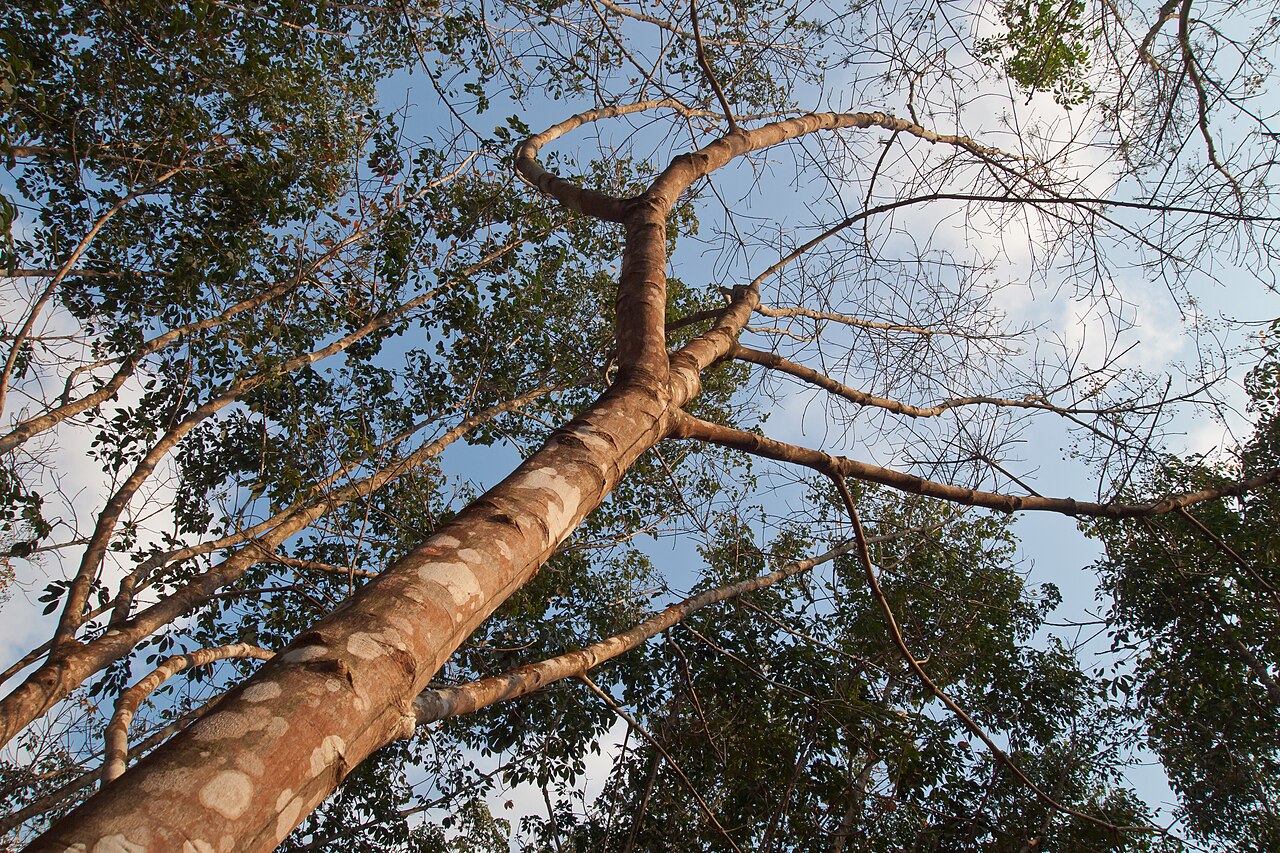
Thailand's commercial rubber industry began in the southern province of Trang. Thailand's government records identify 1899 as the year Phraya Ratsadanupradit Mahison Phakdi introduced the first rubber trees to Kantang district. The area later became an important centre for rubber cultivation and exports.
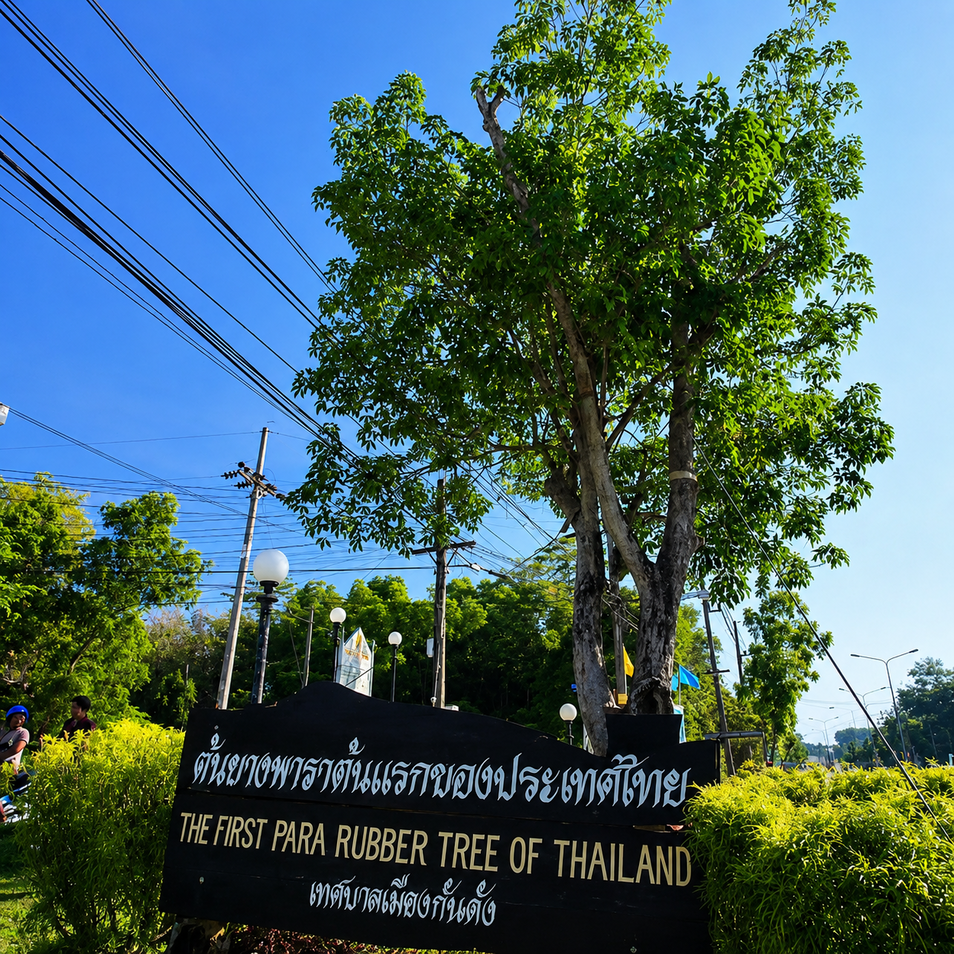
The South remains the country's main rubber growing region.
In 2025, Thailand had approximately 22.4 million rai, or about 3.58 million hectares, of harvested rubber plantations. Around 57% of the harvested area was in the South, while the Northeast accounted for 27%. The Southern share has declined from about 68% a decade earlier as rubber cultivation expanded into the Northeast.
Upstream rubber production reached an estimated 4.9 million tonnes in 2025, an increase of 1.1%. Krungsri attributed the increase partly to favorable weather and higher yields, as well as improved management of Circular Leaf Fall Disease.
China Is Thailand's Biggest Rubber Market
In 2024, the country produced around 5 million tonnes of intermediate rubber products. About 76.3% was exported, while the remainder supplied domestic manufacturers. The intermediate rubber industry had an estimated market value of THB374.7 billion (roughly US$10.5 billion) that year.
Thailand also ranks among the world's leading exporters of several intermediate rubber products. In 2024, it held the largest global export share for ribbed smoked sheets (26.7%) and concentrated latex (53.2%), while accounting for 24.7% of global technically specified rubber exports. Thailand also ranked first globally in mixed rubber exports by volume.
China is the largest destination for Thailand's intermediate rubber exports. In 2025, Thailand exported 4.6 million tonnes of intermediate rubber products worth approximately US$8.8 billion, with export volume increasing 6.4% from the previous year.
China accounted for 61.3% of the export volume, followed by Malaysia at 7%, Japan at 5.5%, the United States at 4.6% and India at 4%.
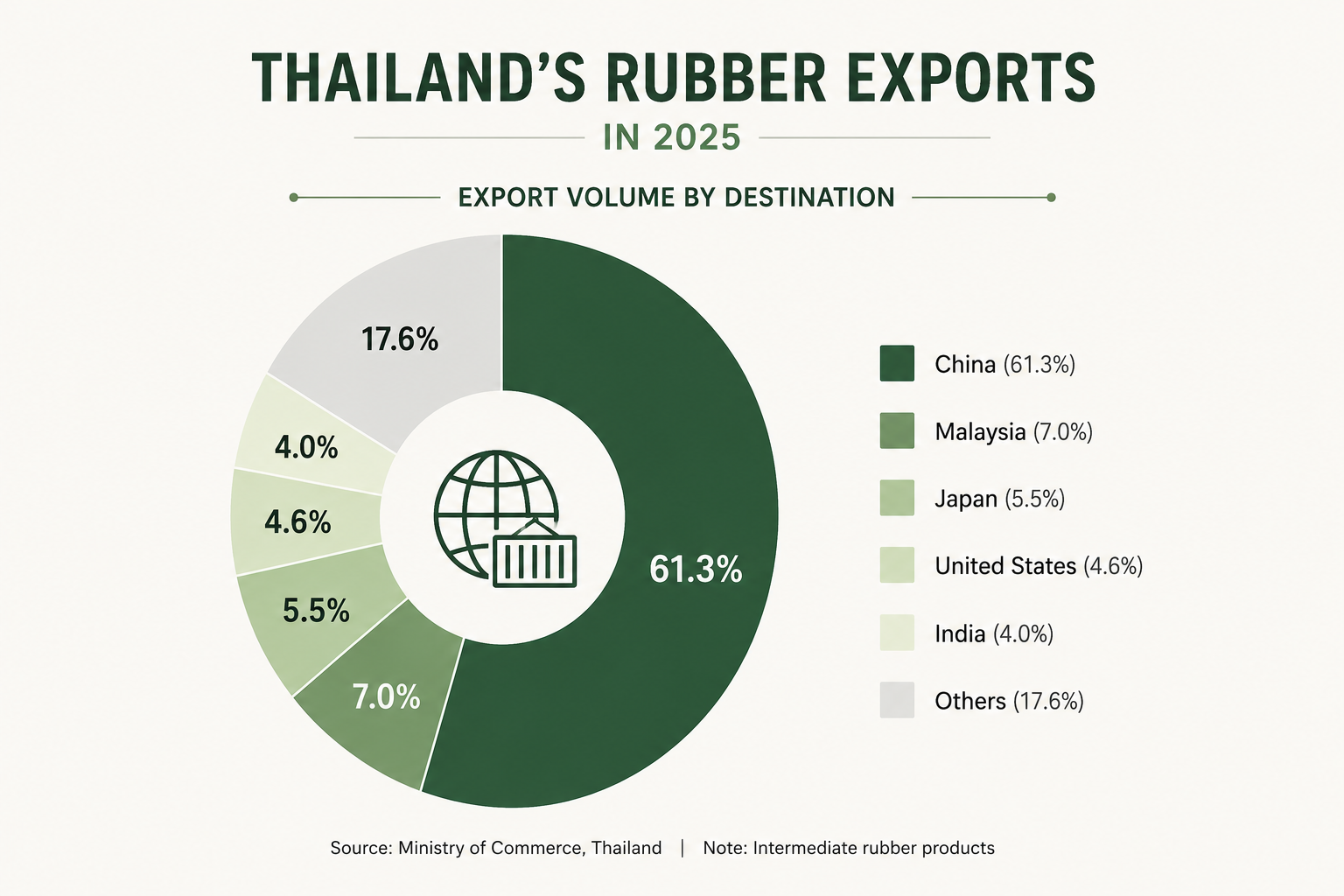
Thai exports to China reached approximately 2.8 million tonnes, up 24.3% from 2024. Krungsri linked the increase to demand from China's automotive and tire industries, including electric-vehicle manufacturing, as well as higher stockpiling by Chinese manufacturers.
Rubber Ends Up in Tires and Other Products
The automotive industry is one of the main users of Thai rubber.
In 2024, tires accounted for 47.3% of Thailand's domestic demand for intermediate rubber products. Other major applications included medical rubber gloves at 11.3% and elastic thread at 10.1%.
For 2026, Krungsri expects Thailand's rubber output to expand, supported by favorable weather, higher yields and incentives for farmers to maintain and harvest rubber trees. Export volumes are also projected to increase as automotive, tire and parts manufacturers rebuild inventories.
Thailand's rubber industry therefore links millions of hectares of plantations with processing facilities and manufacturing supply chains serving major automotive and industrial markets around the world.