


Myanmar’s cultural character is preserved in layers: gilded pagodas, ancient brick temples, colonial streets and communities whose traditions remain part of everyday life. Across mainland Southeast Asia’s largest country, spirituality and geography continue to shape a deeply distinctive national landscape.
Shwedagon Illuminates Yangon
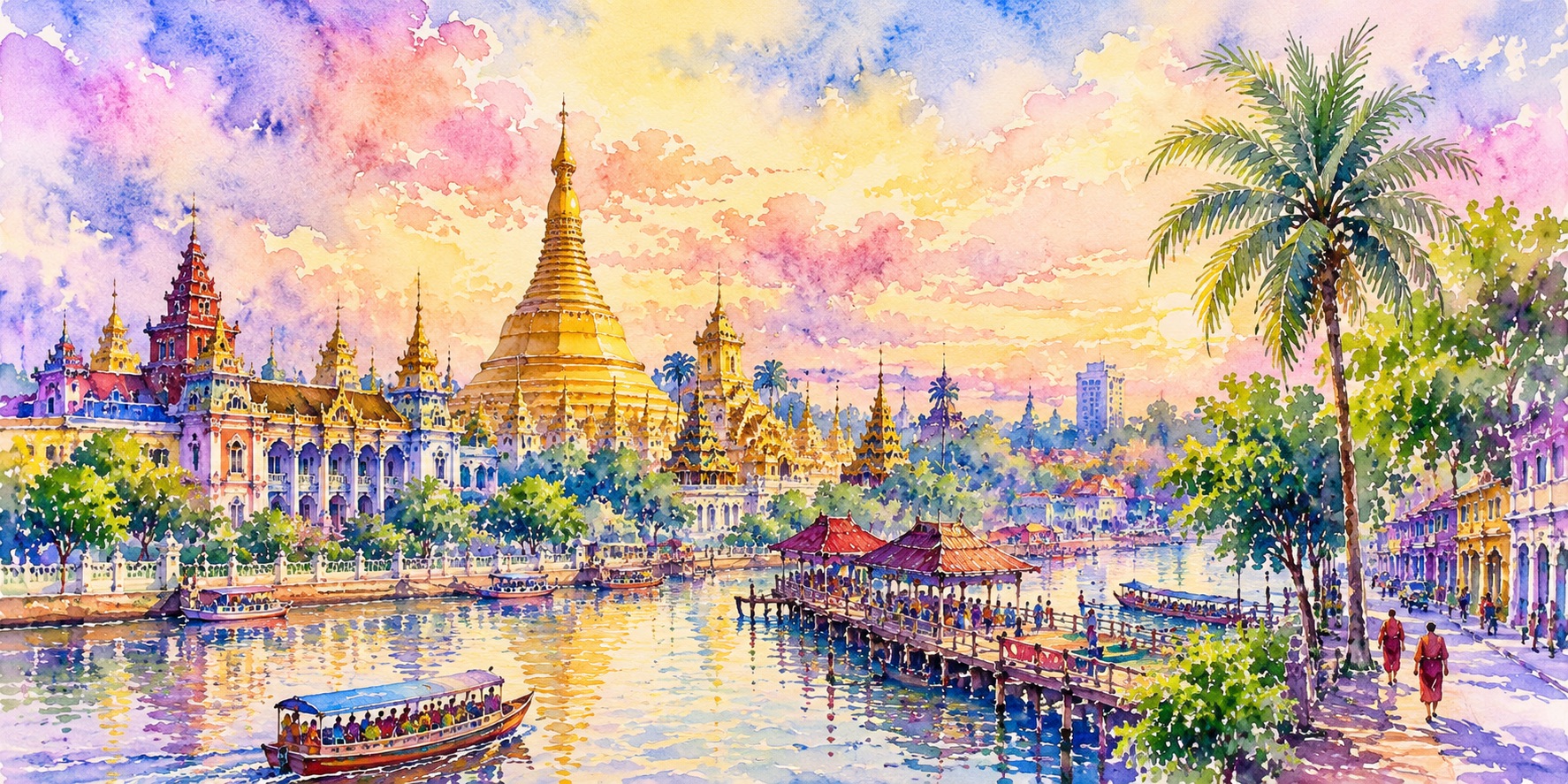
Rising 99 metres above Singuttara Hill, Shwedagon Pagoda dominates Yangon’s skyline. Buddhist tradition traces its origins back more than 2,500 years, while inscriptions and royal chronicles document centuries of rebuilding, enlargement and gilding. Its present form reflects contributions from successive monarchs and generations of devotees.
At sunset, the gold-covered stupa changes with the light as worshippers circle its marble platform, offer flowers and pour water over planetary posts representing the days of the week. Incense, bells and quiet chanting create a spiritual refuge within Myanmar’s largest city.
Architect and heritage advocate Daw Moe Moe Lwin has described Shwedagon as a place that gives Myanmar people “spiritual strength and a unique sense of security and being in Yangon.” Its importance comes not only from architecture, but from its continuing role in prayer, pilgrimage and collective memory.
Two Cities, Different Chapters of History
Below Shwedagon, downtown Yangon preserves one of Southeast Asia’s most extensive collections of colonial-era buildings. Former banks, offices and trading houses stand along a planned street grid around Sule Pagoda. Weathered façades share the streets with tea shops, markets and apartments, allowing history to remain part of contemporary urban life.
Farther north, Bagan presents an entirely different horizon. Located on a bend of the Ayeyarwady River, its plains contain 3,595 recorded monuments, including temples, stupas, monasteries, murals and archaeological remains. Built primarily between the 11th and 13th centuries, Bagan reflects an era when Buddhist merit-making inspired extraordinary artistic and architectural production.
Before Bagan’s inscription on UNESCO’s World Heritage List in 2019, archaeology official U Thein Lwin said recognition would “increase our national integrity and promote tourism.” The designation confirmed Bagan’s international significance, but earthquakes—including the devastating event of March 2025—have reinforced the need for careful conservation and technical support.
Traditions Worn, Shared and Woven
Myanmar’s heritage is equally visible beyond monumental architecture. Thanaka paste, made from ground bark, is applied to the cheeks for beauty, cooling and protection from the sun. Longyi remain widely worn, while roadside tea shops function as spaces for conversation and community.
Theravada Buddhism shapes the rhythm of many towns and villages. Monks and nuns receive morning offerings, families support monasteries, and religious festivals bring neighbourhoods together. These practices connect generosity with everyday social life.
At Inle Lake, artisans produce lotus silk from fibres extracted by hand from lotus stems. The wider Inlay Lake Biosphere Reserve, recognised by UNESCO in 2015, covers almost 490,000 hectares and includes floating gardens, stilt villages and the distinctive traditions of communities living around the water.
Heritage as a Source of Resilience
Myanmar covers 676,578 square kilometres, from Himalayan foothills to the Andaman Sea. The Ayeyarwady River runs for more than 2,000 kilometres through its heart, supporting agriculture, transport and historic settlements, while forests covered approximately 42.4 percent of the country in 2023.
At a time of profound national hardship, protecting these landscapes and cultural traditions carries added meaning. Conservation preserves more than beautiful objects; it sustains memory, skills and community identity.
From Shwedagon’s golden summit to Bagan’s brick plains and Inle’s floating gardens, Myanmar’s heritage endures because it remains lived, practised and renewed across generations.


