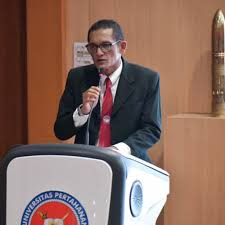
The 11th Eastern Economic Forum (EEF), held in Vladivostok, Russia, from September 1–4, 2026, served as a pivotal moment for strengthening the strategic partnership between Indonesia and Russia. Organized by the Roscongress Foundation with Russian government support, the annual forum centered on the theme ‘Developing the Far East for the Benefit of Its People’.
The theme aligns with Russia's efforts to strengthen its engagement with the Asia-Pacific region while attracting foreign investment to its Far East territory.
The attendance of Indonesian President Prabowo Subianto as the guest of honor marked a significant diplomatic milestone. Kremlin Foreign Policy Advisor Yury Ushakov confirmed Prabowo’s attendance on August 28, 2026, emphasizing that he was the only foreign head of state attending the forum.
The forum brought together government officials, business leaders, and stakeholders from various countries to discuss economic cooperation and the development of Russia's Far East region. For Indonesia, the event provided an opportunity to further develop its strategic partnership with Russia, particularly through the meeting between Prabowo and Russian President Vladimir Putin.
Another Meeting Between Prabowo and Putin
The highlight of Indonesia's participation in the 11th EEF was the bilateral meeting between President Prabowo and President Vladimir Putin, scheduled for September 3, 2026, in a business breakfast format. It would mark the sixth encounter between the two leaders and Prabowo's second visit to Russia in 2026.
Previously, the two leaders met for five hours in Moscow in April 2026 to discuss strengthening bilateral cooperation across strategic sectors, including the economy, energy, space, agriculture, industry, and pharmaceuticals. Russian Ambassador to Indonesia Sergei Tolchenov expressed hope that the strong rapport established between the two leaders would help finalize bilateral agreements and produce tangible results during the Vladivostok meeting.
The 11th EEF was also expected to serve as a venue for signing several new cooperation contracts between Indonesia and Russia. Tolchenov indicated that several agreements would likely be signed on the sidelines of the forum, while asking the public to await the official announcement.
The two countries were also expected to continue discussions on strengthening cooperation across various sectors, including the supply of grain, oil, and fertilizers.
Trade and Cooperation Continue to Grow
Cooperation between Indonesia and Russia has shown a positive trend in recent years. Bilateral trade reached US$5 billion in 2025, while mutual trade has more than doubled over the past five years.
The partnership holds potential to support Indonesia's economic transformation through industrial development, downstreaming, infrastructure, energy security, digital transformation, technological development, and sustainable development.
The legal foundation for this expanding partnership was established through the Declaration on Strategic Partnership between Russia and Indonesia, adopted by Putin and Prabowo during their meeting on the sidelines of the St. Petersburg International Economic Forum on June 19, 2025. The declaration provides an umbrella for cooperation in areas including trade, the economy, defense, and military-technical cooperation.
Another milestone came with the signing of the Indonesia-Eurasian Economic Union Free Trade Agreement (I-EAEU FTA) in December 2025. The agreement opens access to a US$3 trillion market comprising Russia, Kazakhstan, Belarus, Armenia, and Kyrgyzstan. Indonesia is currently in the process of ratifying the agreement.
Energy is another key priority. Indonesia has begun importing Russian oil as part of a plan to purchase 150 million barrels in stages through 2026. Cooperation in space technology is also being explored, with the two countries discussing the potential development of a spaceport in Biak, Papua, involving BRIN and Russia's Roscosmos.
A Wider Role for Indonesia in Russia’s Asia-Pacific Engagement
Indonesia's presence as the guest of honor at the 11th EEF reflects Russia's recognition of Indonesia's strategic position in the Asia-Pacific. Ushakov described Indonesia as one of Russia's key and proven partners in the region, as well as an influential ASEAN member and a significant representative of the Global South and the Muslim world.
The participation of diplomatic delegations from India, Mongolia, Myanmar, China, Laos, and other ASEAN countries further positioned the forum as a strategic multilateral platform. For Indonesia, this creates an opportunity to expand its economic cooperation networks while strengthening its position internationally.
Against this backdrop, Indonesia's participation in the 11th EEF represents more than a ceremonial appearance by a head of state. It provides an opportunity to translate the commitments outlined in the 2025 Strategic Partnership Declaration into concrete and mutually beneficial economic cooperation.
For Jakarta, closer ties with Russia align with President Prabowo Subianto's Asta Cita vision of advancing economic transformation and national resilience. For Moscow, Indonesia's engagement as a key Asia-Pacific partner offers opportunities to support the sustainable development of the Russian Far East and expand its economic engagement in an increasingly competitive region.
The meeting in Vladivostok could therefore mark another step toward a closer and more substantive Indonesia–Russia partnership.
This article was created by Seasians in accordance with the writing rules on Seasia. The content of this article is entirely the responsibility of the author.