Imagine you’re an Indonesian tourist having dinner in Thailand. You see a PromptPay QR at the counter, open your usual Indonesian payment app, scan it, and pay for your meal.
No cash exchange. No Thai bank account. No new payment app.
The merchant gets paid in Thai baht, while the money comes from your Indonesian account. So how does that actually work?
To make it easier to understand, let’s use Indonesia and Thailand as an example. Their QR payment systems were among the first in Southeast Asia to become directly connected, giving us a simple look at what happens behind a cross border QR payment.
It Starts With the QR Code
The merchant displays a PromptPay QR, Thailand’s national QR payment system. The Indonesian tourist opens a participating Indonesian payment app, scans it, enters the amount in Thai baht and confirms the transaction.
This became possible after Indonesia and Thailand connected their national QR payment systems in 2022.
Read here to learn more: Indonesia-Thailand QR payment integration.
The important part is that the two payment systems have been connected.
QRIS doesn’t replace PromptPay, DuitNow or Singapore’s QR system. Instead, the systems are interconnected, allowing a payment made through one country’s system to be processed through the other.
Your Rupiah Doesn’t Travel to Thailand
This is where things get interesting. Suppose a meal costs 100 baht, the merchant still thinks in baht. You see the equivalent amount in rupiah in your payment application and authorize the payment.
Behind the scenes, the payment infrastructure handles the conversion and settlement between the two countries.
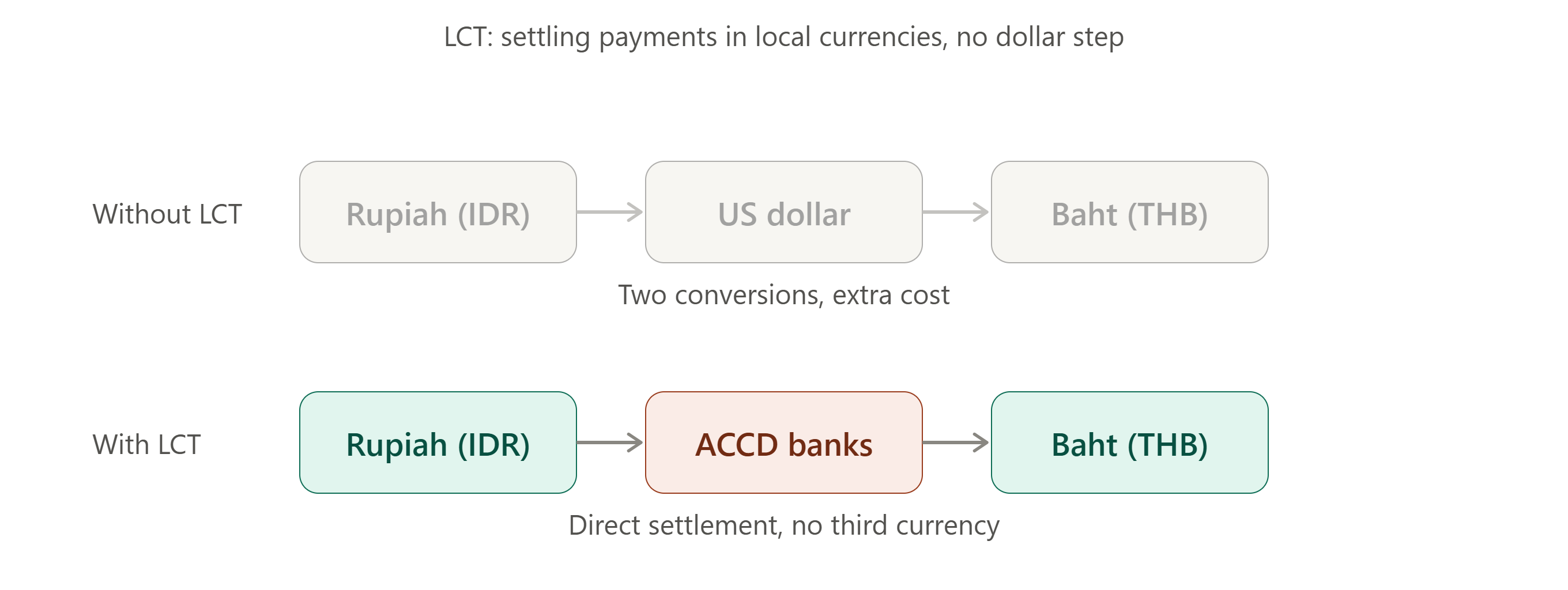
Bank Indonesia’s system uses Local Currency Transactions (LCT) for participating cross border payment arrangements, allowing transactions to be settled using the respective local currencies rather than requiring every payment to go through a third currency such as the US dollar.
In the Indonesia-Thailand connection, local currency exchange rates are provided through Appointed Cross Currency Dealer (ACCD) banks, helping determine the exchange rate used for the transaction.
So you don’t need to manually buy baht before dinner.
The merchant receives their money in the local currency, while the equivalent amount is deducted from your Indonesian payment source.
What Happens Between the Two QR Systems?
Think of it like two different railway networks connected by a bridge.
Your Indonesian payment application sends the payment instruction into Indonesia’s payment system. That system communicates with the partner country’s payment infrastructure, which then routes the transaction to the merchant.
Once the payment is authorized, the two sides handle the corresponding settlement between participating financial institutions. The QR code itself isn’t carrying your money. It mainly contains the information needed to identify the merchant and initiate the payment.
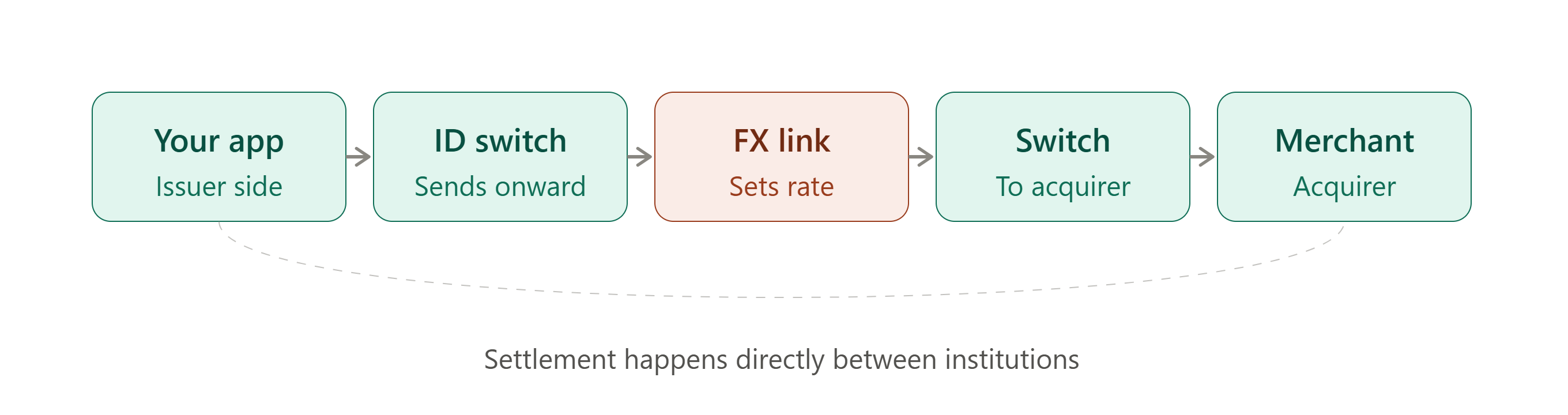
The actual movement of funds happens through the payment systems, switches and financial institutions behind it. And because these systems are interconnected, the transaction can happen almost instantly from the user’s perspective.
It Works Across Borders
The system isn’t only useful for Indonesians travelling abroad. It works in both directions.
A Malaysian tourist visiting Jakarta, for example, can use a participating Malaysian payment application to scan a QRIS code at an Indonesian merchant. This became possible when Indonesia and Malaysia launched their QRIS-DuitNow connection in 2023.
Singapore followed later that year. In November 2023, Indonesia and Singapore launched cross-border QR payment services, allowing customers of participating financial institutions in both countries to pay merchants across the border by scanning QR codes.
Read here to learn more: Indonesia-Singapore QR payment integration.
The principle remains the same, the customer uses their familiar payment application, while the merchant receives money in their own local currency.
The merchant doesn’t need to install a foreign QR code just to accept the payment.
Southeast Asia Is Building a Bigger Network
ASEAN central banks have been working toward Regional Payment Connectivity, with the goal of making cross border payments faster, cheaper and more inclusive while encouraging greater use of local currencies.
For users, however, none of that complexity is visible. You simply:
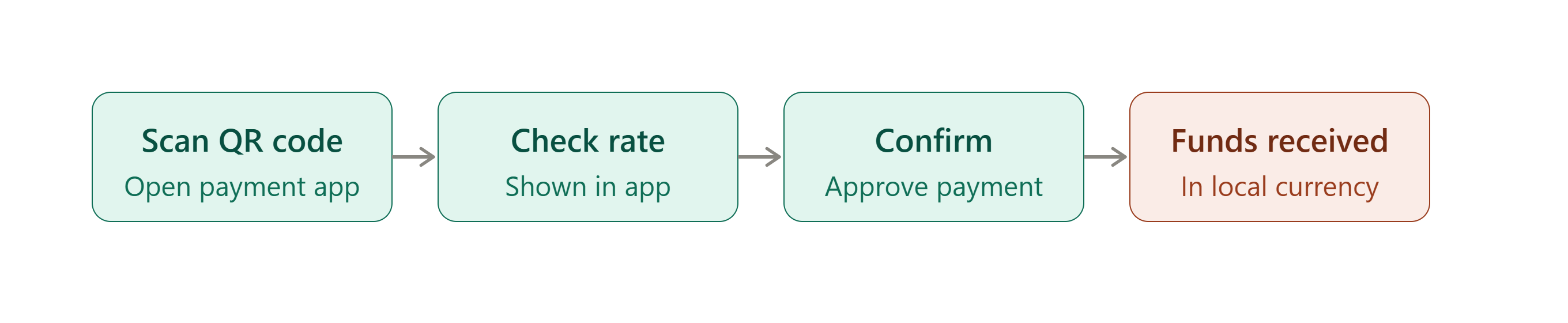
The infrastructure underneath is doing the hard work. Payment switches, banks, currency conversion, settlement systems and agreements between financial institutions and central banks.
That’s why, in an increasingly connected Southeast Asia, paying for dinner abroad can sometimes be as simple as scanning a foreign QR code with the payment app you already use at home.