

Did you know that the Philippines actually got its name from a king of Spain?
The name of the Philippines carries a long colonial history tied to a sixteenth-century Spanish monarch. Before Spanish explorers arrived, the islands did not have a single unified name. Instead, local societies operated as independent kingdoms, rajahnates, and trading ports with their own regional names.
Everything changed in 1543 when a Spanish expedition sailed into Southeast Asia. The expedition leader named a few eastern islands after Crown Prince Philip of Spain. Over time, this single royal title grew to represent the entire nation.
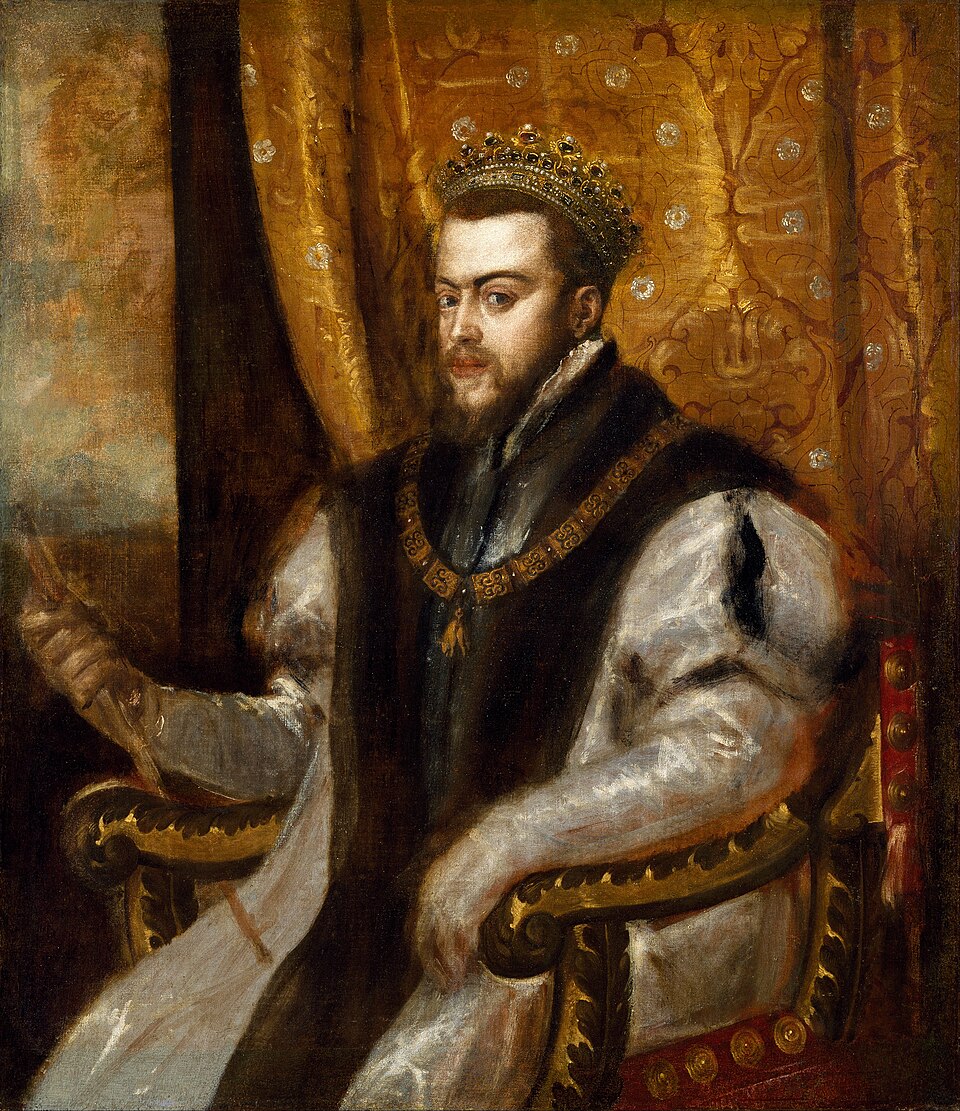
Prince Philip was only sixteen years old when his name was first attached to the territory. He later became King Philip II and ruled Spain during its famous Golden Age. Surprisingly, the monarch never set foot on the islands that bear his title.
Read also: The First Asians in America Were Filipino Sailors
From a Prince's Name to an Archipelago
Spanish explorer Ruy López de Villalobos led the 1543 voyage across the Pacific Ocean. Upon landing, he or one of his captains designated Leyte and Samar as Las Islas Filipinas. This designation was a strategic political move to claim the territory for the Spanish crown.
The name was not originally intended for the whole island chain. Other islands in the region received completely different names during the same journey. For example, Mindanao was called Caesarea Karoli in honor of Holy Roman Emperor Charles V.
Initial Spanish attempts to colonize the area faced severe hardship and failure. Villalobos eventually fled to the Moluccas, where he died in prison. Despite this early failure, the name given to those two eastern islands survived.
Moreover, permanent Spanish colonization began when Miguel López de Legazpi arrived in 1565. As Spanish administrators consolidated power, they needed a single official term for the entire territory. They officially expanded Las Islas Filipinas to encompass the whole archipelago.
Spain ruled the territory for more than three centuries under this colonial label. In 1898, the United States took control of the region after the Spanish-American War. The American authorities translated the Spanish title into English, referring to the land as the Philippine Islands.
When the country gained full independence in 1946, citizens formally retained the name. The official title became the Republic of the Philippines. Through this transition, a colonial label was reshaped into an emblem of national sovereignty.
Read also: Turns Out, Minahasan Languages Are Closely Linked to Filipino
The Language Twists
A curious linguistic feature is why the country starts with "Ph" while the people are called Filipinos with an "F". "Philippines" comes from the English translation of the Spanish name. Meanwhile, "Filipino" comes directly from Spanish grammar, which retained the letter "F".
Another fun fact involves local terminology for the main northern island of Luzon. The Chinese name for Luzon was Liusung, which came from the Tagalog word lusong. This Tagalog word literally refers to a large wooden mortar used for pounding rice.
The Tagalog alphabet also lacked the letter "F" for many decades. Because of this, locals historically pronounced and wrote the country's name as Pilipinas. The letter "F" was officially added back to the modern Filipino alphabet in 1987.



