On July 3, 2003, two Indonesian F-16s were scrambled over the Java Sea to investigate unidentified aircraft near Bawean Island.
They soon discovered that the aircraft weren't random intruders.
They were US Navy F/A-18 Hornets.
What followed was an 18 minute standoff, one of the most tense military encounters between Indonesia and the United States in the air.
It Started With Unknown Aircraft
Indonesian air defense radar at Ngurah Rai International Airport in Bali first detected suspicious aircraft northwest of Bawean Island around midday, flying between 4.6 and 10.7 kilometers above the ground (15,000-35,000 feet), according to reports cited by Angkasa Aviation Magazine.
The contacts briefly vanished, then reappeared three hours later near the Green 63 civil flight route, about 122 kilometers (66 nautical miles) from Surabaya. Because the aircraft weren't communicating with air traffic control, they were considered a potential danger to civilian aviation.
At 17:02, two armed F-16B Fighting Falcons of the 3rd Air Squadron took off from Iswahjudi Air Base.
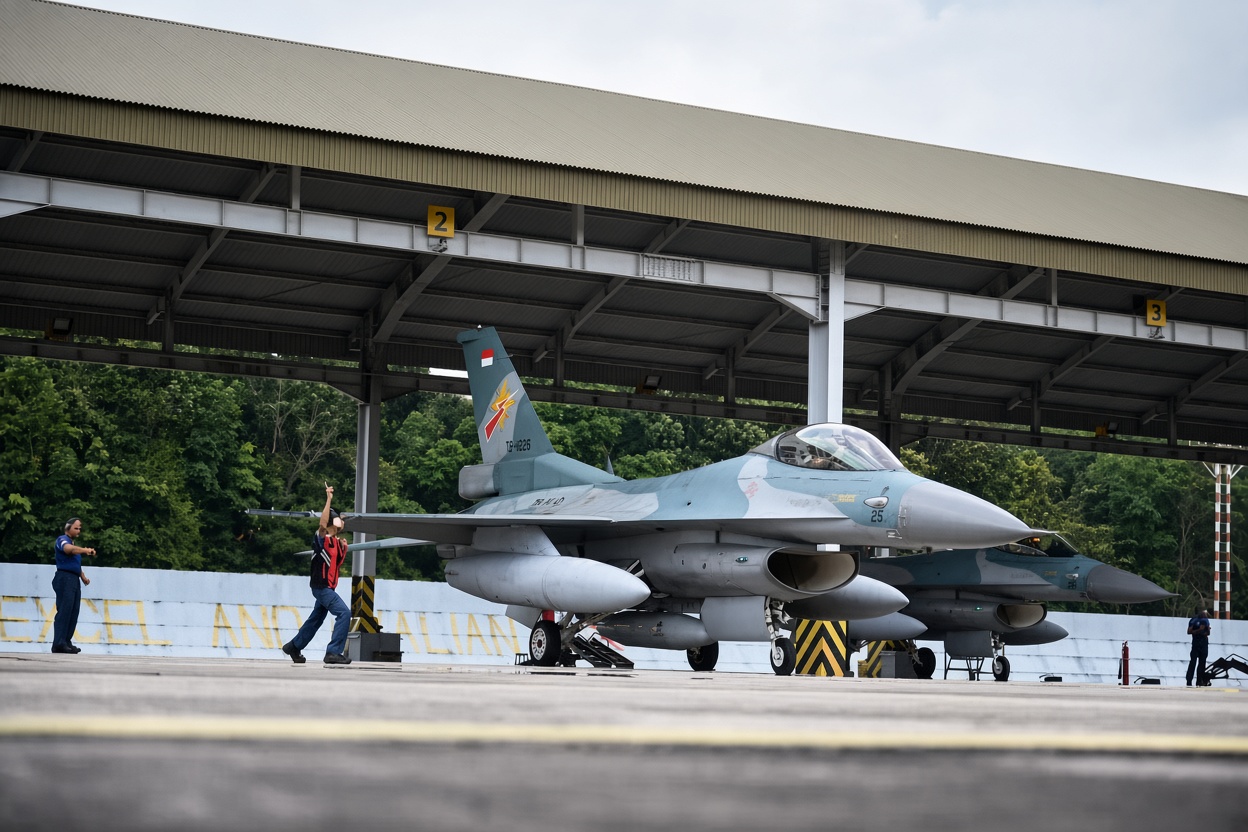
Falcon 1 (tail number TS-1603), flown by Capt. Ian Fuady and Capt. Fajar Adriyanto, and Falcon 2 (TS-1602), flown by Capt. Tony Harjono and Capt. Satriyo Utomo. Both jets were armed with AIM-9P Sidewinder missiles and 20mm cannons.
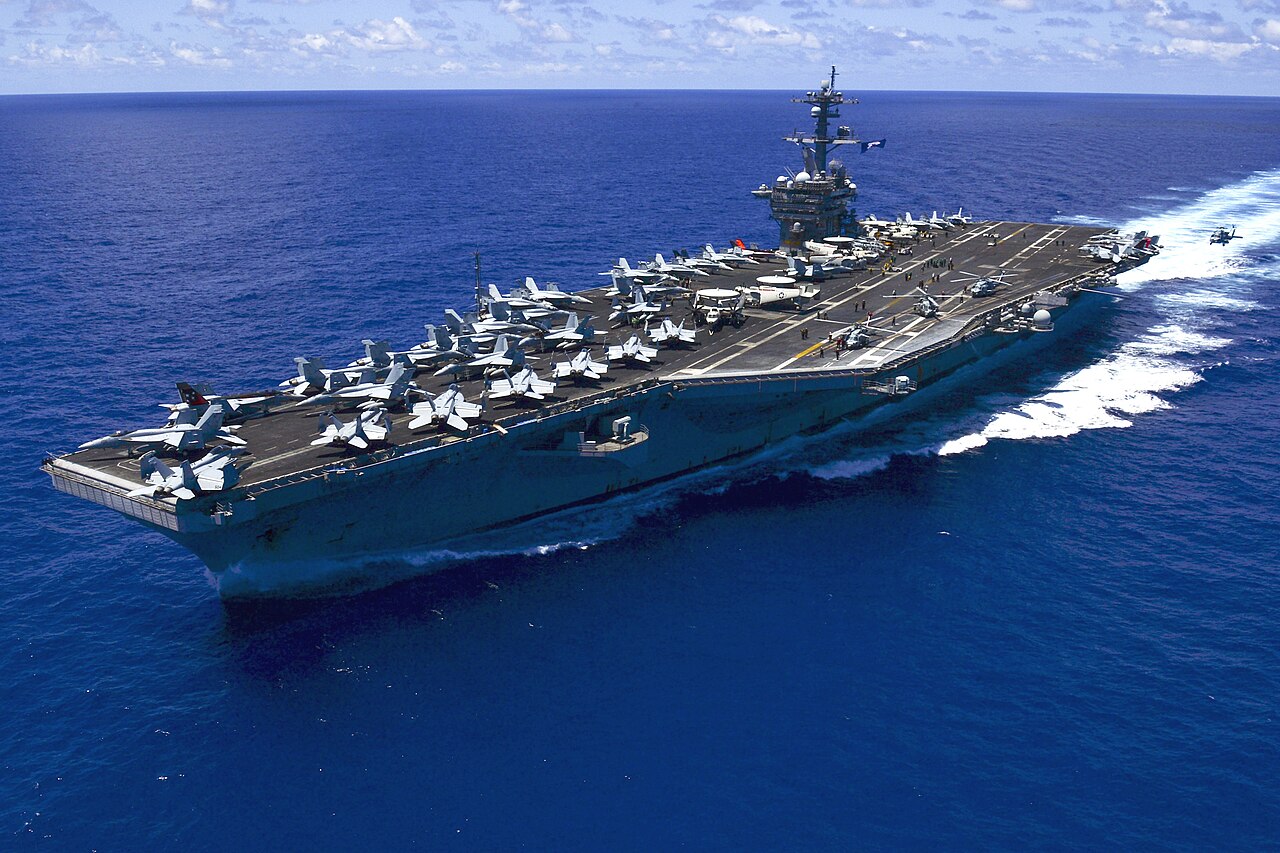
Guided by Surabaya's air surveillance radar, the F-16s eventually identified the aircraft as US Navy F/A-18 Hornets operating from the aircraft carrier USS Carl Vinson.
Both Sides Locked Onto Each Other
This wasn't a one sided standoff. At 17:22, both sides began jamming each other's electronics.
Moments later, Falcon 1 was radar locked by one of the Hornets, but the Indonesian pilot fought back electronically. An 18 minute dogfight followed, involving mutual radar locks and electronic warfare on both sides, not just an American lock on the Indonesians.
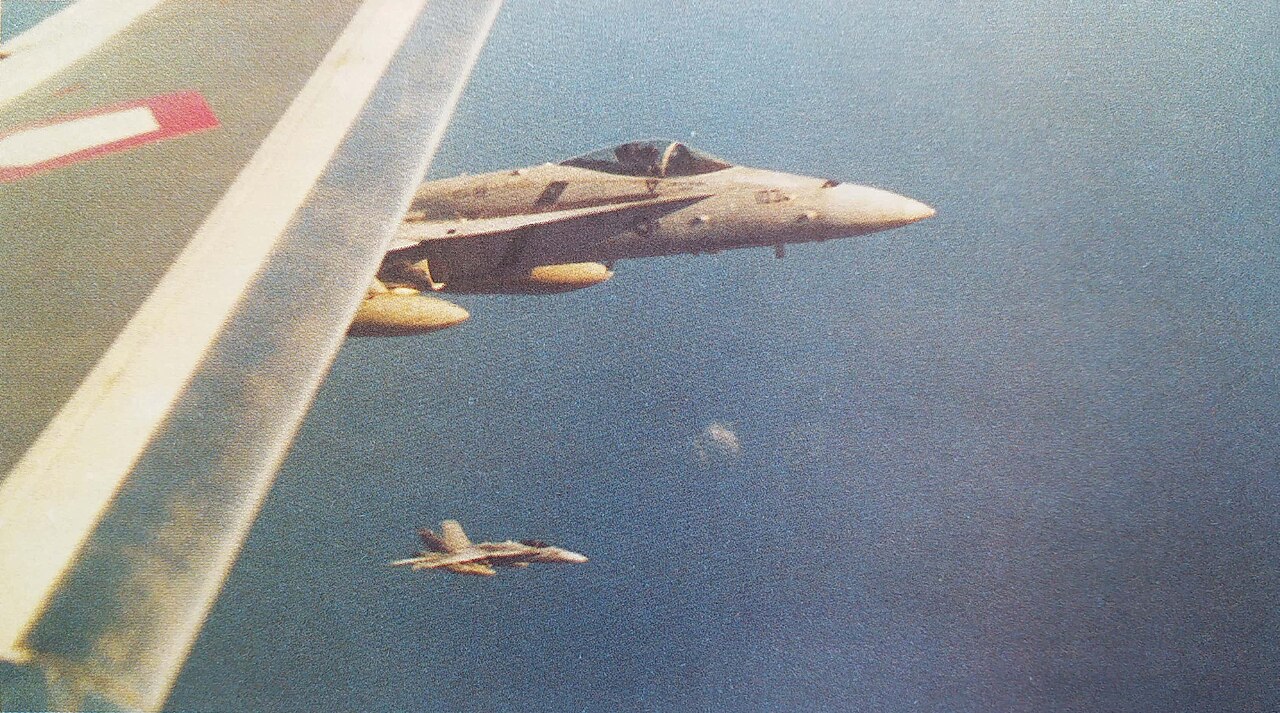
Despite this, no missile was launched and no aircraft was shot down.
The Indonesian F-16s weren't sent out looking for a fight, their mission was to visually identify the unidentified aircraft while avoiding unnecessary confrontation.
Even though at least one F-16 was reportedly in a position where it could have engaged the Hornets, the pilots had been ordered to avoid opening fire unless absolutely necessary. Escalating further could have turned an airspace dispute into a major international crisis.
Instead, Falcon 2 rocked its wings as a signal of peaceful intent, and Falcon 1 established radio contact with the American pilots. The Hornets said they were operating in international waters. Indonesia disagreed, maintaining the aircraft were inside Indonesian airspace and territorial waters.
The Hornets then broke away and returned to Carl Vinson, while the Indonesian F-16s returned to Iswahjudi.
Five Hornets, a Carrier Strike Group
The Indonesian fighters had originally detected five US Navy F/A-18s. During the encounter, Falcon 1 also spotted an aircraft carrier, two frigates, and a tanker heading east, the USS Carl Vinson carrier strike group, mid deployment in the Western Pacific.
Indonesia's House of Representatives later pushed the government to file a formal diplomatic protest.
The US Embassy in Jakarta claimed the convoy had requested permission to transit and had notified Indonesian authorities beforehand, Jakarta denied ever receiving that notification.
Indonesian Air Marshal Wresnowiro offered a more nuanced explanation that the US had in fact requested permission, but Indonesia's own bureaucracy was too slow to issue the clearance in time.
No Shots Were Fired
Despite the dramatic circumstances mutual radar locks, jamming, and an 18 minute dogfight, the Bawean incident ended without a single shot fired.
Both sides fighters were armed and locked onto each other in a genuine two way engagement, and de-escalation came down to discipline and a wing rock signal, not near misfire.
In the end, communication prevented the situation from becoming much worse.
For eighteen tense minutes over the Java Sea, Indonesian F-16s and American Hornets found themselves facing each other with weapons ready, and it was restraint on both sides, not luck, that kept it from becoming something far worse.