


At Bharat Mandapam in New Delhi, the 18th BRICS Summit brought together an expanded group of emerging economies seeking practical responses to an increasingly unsettled world. Held on September 12–13, 2026, the gathering placed resilience, innovation, cooperation and sustainability at the centre of a partnership that now reaches deeply into Southeast Asia.
From an Economic Acronym to a Global Platform
The term BRIC began as an investment acronym coined in 2001 for Brazil, Russia, India and China. Those countries developed it into a diplomatic forum, holding their first leaders’ summit in 2009. South Africa joined the following year, turning BRIC into BRICS.
Two decades after the grouping’s first ministerial meeting, its agenda extends far beyond emerging-market economics. BRICS now coordinates positions on development finance, global governance, trade, health, technology, energy and people-to-people cooperation. It is not a treaty-based alliance, and its members do not agree on every international issue. Its decisions instead depend on consensus among countries with different political systems and strategic relationships.
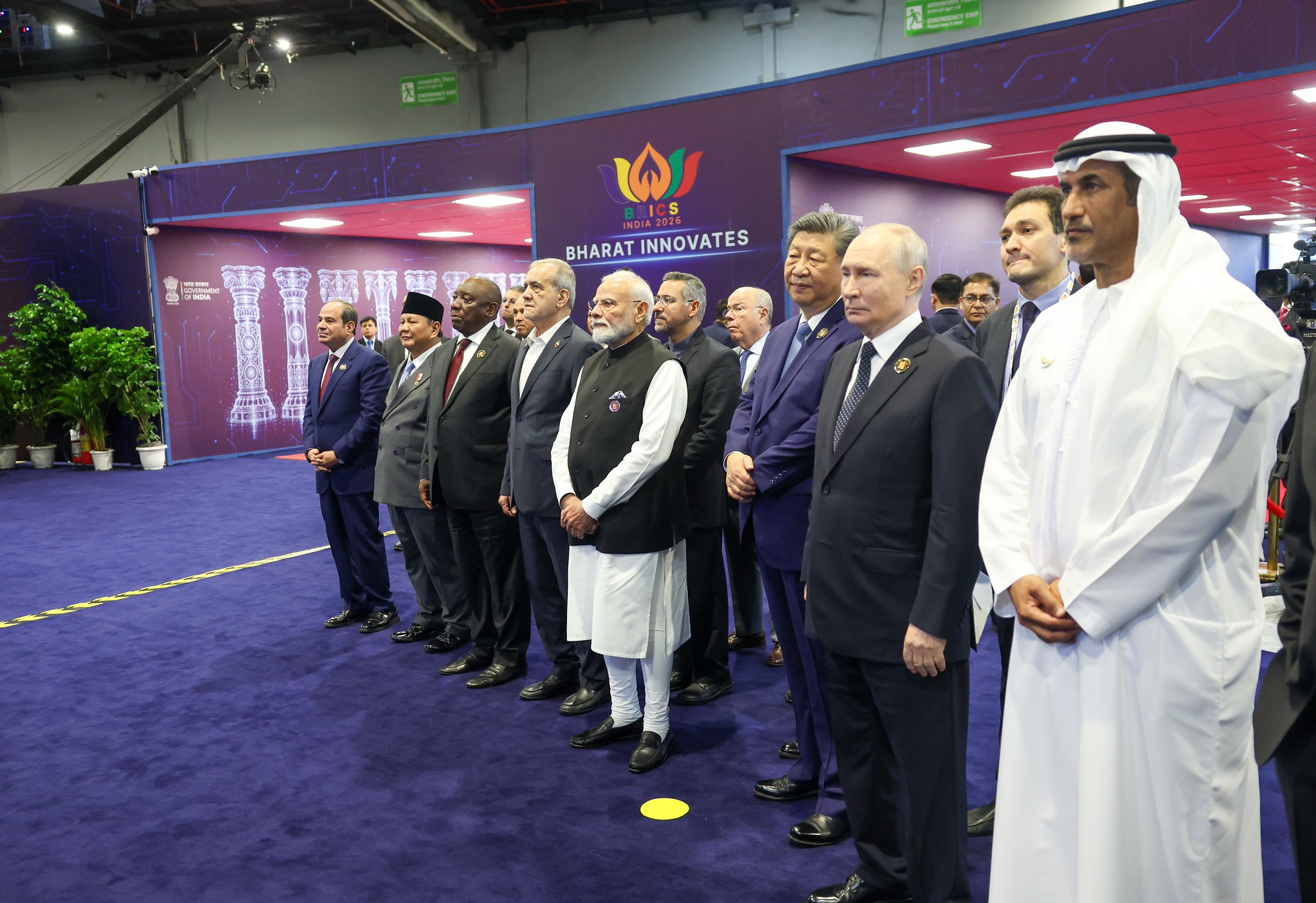
The Indian presidency officially described BRICS as comprising 11 countries: Brazil, Russia, India, China, South Africa, Egypt, Ethiopia, Iran, the United Arab Emirates, Indonesia and Saudi Arabia. Saudi Arabia’s position, however, remains unusual because Riyadh has not publicly confirmed its accession with the same clarity as the other new members.
According to figures released by India’s Press Information Bureau, the expanded grouping represents approximately 49.5 percent of the world’s population, 40 percent of global gross domestic product and 26 percent of international trade. These figures give BRICS substantial influence, although its effectiveness ultimately depends on whether declarations can be converted into shared programmes.
New Delhi Turns Dialogue into Action
India hosted the summit under the theme Building for Resilience, Innovation, Cooperation and Sustainability. The gathering concluded a presidency that organized more than 400 meetings and high-level engagements across 30 Indian cities, extending BRICS diplomacy beyond the national capital.
The 140-paragraph New Delhi Declaration, adopted by consensus on September 12, covered the reform of multilateral institutions, trade, finance, climate action, energy security, artificial intelligence, agriculture, health and cultural cooperation. It called for greater representation of developing countries in institutions such as the United Nations, World Bank and International Monetary Fund.
The declaration also supported the BRICS Incubator Network and further consideration of a BRICS Startup Innovation Fund. Other initiatives included cooperation on logistics and supply chains, digital agriculture, smart grids, energy storage, urban mobility, regenerative agriculture and early-warning systems for infectious diseases and natural disasters.
These programmes reflect an effort to bring BRICS closer to everyday economic concerns. More reliable supply chains affect food prices and manufacturing jobs, while cooperation on digital agriculture could help farmers use satellite information, artificial intelligence and connected services to respond to weather and production risks.
“Our effort has been that BRICS cooperation should not remain limited to governments. Our entrepreneurs, farmers, researchers, women, youth and ordinary citizens should also become active participants,” Indian Prime Minister Narendra Modi said during the summit.
Five Southeast Asian Countries Join the Conversation
Southeast Asia had a stronger presence in New Delhi than at any earlier BRICS summit. Five ASEAN countries were represented through different levels of participation.
Indonesia attended as a full member, represented by President Prabowo Subianto. Malaysia, Thailand and Vietnam participated as BRICS partner countries, while Philippine President Ferdinand Marcos Jr. joined the outreach session as chair of ASEAN for 2026.
Their presence showed that ASEAN’s engagement with BRICS is developing through several channels rather than through a single regional position. Indonesia has chosen full membership, while Malaysia, Thailand and Vietnam have entered the partner-country framework. The Philippines, which is not a member or partner, participated as the representative of the 11-member ASEAN community.
Marcos used the outreach session to connect BRICS priorities with the Philippines’ ASEAN chairship theme, Navigating Our Future, Together. He highlighted peace and security, economic connectivity and people-centred development while emphasizing ASEAN centrality and international law.
“Indeed, international and regional groupings may diverge on issues, thrusts, and interests,” Marcos said before leaving for New Delhi. “It is our conviction, however, that as a broader community of nations, it is imperative that we coalesce and cohere around issues that impact on us collectively.”
For Southeast Asia, those shared issues include disaster preparedness, energy security, digital payments and resilient supply chains. Indonesia could use BRICS networks to expand cooperation in critical minerals, renewable energy and downstream manufacturing. Malaysia, Thailand and Vietnam can participate in sectoral programmes without assuming the full responsibilities of membership.
The Philippines also pursued practical bilateral opportunities during the visit. Discussions with India covered railway development, space technology, digital payments, pharmaceuticals, agriculture and disaster resilience, demonstrating how a multilateral summit can generate localized cooperation.
Local Currencies Without a Common BRICS Currency
BRICS members continued to support greater use of national currencies in trade and investment, alongside better interoperability among their payment systems. The approach could reduce transaction costs and exposure to exchange-rate disruptions for companies trading across member economies.
The summit did not create a common BRICS currency. Instead, the New Delhi Declaration endorsed gradual cooperation, including local-currency financing by the New Development Bank and stronger links between national financial systems.
This distinction is important for Southeast Asian businesses. An Indonesian exporter or Malaysian technology company would benefit more immediately from faster, less expensive cross-border transactions than from a politically complex new reserve currency. The practical question is whether technical standards and regulations can be aligned without weakening financial safeguards.
Building a Fairer Green Transition
Energy and climate cooperation formed another major part of the declaration. BRICS supported the Paris Agreement and called for a just, orderly and inclusive transition that reflects the different development conditions of member countries.
The bloc’s members possess significant reserves of nickel, rare earth elements and other minerals needed for batteries, renewable energy systems and electric vehicles. Indonesia’s nickel industry gives Southeast Asia an especially important position within this conversation.
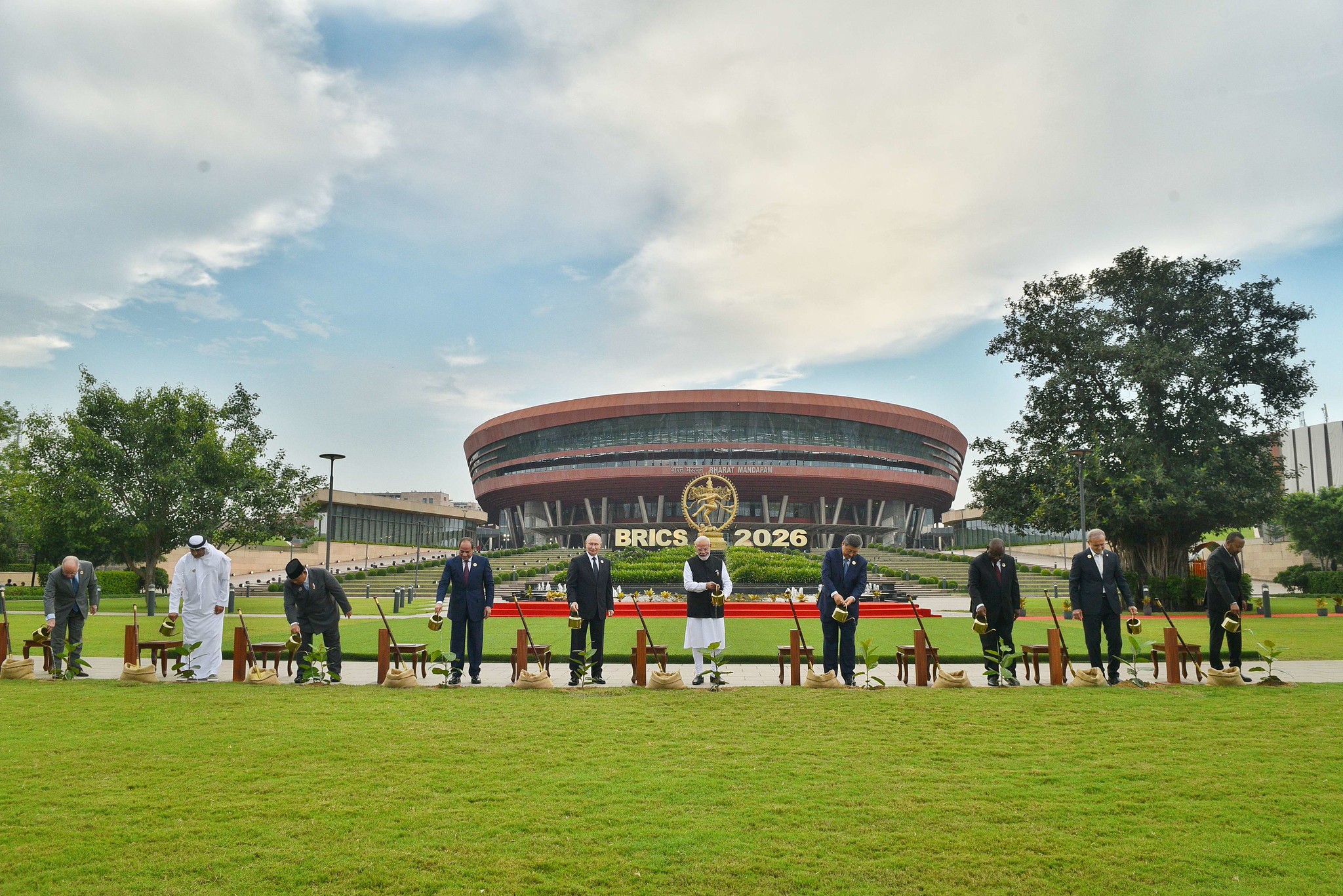
Cooperation could help BRICS countries move beyond exporting raw materials by developing processing, manufacturing, research and recycling capacity. Yet the success of this approach will depend on environmental protection, responsible mining and benefits reaching workers and surrounding communities.
The summit also illustrated BRICS’ diplomatic function. Members with sharply different positions, including Iran and the United Arab Emirates, supported a declaration calling for restraint and dialogue amid escalating tensions in the Middle East. On the sidelines, Narendra Modi and Chinese President Xi Jinping held talks intended to stabilize relations between Asia’s two largest countries.
A Partnership Entering Its Next Chapter
The New Delhi summit demonstrated BRICS’ growing reach, but expansion also brings the challenge of maintaining consensus across a highly diverse membership. Its future credibility will be judged through working payment connections, accessible innovation programmes, development financing and measurable cooperation on food, health, energy and disaster resilience.
China will assume the BRICS chairship in 2027. As the partnership moves from New Delhi to its next cycle, Southeast Asia is no longer watching from the margins. Through Indonesia’s membership, three partner countries and the Philippines’ ASEAN outreach role, the region is helping shape how an expanded BRICS connects global ambition with practical cooperation.


