

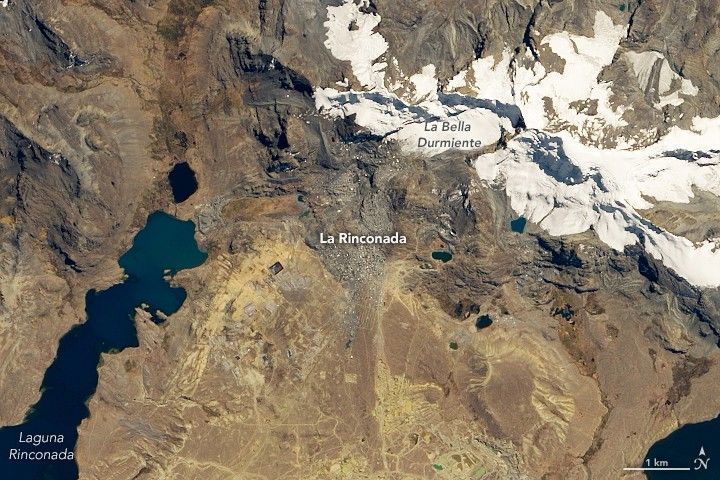
La Rinconada is an isolated gold mining town located 5,100 meters above sea level on Mount Ananea in the Peruvian Andes. Situated near the Sleeping Beauty glacier, this freezing settlement holds the official title of the highest permanent human habitation on Earth.
Living at this altitude presents extreme physiological challenges because atmospheric pressure provides only half the oxygen available at sea level. To cope with the thin air, the human body produces extra red blood cells, which thickens the blood and leads to high rates of chronic mountain sickness.
The population of the settlement expanded rapidly during the 2000s when global gold prices surged by more than two hundred percent. Tens of thousands of impoverished prospectors traveled up the mountain to seek fortune despite the harsh environment.
This sudden growth occurred without any basic municipal infrastructure, leaving the town without running water, sewage systems, or waste collection.
Extreme Elevation and Health Consequences
Permanent residency at five thousand meters exerts continuous physical strain on the human cardiovascular system. Because the air contains reduced oxygen levels, blood viscosity increases significantly, placing heavy stress on the heart and cerebral blood vessels.
Chronic Mountain Sickness impacts approximately twenty-five percent of local inhabitants, causing constant headaches, dizziness, and exhaustion. Severe symptoms can lead to heart failure, while freezing glacier winds make daily outdoor physical work even more dangerous for unacclimatized residents.
Read also: Viet Nam Has the World's Highest Economic Exposure to Rising Sea Levels
Life expectancy in this high-altitude settlement is estimated to be considerably shorter than the national Peruvian average. Medical care remains extremely limited, with only a small local clinic available to treat thousands of workers facing chronic oxygen deprivation and physical injuries.
The Informal Mining Economy
Gold extraction serves as the primary economic foundation of La Rinconada, attracting workers from all across Peru. Most miners operate under an informal arrangement known as the cachorreo system rather than receiving a predictable monthly wage.
Under this traditional system, laborers work thirty days straight without pay before spending a single final day collecting as much ore as personal backs can carry. Because the gold content of that final load depends entirely on chance, many miners receive no financial compensation after a full month of hard labor.
Local traditions ban female workers from entering the underground mine shafts due to deep-seated cultural superstitions. Instead, thousands of women known as pallaqueras spend long days sorting through discarded rock piles on freezing slopes to find small flecks of gold.
Moreover, refining gold ore requires treating raw rock with mercury, which is then burned off over open flames in residential areas. This toxic process releases mercury gas into the air, contaminating local rainwater, soil, and the nearby glacier that supplies drinking water.
Untreated sewage and industrial waste flow freely downstream into regional rivers, eventually polluting the Lake Titicaca watershed. Furthermore, a lack of police presence has allowed armed crime, illegal bars, and human trafficking to thrive within the isolated community.
Read also: Unveiling the World's Highest Gondola: The Dagu Glacier Gondola in China



