


Before sunrise, trucks deliver vegetables, rice, fruit and seafood to markets across Southeast Asia. By nightfall, some may be unsold, damaged or forgotten. On September 29, the International Day of Awareness of Food Loss and Waste asks the region to see discarded food as lost nutrition, income, labour and climate resilience.
One Food Chain, Two Points of Loss
The 2026 observance focuses on the “Transformative Potential of Reducing Food Loss and Waste.” Food loss occurs before retail, when crops spoil during harvesting, storage, processing or transport. Food waste happens in shops, restaurants and homes when edible products are discarded.
This distinction is important in Southeast Asia. Humidity, extreme heat, island geography and fragmented logistics shorten the life of produce before it reaches a city. In Jakarta, Manila, Bangkok and Singapore, over-ordering, large buffets, cosmetic standards and poorly planned purchases create a different form of waste.
The Paradox Behind the Plenty
In 2023, around 118 million people in Southeast Asia experienced moderate or severe food insecurity, while approximately 42 million were undernourished. Meanwhile, the share of food lost between production and retail across Eastern and Southeastern Asia stood at about 13.9 percent.
Indonesia illustrates the scale. A national study covering 2000–2019 estimated annual food loss and waste of between 23 million and 48 million tonnes. The economic damage reached Rp213 trillion to Rp551 trillion a year, equivalent to roughly four to five percent of gross domestic product. The lost nutrition could have fed an estimated 61 million to 125 million people.
The conflict is therefore not a lack of food alone. It is a system that often fails to keep food fresh, move it efficiently and distribute surpluses safely.
Keeping Harvests Fresh in the Tropics
Reducing upstream losses requires practical investment. Solar-powered cold rooms can protect fish and vegetables beyond reliable electricity grids. Reusable crates prevent fruit from being crushed, while better roads, weather information and direct digital links between farmers and buyers shorten journeys to market.
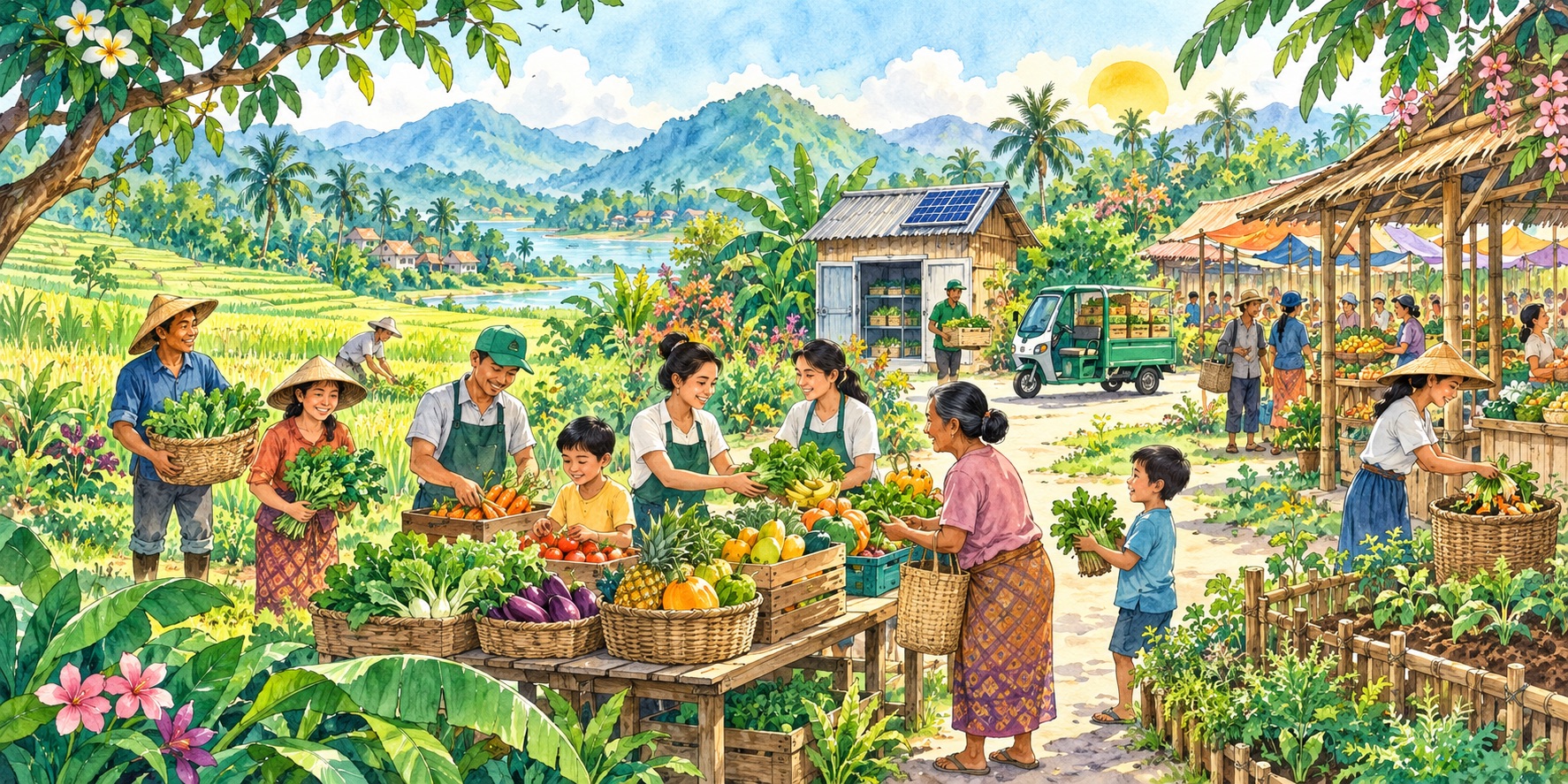
Small changes can produce measurable results. FAO work in the Philippines achieved a 38 percent reduction in fresh-produce losses by removing an unnecessary repackaging stage and improving handling for goods sent to Manila supermarkets. Technology does not always need to be complex; sometimes a better crate, schedule or market connection is enough.
Rescue Networks Turn Excess into Access
At the consumer end, food-rescue groups are connecting abundance with need. FoodCycle Indonesia links businesses holding safe surplus food with food-insecure communities. Its co-founder, Herman Andryanto, explains: “FoodCycle Indonesia’s dual benefit model addresses both food security and waste reduction in one streamlined process.”
Other initiatives include Garda Pangan’s redistribution programmes in Indonesia, community refrigerators in Singapore and surplus-food collections in the Philippines. These networks rely on trust, food-safety procedures, volunteers and dependable transport.
Singaporean food-rescue advocate Daniel Tay argues that the cultural shift must go deeper: “We need to change the way we measure the value of our food.” A blemished tomato still contains nutrition; an unsold loaf can still become a meal. Rescuing safe food preserves its highest social value.
Climate Action Begins Beyond the Bin
Food reaching a landfill creates another cost. As organic material decomposes without oxygen, it releases methane, a powerful greenhouse gas. Globally, food that is never eaten is associated with an estimated eight to ten percent of greenhouse-gas emissions.
Prevention must come first, followed by safe redistribution. Food unsuitable for people can support regulated animal-feed or industrial uses, while unavoidable scraps can be composted or processed in biodigesters. This approach reduces pressure on landfills and agricultural land.
Building a Region That Values Every Meal
Southeast Asia already has the ingredients for change: active food banks, mobile-first consumers, innovative farmers and an ASEAN commitment to food rescue and waste reduction. The next step is to measure losses consistently, strengthen donation protections, invest in cold chains and normalise smaller portions, surplus discounts and imperfect produce.
September 29 is an invitation to redesign the journey from farm to table so that more harvests become meals, more surpluses reach communities and every plate carries greater respect for the people and ecosystems behind it.


