


From movie-inspired adventures in Singapore to mythological kingdoms in Vietnam, Southeast Asia’s amusement parks are evolving into destinations where global entertainment, local culture and tropical hospitality meet. The region’s newest attractions are not simply adding faster rides; they are building immersive worlds designed to keep families travelling, dining and staying longer.
Global Stories Find a Regional Stage
The expansion comes as the international attractions industry regains momentum. The world’s 25 most-visited theme parks welcomed almost 246 million people in 2024, an increase of 2.4 percent from the previous year, according to the Themed Entertainment Association.
Singapore remains Southeast Asia’s leading showcase for cinematic entertainment. Universal Studios Singapore opened Illumination’s Minion Land in February 2025, introducing attractions, dining and merchandise based on the Despicable Me franchise. Its Buggie Boogie carousel was created exclusively for the Singapore park.
Thailand has taken the concept into the water. The 14-acre Columbia Pictures Aquaverse near Pattaya brings Jumanji, Ghostbusters, Men in Black and other film properties into slides, pools and interactive zones.
“We are creating opportunities for all audiences around the world to immerse themselves deeper into our stories,” said Jeffrey Godsick, Sony Pictures Entertainment’s head of location-based entertainment.
Tropical Fun, From Highlands to Water Parks
Malaysia demonstrates how geography can become part of an attraction’s identity. Genting SkyWorlds sits approximately 6,000 feet above sea level, where mountain mist and cooler temperatures create a striking contrast with the region’s coastal parks. Its 26-acre site contains nine movie- and adventure-inspired worlds.
The park welcomed its one-millionth visitor of 2025 in November. Zawani Zamri, who reached the milestone while visiting with her siblings, captured the spontaneous excitement: “We did not expect to be the one millionth guest. It was unexpected and we were very surprised.”
Near Kuala Lumpur, Sunway Lagoon follows a different model. More than 90 attractions are distributed across six parks devoted to water, wildlife, extreme activities, amusement rides and themed entertainment. The 2024 Global Experience Index ranked it third among Asia-Pacific water parks and 12th worldwide.
Local Legends Become Living Attractions
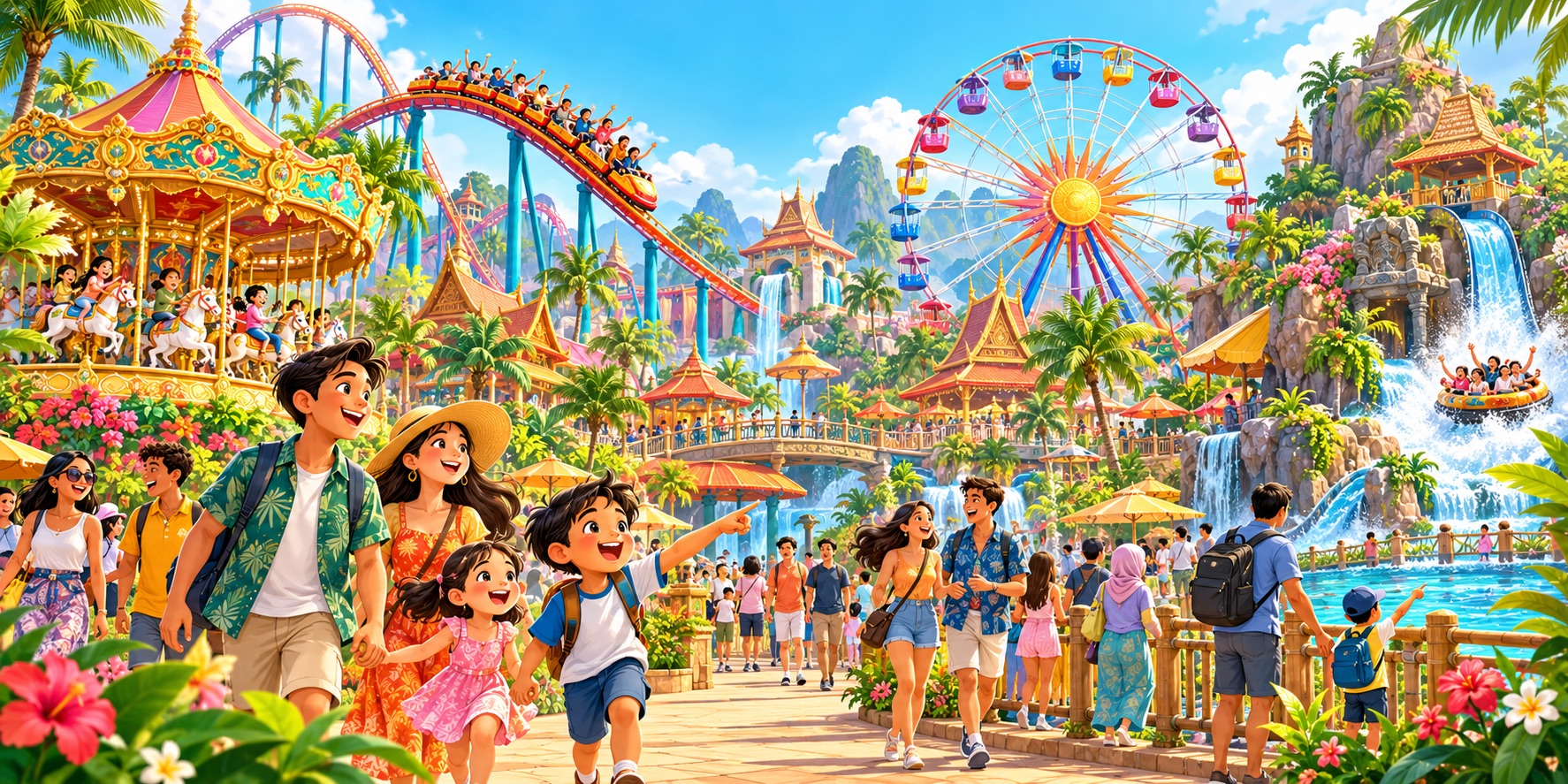
Southeast Asia’s strongest parks do more than import familiar characters. They also transform regional stories into physical experiences.
Suối Tiên in Ho Chi Minh City draws on Vietnamese history, Buddhism and legends associated with dragons, phoenixes, national heroes and the story of Lạc Long Quân and Âu Cơ. Vietnam’s national tourism database describes the 200,000-square-metre site as a combination of recreation and cultural education, receiving an estimated 1.5 million to two million visits annually.
Singapore’s Haw Par Villa offers a darker form of cultural storytelling through more than 1,000 sculptures and dioramas inspired by Chinese folklore. The historic park has been partially closed for essential maintenance since December 2025, although Hell’s Museum and its Ten Courts of Hell remain open. The work illustrates a growing regional challenge: heritage attractions must preserve their distinctive character while meeting contemporary expectations for safety and visitor comfort.
In Indonesia, Dunia Fantasi remains part of the wider Ancol recreation district. Ancol manages approximately 500 hectares along Jakarta’s northern coastline, combining the amusement park with marine attractions, public spaces, hospitality and future mixed-use development.
Parks Grow Into Complete Destinations
The modern amusement park increasingly anchors an entire tourism ecosystem. Vietnam’s VinWonders Phu Quoc covers about 50 hectares and offers more than 100 games and experiences across six themed areas, connecting its rides with an aquarium, performances and the wider island-resort economy.
Brunei’s Jerudong Park reflects a more compact national model, combining a water park with more than 30 attractions, family rides and adventure activities. Elsewhere, smaller markets such as Laos and Timor-Leste rely more heavily on community recreation, waterfront spaces and local festivals than international-scale amusement developments.
The Next Ride Is Regional
Southeast Asia’s amusement-park future will be shaped by more than size. Climate-responsive design, shaded queues, water and energy efficiency, accessibility and authentic cultural representation will increasingly influence where families choose to spend their time.
The parks most likely to succeed will be those that combine international standards with a clear sense of place—creating experiences that could only belong in Southeast Asia.


