


On Cambodia’s Tonle Sap, the changing direction of a river helps determine the rhythm of life. Seasonal waters replenish fishing grounds and nourish flooded forests. As Cambodia pursues new transport routes and deeper cooperation with China, protecting that rhythm has become a test of whether development can sustain the river communities depending on it.
Making Cooperation Work for Communities
Established in 2016, Lancang-Mekong Cooperation brings together China, Cambodia, Laos, Myanmar, Thailand and Vietnam. For Cambodia, the framework offers access to funding, technical exchanges and a direct channel to its upstream neighbours. In June 2026, Cambodia and China signed an agreement covering seven cooperation projects worth approximately US$1.98 million.
These grants should be distinguished from the much larger financing arrangements behind Chinese-backed dams and canals. Treating every infrastructure project as an LMC initiative obscures who funds it, who makes decisions and who is responsible for its impacts.
Nor has the LMC simply replaced the Mekong River Commission. Cambodia, Laos, Thailand and Vietnam remain members of the MRC, whose mandate combines sustainable development with water cooperation. Its collaboration with the LMC includes joint research, while China has supplied year-round hydrological data from two upstream stations since November 2020.
Keeping Tonle Sap’s Seasonal Rhythm Alive
During the wet season, rising Mekong waters push the Tonle Sap River backwards into the lake, expanding habitat where fish feed and grow. When water levels fall, the lake drains towards the Mekong again. This seasonal exchange connects Cambodian fisheries with the wider basin.
The rhythm has faced serious disruption. MRC analysis found that reverse-flow volumes in 2020 and 2021 reached only 58% and 51%, respectively, of the 2008–2021 average. Its assessment identified unusually low rainfall alongside changes associated with reservoir storage, rather than attributing the crisis to a single country or cause.
“Proactive cooperation is essential, not just from China but from all the MRC Member Countries, to jointly address these issues,” Cambodian water specialist An Pich Hatda, then MRC Secretariat chief executive, said in January 2022.
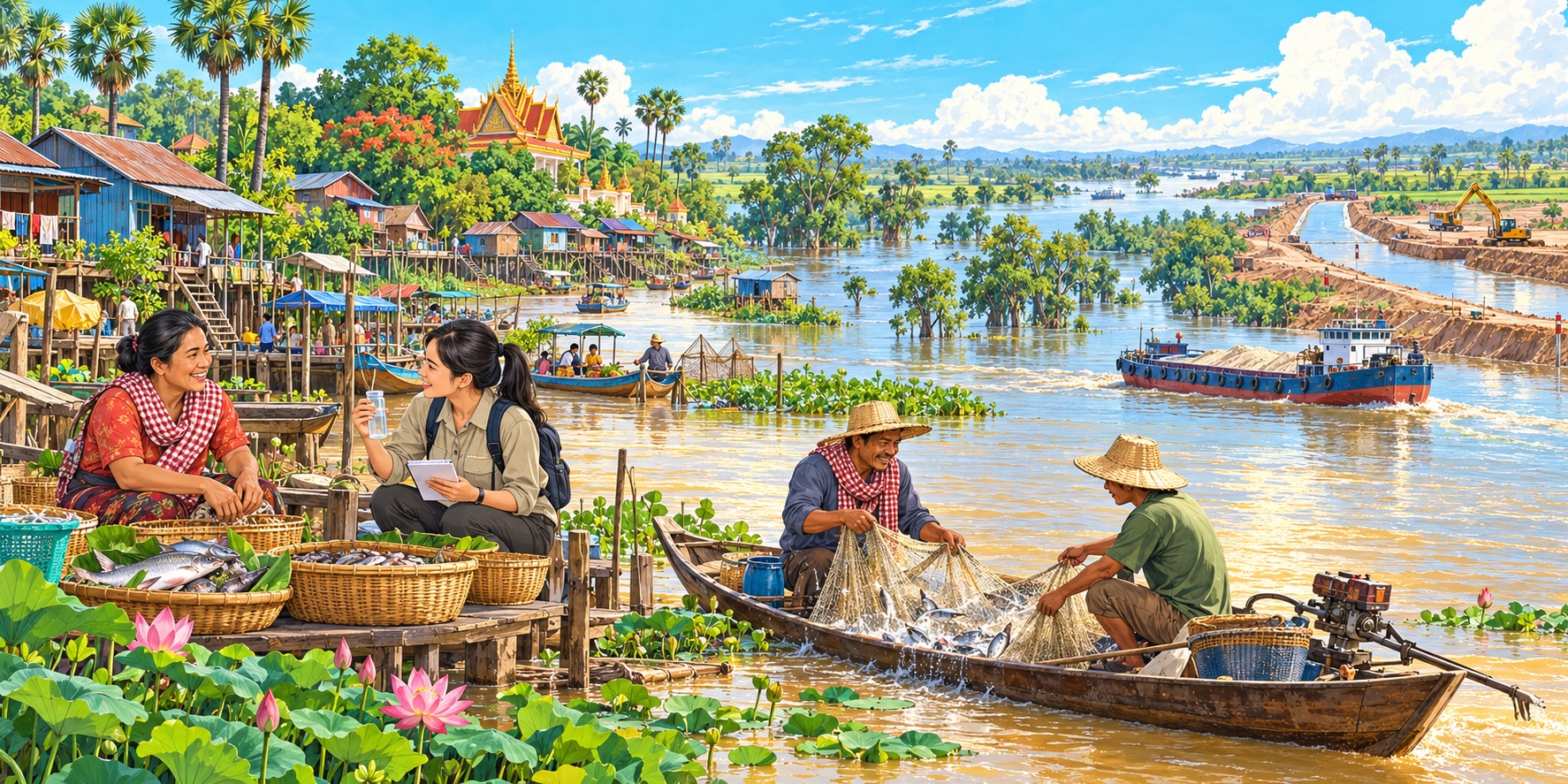
For fishing households, such cooperation must translate into reliable seasonal information, protected habitats and a meaningful voice in decisions affecting their catch.
Building Connections with Shared Safeguards
The Funan Techo Canal embodies Cambodia’s ambition to improve access to the sea. An April 2026 government announcement described a 172.6-kilometre waterway connecting the Mekong system with coastal Kep. A financing agreement with China Exim Bank followed in September, with Cambodian authorities promoting lower logistics costs and new economic opportunities.
The downstream questions deserve equally clear answers. How much water will the canal require during dry months? How might its embankments affect floodwater movement? What safeguards will protect farms and settlements? Independent analysis has raised concerns about water diversion and the adequacy of regional consultation. These are risks requiring transparent assessment, not proof that the unfinished canal has already reduced Vietnam’s river flows.
Cambodia already knows infrastructure’s difficult trade-offs. The Lower Sesan 2 hydropower dam, completed in 2018, expanded electricity generation, but Human Rights Watch documented the displacement of nearly 5,000 people and damage to fishing livelihoods.
Letting Better Evidence Guide Development
The consequences extend beyond water volume. Sediment supports floodplains and helps replenish Vietnam’s delta. “We definitely cannot return to sediment levels seen in the past. We need to preserve what we have,” Lao river-governance specialist Anoulak Kittikhoun, then MRC chief, told Reuters in 2022.
There is a practical foundation for progress. In September 2026, the MRC reported joint work involving all six countries on changing hydrological conditions, linking models of the Mekong mainstream, Tonle Sap and the delta. Cambodia can use both cooperation frameworks to support stronger assessments and coordinated responses.
Cambodia’s opportunity is to make development strengthen the river economy already sustaining its people. A successful new waterway should leave room for another kind of connectivity: fish migration, nourishing floods and trust between neighbours.


