


At Tanjung Priok’s Dermaga Ex Presiden, a gangway connected Jakarta’s waterfront with Russia’s Pacific Fleet. The October 2, 2026 Open Ship Day gave visitors a close look at operational warships while bringing a broader message ashore: defence cooperation also develops through conversation, cultural exchange and personal contact.
The visiting detachment comprised the frigate Marshal Shaposhnikov, destroyer Admiral Tributs and tanker Pechenga. Their September 30–October 4 port call included public access on October 2, with the embassy scheduling a dedicated media visit followed by an ambassadorial briefing.
Bringing Maritime Diplomacy Within Reach
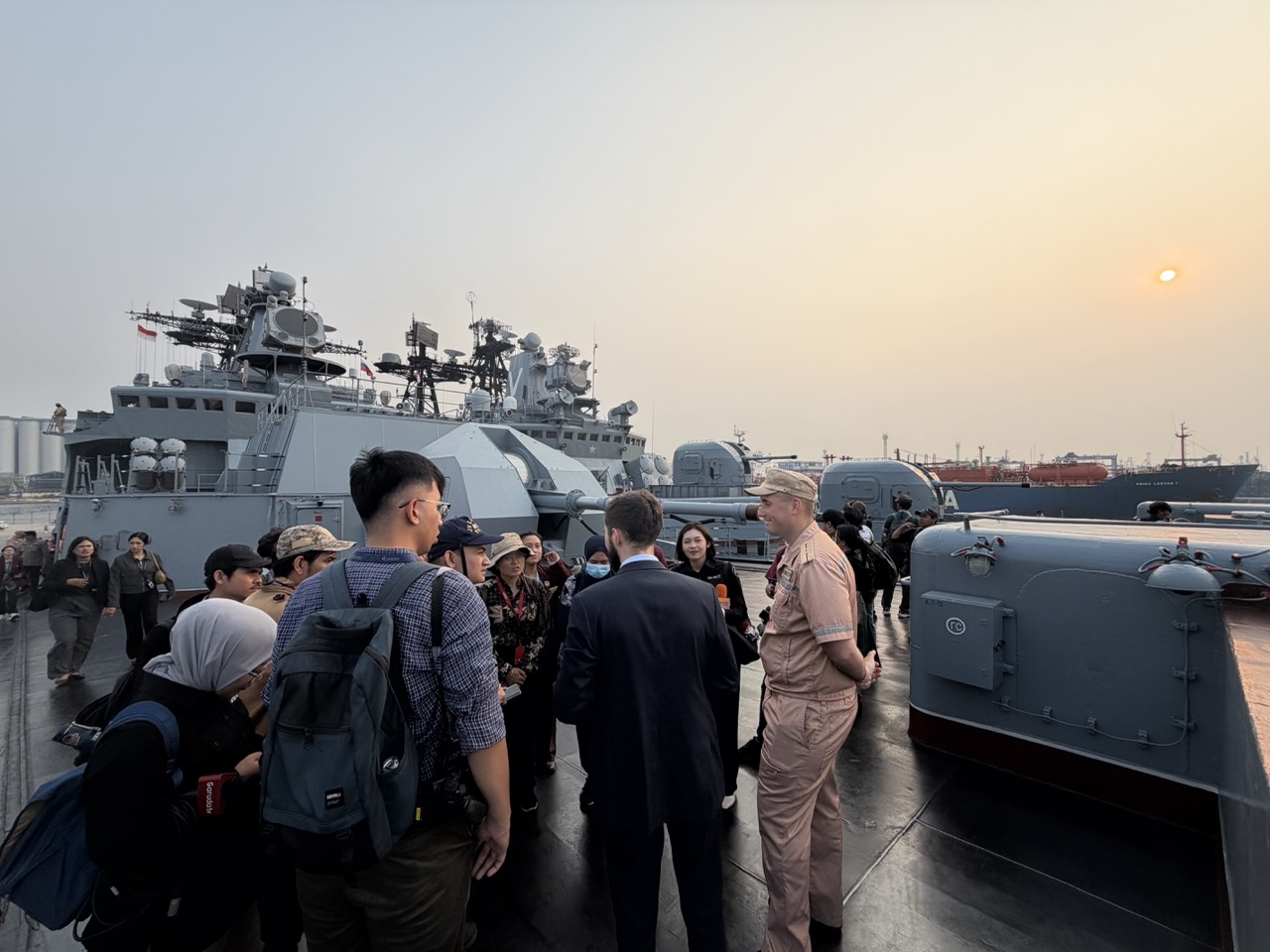
For media representatives, the afternoon offered an opportunity to connect the machinery of naval operations with the people responsible for it. The invitation allocated 4–5 p.m. for the ship visit and 5–6 p.m. for a briefing with Russian Ambassador Sergei Tolchenov and Rear Admiral Evgeny Myasoedov, with Military Attaché Maxim Lukyanov also in attendance.
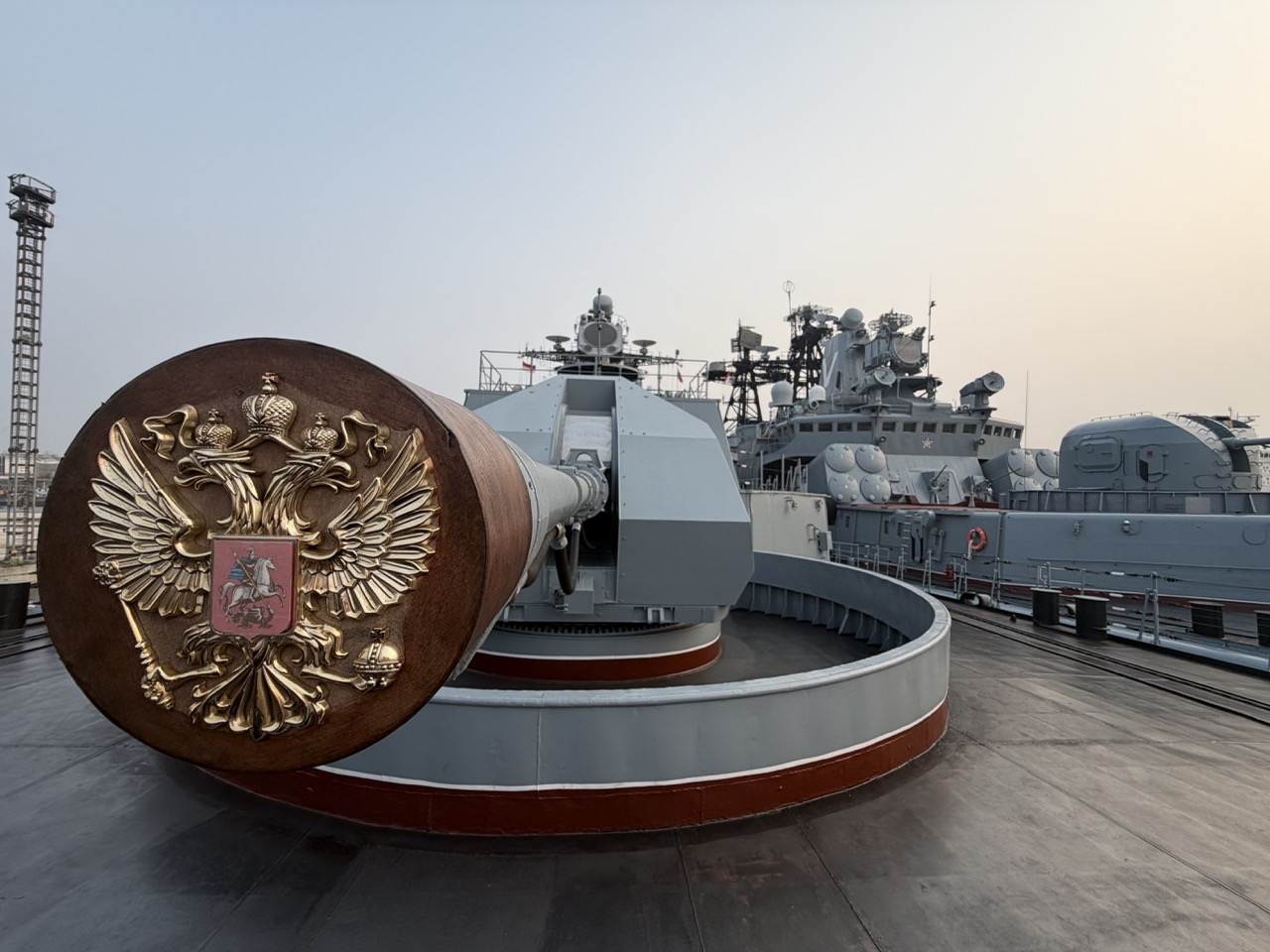
Beside Marshal Shaposhnikov, bilingual information boards introduced the vessel as a Project 1155M multipurpose frigate, formerly a large anti-submarine ship. The displayed specifications listed a length of 163 metres, full displacement of 7,480 tonnes and a crew of 220, including 29 officers.
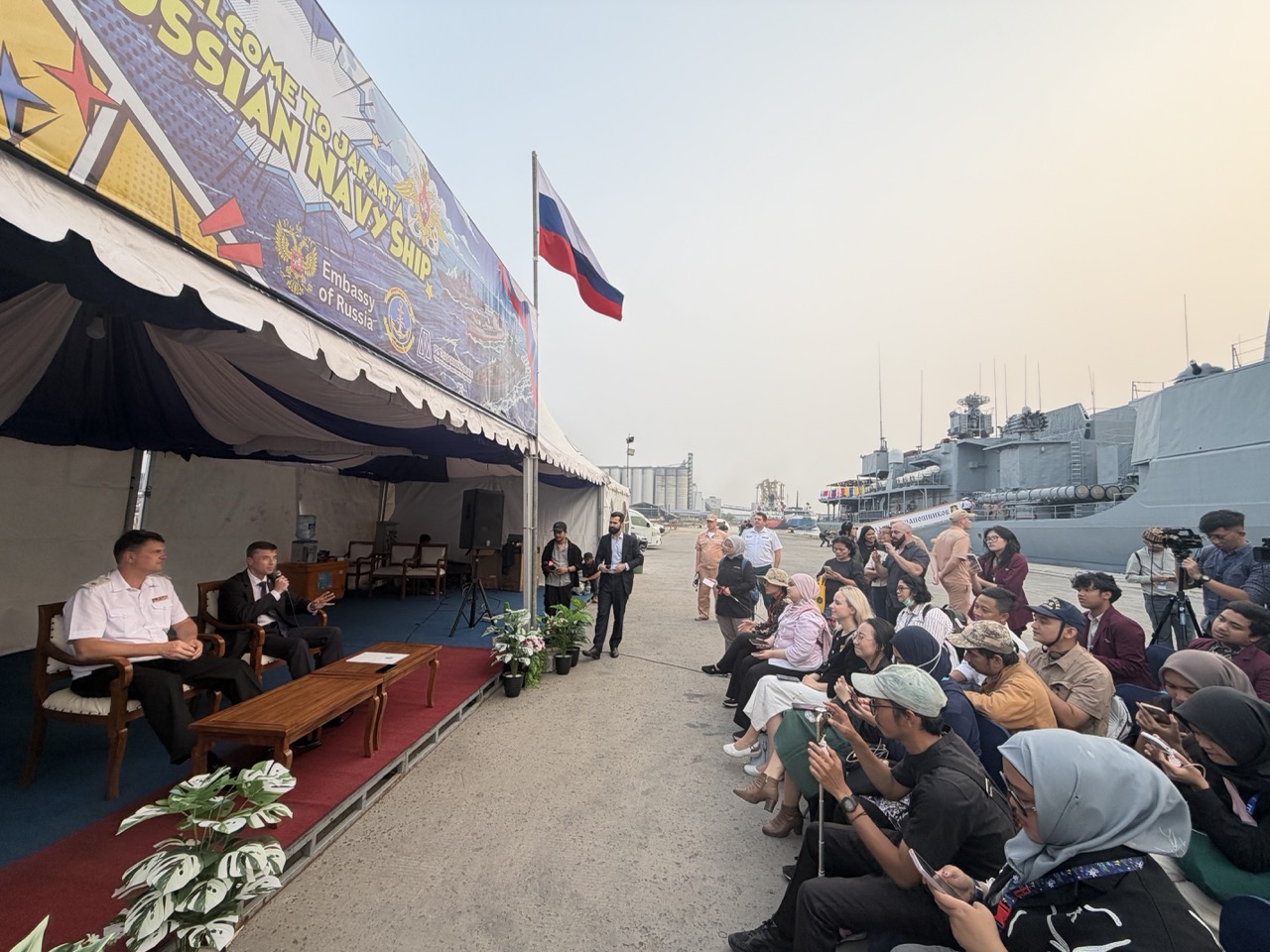
Those figures helped explain the scale of the vessel beyond its grey hull and deck equipment. The accompanying displays outlined its modernisation and naval roles, giving visitors an accessible introduction to a ship normally encountered through news photographs or military reporting.
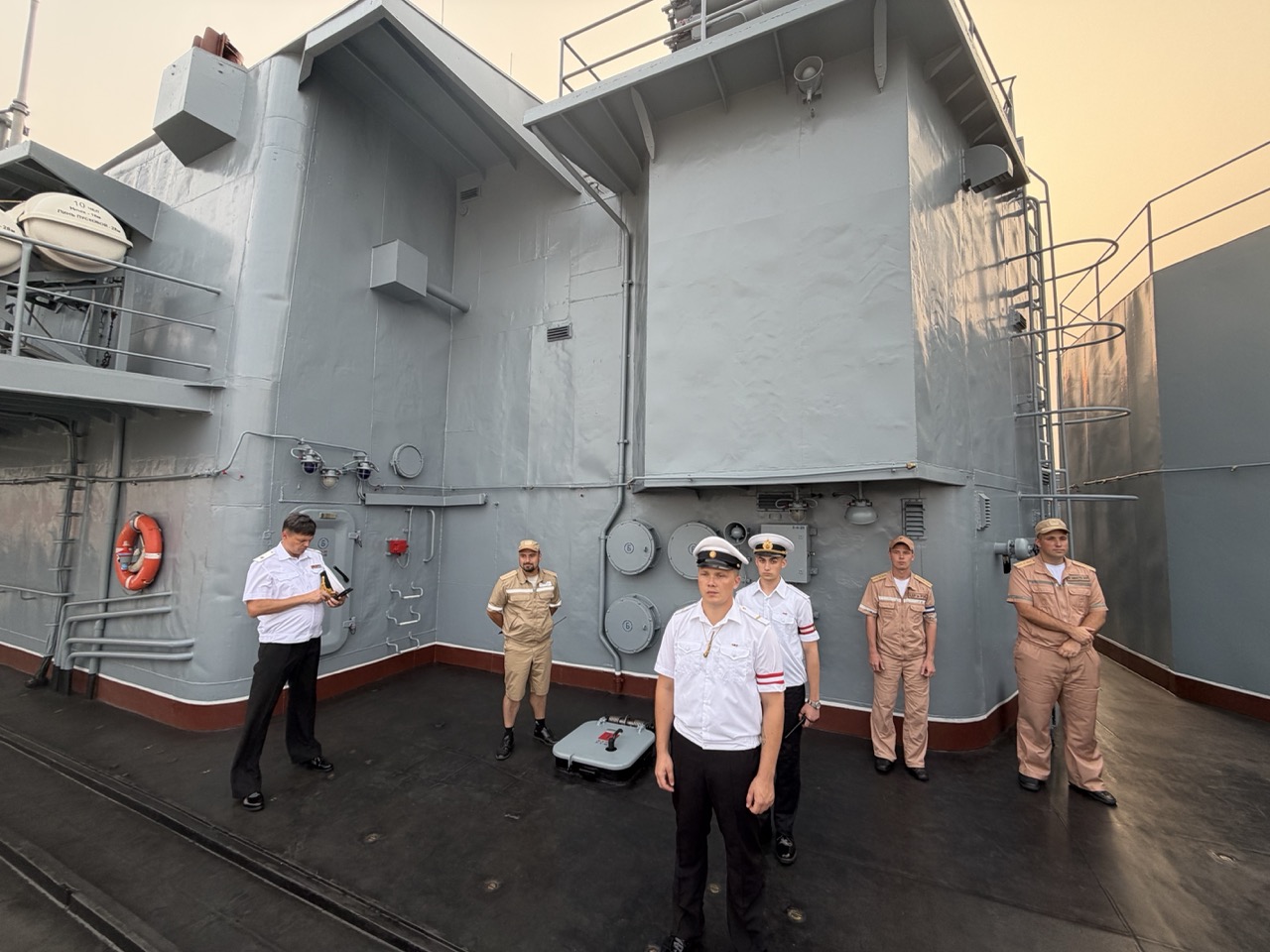
The open decks also served a diplomatic purpose. Allowing civilians to meet naval personnel made an otherwise formal port call more visible and approachable.
Building Connections Beyond the Deck
Rear Admiral Evgeny Myasoedov, commander of the visiting detachment, emphasised that the programme extended beyond demonstrating naval capabilities. It included professional exchanges, cultural activities and opportunities to become acquainted with Indonesian traditions.
He described “professional exchanges with naval personnel, cultural activities,” and the admiral also said the turnout exceeded his expectations.
The visit included a friendly football match between Russian and Indonesian naval personnel, adding an informal dimension to the engagement. Away from briefings and shipboard routines, sport offered participants a shared activity through which to build familiarity.
At the briefing, Tolchenov presented the visit as part of continuing defence cooperation supporting regional peace and security. He also expressed hope for future visits. These remarks outlined Moscow’s diplomatic objectives; the practical value of such exchanges lies in the relationships and communication they sustain.
Continuing a Partnership at Sea
The Jakarta visit followed earlier naval cooperation, including the inaugural bilateral Orruda exercise in November 2024. Held in Surabaya and the Java Sea, the exercise combined harbour preparations with activities at sea. Indonesia deployed two warships, while Russia’s contingent included three corvettes and support vessels. The name joined Orel, the Russian eagle, with Indonesia’s Garuda.
“This is an honour. Russian warships have come from afar to exercise together,” said Vice Admiral Denih Hendrata, then commander of the Indonesian Fleet, at the November 2024 opening, translated from his remarks reported by detikJatim. He placed the engagement within Indonesia’s independent and active foreign policy.
That context is important. Naval exchanges allow Indonesia to develop professional relationships with different partners while maintaining its own priorities. Port visits and exercises provide opportunities to improve familiarity between crews and communication at sea.
Opening Discussion on Future Cooperation
Questions during the October briefing also touched on procurement. Asked about possible Indonesian interest in acquiring a Russian vessel, Tolchenov indicated that such cooperation was possible, referring to Indonesia’s recent acquisition of the former Italian aircraft carrier Giuseppe Garibaldi.
Indonesia formally commissioned that vessel as KRI Sriwijaya-100 at Tanjung Priok on September 24, 2026. The Defence Ministry described its roles as including maritime command, defence diplomacy and humanitarian assistance.
The ambassador’s response indicated openness to discussion; it did not establish an Indonesian purchasing decision or a ship-transfer agreement. Any acquisition would require separate consideration of operational needs, financing, training and maintenance.
For Jakarta’s visitors, the most immediate outcome was simpler: access to ships, sailors and a conversation about bilateral relations. The Open Ship Day brought defence diplomacy into public view, with its human connections extending from the waterfront to the football field.


