


Along Singapore’s coast, busy shipping lanes and rising seas connect local livelihoods to decisions made far beyond the island. Its response has been to build partnerships that give smaller countries greater influence. The Forum of Small States offers one example of how shared vulnerabilities can become a basis for collective action.
Building Influence Across Oceans
Singapore, Barbados and Cabo Verde co-founded the Forum of Small States in 1992. Singapore has chaired it since, helping the informal, non-ideological grouping grow to 108 countries across different regions and levels of development. Its membership extends beyond island nations.
That reach gives small states a substantial platform within the United Nations. However, membership does not automatically translate into unified votes or identical foreign policies. FOSS’s strength lies in convening governments, exchanging perspectives and finding common ground.
At a September 2024 FOSS reception, Singapore’s Foreign Minister Vivian Balakrishnan explained the underlying principle: “we need to make common cause, we have to work together”. He linked that cooperation to international law, digital opportunities and small states’ freedom to make their own choices.
For Southeast Asia, this approach complements regional diplomacy. ASEAN provides a neighbourhood platform; cross-regional partnerships connect similar concerns across the Caribbean, Pacific, Africa and Europe.
Connecting Coastal Challenges
Climate change makes those connections tangible. Singapore’s national water agency, PUB, reported in March 2025 that approximately 30% of the country’s land lies less than five metres above mean sea level. National projections indicate that mean sea levels could rise by up to 1.15 metres by 2100. East Coast Park already experiences occasional coastal flooding when high tides coincide with heavy rainfall.
For island communities, protecting coastlines also means protecting homes, transport links and economic activity. Countries differ considerably in their resources, but exchanging technical experience can help them assess risks and develop responses.
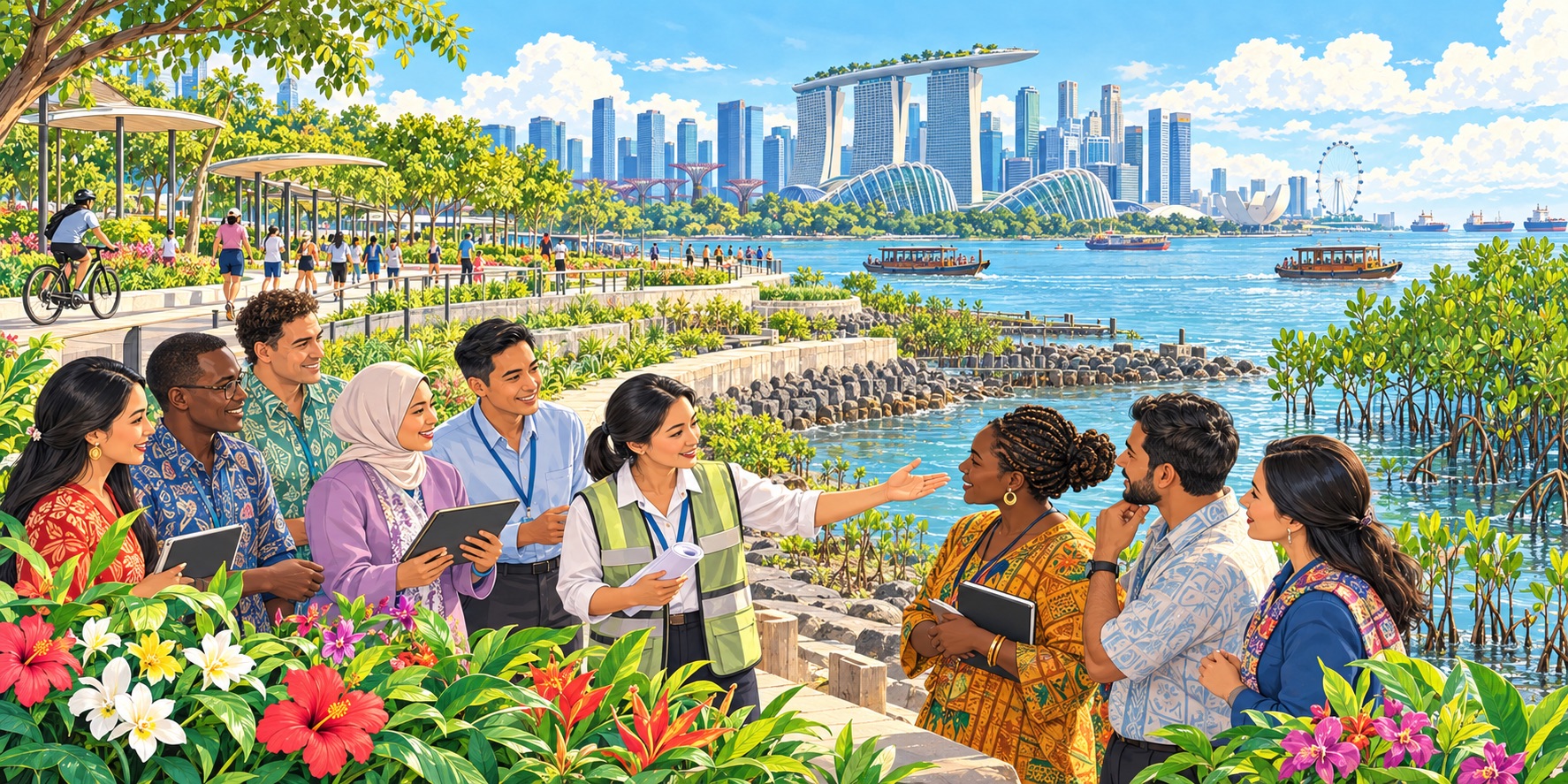
Singapore’s wider small-island diplomacy includes the separate Alliance of Small Island States. Its “SIDS of Change” assistance package, launched in 2024, offers targeted programmes including blue carbon and digitalisation. These initiatives complement FOSS while retaining their own purposes and membership arrangements.
Turning Relationships into Skills
Practical cooperation gives diplomatic networks value beyond meetings. By 2025, Singapore’s FOSS Fellowship Programme had hosted 147 ambassadors from 85 countries for exchanges on development challenges. The “FOSS for Good” technical assistance package was renewed for the financial years 2025–2026.
Digital governance provides a recent example. In June 2025, Singapore’s foreign ministry and the United Nations Development Programme organised an executive programme involving senior officials from 17 FOSS member states. It addressed leadership and governance in an era of digital technologies.
Such exchanges can help governments strengthen the expertise needed to evaluate new technologies and public services. Their impact ultimately depends on whether participants can adapt lessons to local budgets, institutions and community needs.
Preserving Room to Choose
Singapore’s partnerships also reflect a realistic understanding of influence. Speaking at the Regional Outlook Forum in January 2026, Senior Minister Lee Hsien Loong said: “Work together, because small states have agency – I do not determine the outcome, but I have influence over my fate.”
That distinction is essential. Diplomatic cooperation cannot guarantee protection from coercion or resolve every dispute. It can help smaller governments build relationships, contribute proposals and resist being excluded from discussions.
A related Singapore initiative, the Global Governance Group, brings together 30 small and medium-sized UN members to promote more inclusive dialogue with the G20. It is a separate platform, illustrating how different partnerships can address different gaps in global decision-making.
Singapore’s experience offers Southeast Asia a practical lesson: influence grows through sustained participation, useful expertise and dependable relationships. For small islands facing pressures from both geopolitics and the sea, those connections can expand the choices available—and strengthen their ability to shape a shared future.


