


For Kayla Putri Mariana, going first before the judges brought nerves and little expectation of victory. For Gathan Razidy, preparation included a late-night online session with his lecturers. On October 8, both left Institut français d’Indonésie (IFI) Jakarta as French Language Olympics champions—with a two-week learning adventure in France ahead.
Finding Their Voice on Stage
Organised by the French Embassy–IFI in partnership with Erlangga Publishing, the 2026 Olimpiade Bahasa Prancis brought together 15 finalists: 10 high school students and five university students. Each faced questions from three judges, putting their spoken French, comprehension and confidence to the test.
Kayla, representing SMA Labschool Cibubur, won the high school category. Audi Afifah Da Ninos of SMA Ignatius Global School Palembang placed second, followed by Dominic Angelo Gusnatama of SMA Pradita Dirgantara.
In the university category, Universitas Negeri Jakarta’s Gathan took first place. Wynona Cherry of Universitas Indonesia finished second, while Shofiyatunnisa of Universitas Negeri Yogyakarta placed third.
The two category champions received fully funded, two-week language and cultural immersion trips to France, combining French lessons with opportunities to explore the country’s heritage and attractions.
Turning Preparation into Possibility
Kayla said she had been nervous about being the first finalist called to face the judges and had not expected to win. Her excitement about the prize also carried a personal dimension: the journey could give her an opportunity to meet her sister, who is already studying in France.
For Gathan, a seventh-semester university student, the result brought a longer-term ambition closer. He hopes to continue his studies in France in international studies or international relations.
He described learning independently while drawing on support from his lecturers. That support continued until the evening before the final, when they joined him on Zoom to help him prepare.
Their experiences offered two perspectives on the same achievement: a school student discovering unexpected confidence and a university student using language learning to pursue an academic goal.
Opening the Competition to More Learners
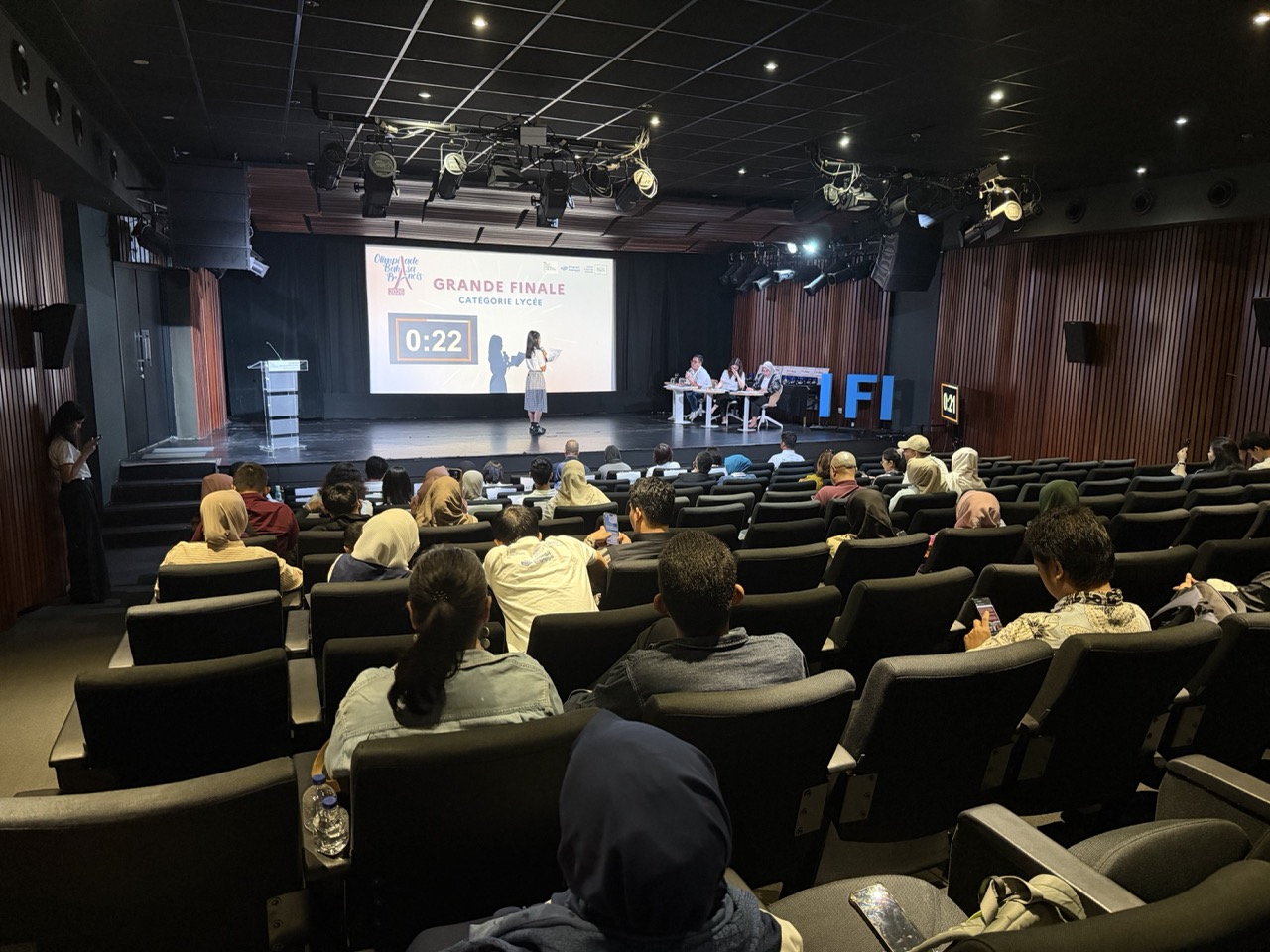
Launched in 2020, the competition introduced a national selection round this year before the semifinals. Previously, educational institutions nominated representatives directly for the semifinal stage.
According to the organisers , the online screening on September 10 attracted 174 high school students from 65 schools and 38 university students from 14 universities—a combined 212 participants. The September 16 semifinals involved 100 secondary students and 20 undergraduates.
The school pathway included general, vocational and Islamic secondary institutions. By the Jakarta final, participating schools represented locations including Cibubur, Palembang, Jombang and Yogyakarta, bringing different learning communities onto one national stage.
“We are proud to continue supporting educational initiatives that open opportunities for Indonesia’s young generation to excel on the global stage,” Erlangga Publishing representative Irving William said.
Strengthening a Partnership Through Language
The competition sits within a broader French–Indonesian educational relationship. The organisers estimate that approximately 65,000 people learn French in Indonesia, supported by a network of nearly 500 high schools and 15 universities. IFI’s work also includes supporting partner institutions and facilitating teacher training.
Language exchange extends beyond classrooms and competitions. In September 2026, the French Embassy and IFI launched the Rimbaud literary residency in cooperation with Semarang’s city government, welcoming Haiti-born, Paris-based writer Louis-Philippe Dalembert.
“The Language Agency openly supports Louis-Philippe Dalembert in producing literary works during his stay in Semarang,” agency head Hafidz Muksin said, in a ministry statement about that separate programme. The residency creates opportunities for exchanges with students, writers and local communities.
Together, these initiatives show how language partnerships connect learning with direct encounters: Indonesian students travel to France, while French-language writers engage with Indonesian communities.
For Kayla and Gathan, that exchange is about to become personal. Their next classroom will extend into everyday life in France, where the language they practised for a competition can help them build friendships, discover new perspectives and shape their next ambitions.


