


A craft survives when someone can afford to practise it—and another generation has reason to learn. That everyday challenge lies at the heart of Vietnam’s latest diplomatic initiative: a UN decade intended to connect cultural life with the decisions shaping development.
Bringing Culture into the Conversation
On September 4, 2026, the United Nations General Assembly proclaimed 2027–2036 the International Decade of Culture for Sustainable Development. Initiated by Vietnam, the resolution attracted 103 co-sponsors and passed with 174 votes in favour, one against and no abstentions. UNESCO will lead implementation and develop an action plan with governments and other partners.
The initiative advanced through UNESCO’s General Conference in 2025 before reaching New York. Vietnam worked with Laos, Cyprus, Italy, Qatar and Saint Kitts and Nevis, demonstrating how a Southeast Asian proposal could gather support across regions.
Its significance extends beyond diplomatic recognition. The decade offers a framework for connecting heritage, creativity and cultural participation with education, livelihoods and environmental resilience. It also strengthens efforts to secure a dedicated cultural goal in the development framework after 2030; that goal has not yet been established.
Supporting the People Who Keep Culture Alive
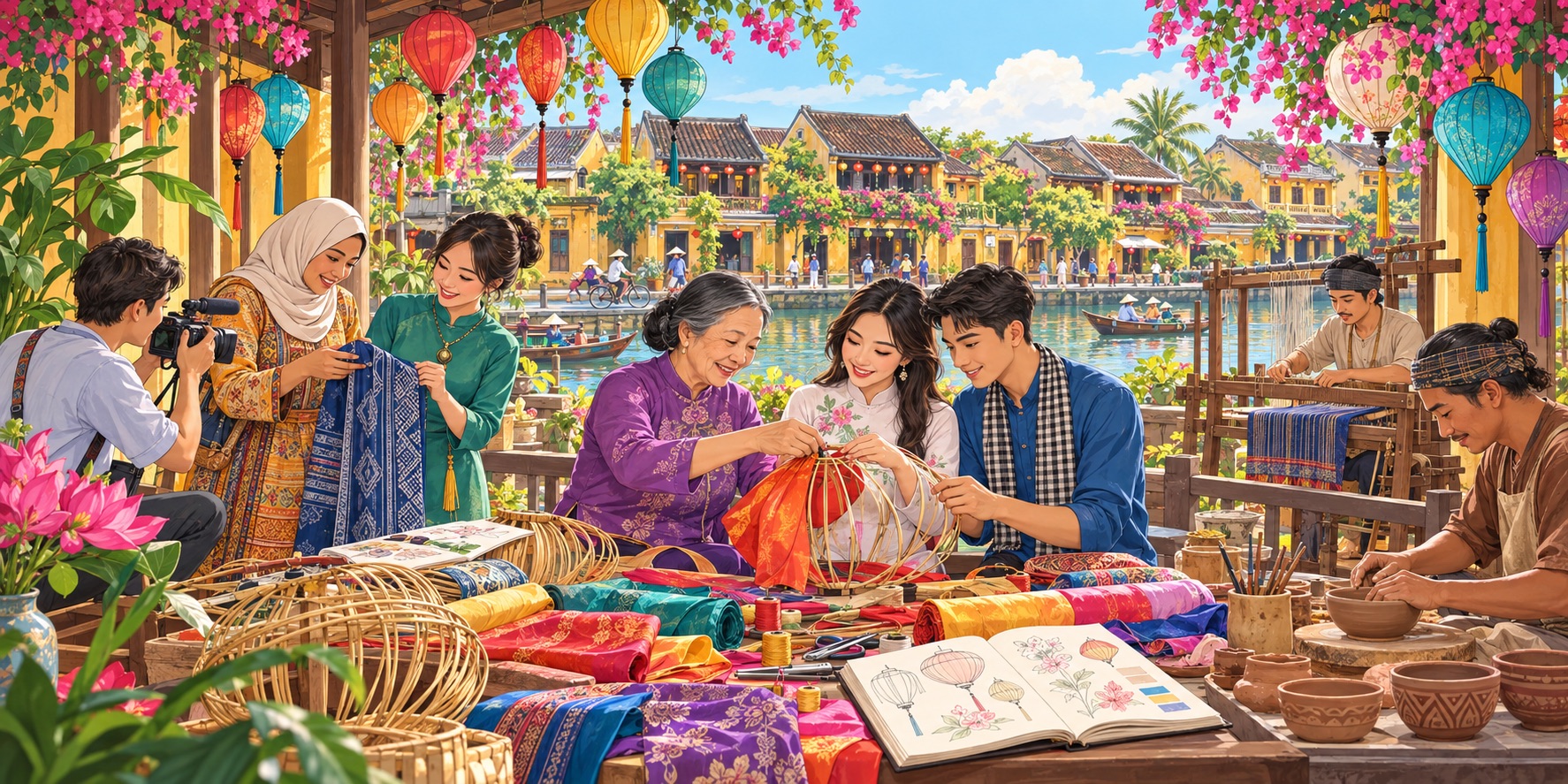
Culture reaches beyond monuments and visitor attractions. It includes the skills of artisans, the working conditions of performers, the languages communities transmit and the stories young filmmakers choose to tell.
Ngô Lê Văn, Vietnam’s deputy foreign minister and chairman of its National Commission for UNESCO, identified the central challenge in a September 2026 interview: “the initiative’s key significance lies in creating momentum to turn awareness and commitments into substantive action.”
For Southeast Asia, that means asking practical questions. Can a weaving community train apprentices without losing income? Can an independent artist access affordable workspace? Can communities decide how their traditions are recorded, presented and commercialised?
These are useful tests for future programmes. International recognition becomes meaningful when cultural practitioners gain the resources and influence to sustain their work.
Building on Partnerships Already Underway
Vietnam already has an example of the cooperation the decade could encourage. In June 2025, UNESCO and SOVICO Group signed agreements in Da Nang that included a cultural and creative industries project running through 2030.
The project aims to support more than 10,000 artists, young people and creative entrepreneurs through training, mentoring and assistance for start-ups. Its plans also include improving selected cultural venues and supporting emerging filmmakers. These are programme targets, rather than completed results.
Such work offers a practical connection between international commitments and local opportunity. A museum can become a learning space, a theatre can nurture new performers, and professional mentoring can help creative workers develop sustainable careers.
Across Southeast Asia, similar partnerships could connect heritage communities with universities, cultural institutions and responsible businesses. Laos’s participation in the resolution’s core group provides an additional regional foundation for sharing experience.
Turning Recognition into Lasting Support
The decade’s next task is implementation. UNESCO’s announcement describes an action plan to be developed; it does not announce automatic grants, guaranteed market access or a common social protection system for artists. Those benefits would require funded programmes and national decisions.
Jonathan Wallace Baker, UNESCO’s representative to Vietnam, set a clear benchmark: success would be measured by “the difference it makes to people, communities and cultural life at national and local levels.”
Meeting that benchmark will require attention to who participates. Digital initiatives should accommodate communities with limited connectivity. Heritage tourism should retain benefits locally. Projects involving traditional knowledge should respect the people who hold it, including their choices about what to share.
Vietnam has helped create a ten-year opening for this work. Southeast Asia’s opportunity is to fill it with lasting support for the people who make culture a living part of development—through their skills, imagination and everyday choices.


