


A stronger roof, a clear evacuation route and a warning understood in time can determine whether a family reaches safety. As Southeast Asia marks the International Day for Disaster Risk Reduction on October 13, the 2026 theme, “Resilience Starts at Home,” puts these everyday protections at the centre of regional preparedness.
Building Safety Where People Live
The theme selected by the United Nations Office for Disaster Risk Reduction connects household preparedness with decisions about housing, infrastructure and public investment. Families need practical information, but governments and developers also shape their safety through building standards, land-use planning and access to affordable, resilient homes.
Across Southeast Asia, those responsibilities take different forms. Coastal communities face storm surges and erosion, river settlements confront flooding, and earthquake-prone areas need buildings capable of withstanding strong shaking. Indonesia and the Philippines face substantial tectonic hazards, while floods, extreme heat and drought affect countries across the region.
“Resilience should be mandated through building codes, zoning, and land-use planning,” ASEAN Secretary-General Kao Kim Hourn said at the ASEAN Strategic Policy Dialogue on Disaster Management in August 2025. His message places prevention within the routine decisions that determine where and how communities grow.
Learning From Disasters That Cross Borders
The consequences of inadequate protection were evident when Typhoon Yagi and the enhanced southwest monsoon swept across Southeast Asia in September 2024. According to the AHA Centre, more than five million people across Laos, Myanmar, the Philippines, Thailand and Vietnam had been affected by September 27, with 701 fatalities reported at that point.
In Laos, assessments focused on communities in Luang Namtha province. In Thailand, flooding affected 26 provinces. These experiences showed how a single weather system can overwhelm homes, roads and essential services across several countries.
The Philippines’ exposure also illustrates why preparedness must be continuous. PAGASA reports that an average of approximately 20 tropical cyclones form within or enter the Philippine Area of Responsibility annually, with around eight or nine crossing the country. These are tropical cyclones of varying intensity, rather than 20 typhoons making landfall each year.
For families, effective preparedness means knowing which warnings apply to their location and having a realistic way to act. Evacuation planning must account for older residents, people with disabilities, children and those without private transport.
Turning Regional Solidarity Into Practical Support
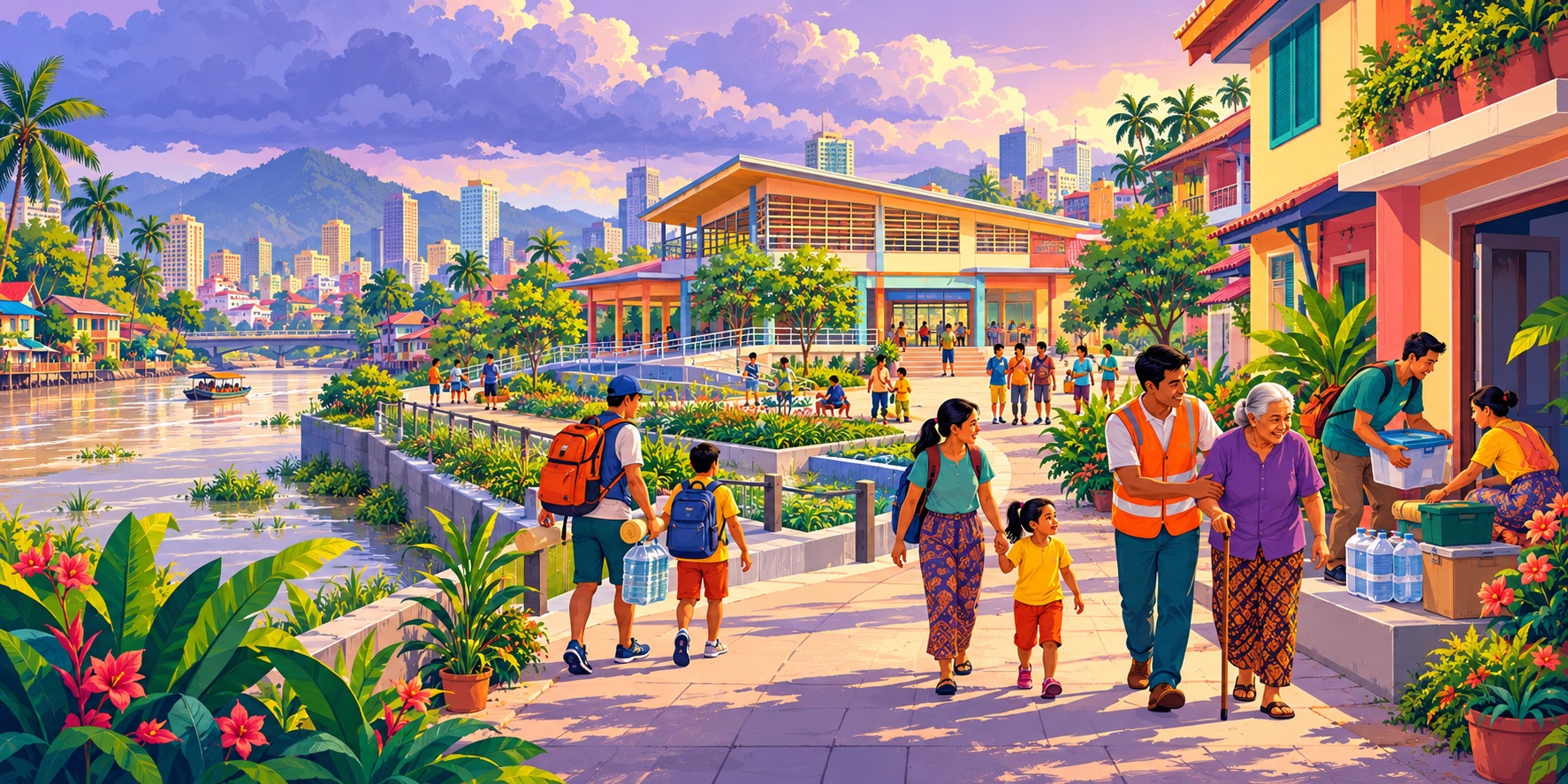
Southeast Asia has developed mechanisms to support countries when national capacities come under pressure. The ASEAN Agreement on Disaster Management and Emergency Response provides the regional framework, while the Jakarta-based AHA Centre coordinates assistance with national disaster-management authorities.
Its 2024 report recorded more than US$2 million in relief supplies deployed across ASEAN and a network of 422 trained ASEAN Emergency Response and Assessment Team members by year-end. These capabilities help translate cooperation into needs assessments, logistics and emergency support.
Yet regional coordination requires preparation, agreed procedures and access to affected communities. It supports national responses; it cannot make logistical obstacles disappear.
“We have to go further upstream, and work together before a disaster occurs,” Singapore’s Minister for Law and Second Minister for Home Affairs Edwin Tong said at the regional disaster-management dialogue in August 2026.
Tong also announced that Singapore would host the ASEAN regional disaster emergency response simulation exercise in 2027, providing another opportunity to test how agencies work together before an actual emergency.
Giving Communities the Tools to Act
Schools and young people remain essential to this year’s household-focused message. Lessons and drills can help children recognise hazards and bring preparedness discussions home. Young volunteers can support community mapping and accessible communication, with training and supervision appropriate to their roles.
Technology works best when paired with trusted local networks. A mobile alert needs understandable instructions; a hazard map needs an accessible evacuation route. Schools designated as shelters also need structural safety, sanitation and plans that protect the continuity of education.
For Southeast Asia, October 13 offers a practical test: are homes becoming safer, and can every resident act when danger approaches? Progress begins when regional commitments reach neighbourhoods—and give families the resources to protect their lives before the next emergency.


