Operation Babylift was a U.S.-led airlift in April 1975 that evacuated between roughly 2,500 and 3,000 Vietnamese children from Saigon in the final weeks before the city fell.
Most were sent abroad for adoption, including about 280 to Australia.
It was presented as a rescue, but not every child was an orphan. Some had living parents who never meant to give them up for good, and the rushed paperwork left many adoptees with no reliable record of where they came from.
More than fifty years later, some are still searching for their birth families.
Saigon Weeks From Falling
North Vietnamese forces had already taken several major cities, and by late March 1975 Saigon was bracing for a takeover. The city’s orphanages were crowded with children, including infants who needed medical care.
On April 3, 1975, President Gerald Ford announced that American aircraft would transport Vietnamese orphans to the United States, with a target of evacuating around 2,000 children. The Gerald R. Ford Presidential Library and Museum identifies this effort as Operation Babylift, a program intended to bring thousands of Vietnamese children to safety, many of whom were expected to be adopted by American families.
The evacuation was driven by humanitarian concerns and fears about what might happen as South Viet Nam faced defeat. Many children had been fathered by American servicemen, raising fears for their safety if communist forces took control. However, Operation Babylift also included children without American parentage, and the circumstances surrounding some children's departures later became controversial.
The first American flight ended in tragedy.
A U.S. Air Force C-5A Galaxy carrying more than 200 orphans and other personnel suffered an explosive decompression shortly after takeoff from Saigon on April 4. The aircraft crashed while attempting to return to the airport. U.S. military historical records report that 138 people died, including 78 children. Despite the disaster, the evacuation effort continued.
Other countries organized their own evacuations. Australia's Department of Defence records that Prime Minister Gough Whitlam announced Australia's plans on April 2, 1975, sending Royal Australian Air Force aircraft to transport children from Saigon to Bangkok.
There, the children boarded a Qantas airliner chartered by the Australian government for the onward journey to Australia. Canada and France also received children evacuated from Viet Nam.
Saigon fell to North Vietnamese forces on April 30, 1975, bringing the South Vietnamese government to an end.
Between 2,500 and 3,000 Children
The exact number varies by source. Operation Babylift is commonly credited with evacuating more than 2,500 Vietnamese children, and a National Archives account says about 2,000 of them were flown to the United States between April 3 and April 15, 1975.
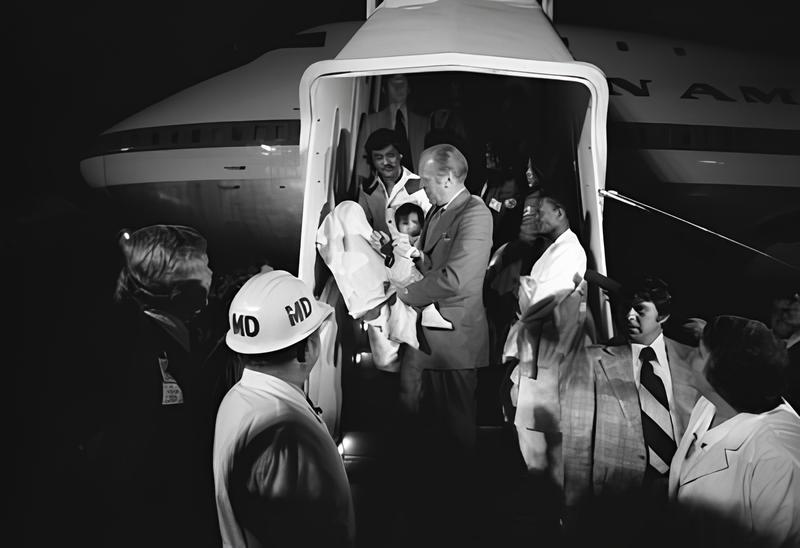
Academic estimates run higher, from 2,500 to about 3,000, partly because some privately organised rescues were not part of the official operation and are counted in some tallies but not in others.
The children went to the United States, Australia, Canada and several European countries. Australian government accounts record 281 arrivals, while the 2012 study in the Journal of Australian Studies gives 292, so the Australian total is best treated as roughly 280 to 290.
Many of these children were placed with families approved for adoption, while others needed medical treatment on arrival.
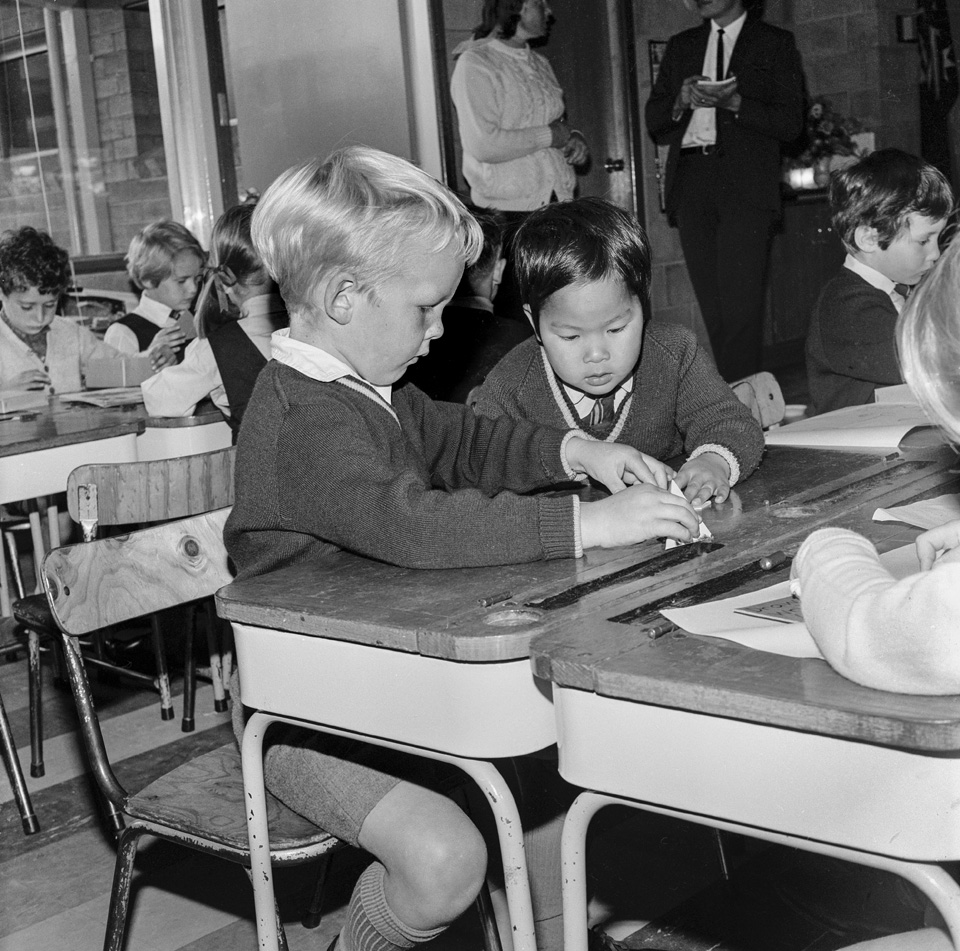
Operation Babylift succeeded in evacuating thousands of children from South Viet Nam during the final weeks of the war.
However, the operation's humanitarian purpose does not resolve questions about consent, the identification of the children, or the circumstances under which some were removed from Viet Nam.
What Happened to the Children Afterward?
Many children grew up with adoptive families far from Viet Nam, and some of them were not orphans.
Some had living relatives, and some parents had left their children in orphanages for safekeeping without meaning to give up their rights. Several parents who reached the US went to court to get their children back, and the cases ran into the 1990s, mostly without success.
Two academic studies have raised questions about the legality and ethics of Operation Babylift.
A 2009 study titled “Operation Babylift or Babyabduction? Implications of the Hague Convention on the Humanitarian Evacuation and ‘Rescue’ of Children”, published in International Social Work, examines the legal issues surrounding Operation Babylift and the 2007 Zoe’s Ark case.
It argues that the Hague Convention does not fully protect children from being evacuated across borders under humanitarian claims when the actions violate the law.
A 2012 study titled “Operation Babylift: Advancing Intercountry Adoption into Australia”, published in the Journal of Australian Studies, argues that many children were adopted without sufficient evidence that they were orphans. It also questions why efforts to reunite children with their families were not adequately supported.
Neither study argues that every child was taken without consent. Court proceedings also showed that the circumstances differed from one child to another.
The central criticism is not that evacuating children from danger was inherently wrong, but that the operation also facilitated large scale international adoption without sufficient safeguards to establish each child's circumstances and protect family reunification.
Can the Children Still Be Traced Today?
Some of them, yes, though not all. Records were destroyed in orphanages, falsified or lost in the chaos of 1975, and no single archive covers every child.
One set of files did survive. Friends For All Children was one of the adoption agencies that coordinated the 1975 flights, and its records were kept for decades by its last surviving leader, Sister Mary Nelle Gage.
In 2024, according to the Operation Babylift Collection’s website, she handed 33 boxes of them to Devaki Murch, an adoptee who was placed through the agency herself. The boxes hold more than 4,800 documents, photographs, letters and case files from 1962 to 1975. The project says Gage’s instruction was to connect as many adoptees as possible, and it now returns original files to adoptees and helps them look for birth families.
The project also says it has checked its files against records from Viet Nam’s National Archives Centre II in Ho Chi Minh City and found matches with adoptees it knows personally.
The matching is hard because one child can appear under several names. Murch is on file as Trần Ngọc An at birth, Mimosa at her Saigon nursery, another name on her departure paperwork, and Devaki Ananda Murch after adoption. A search under any one of them leads nowhere, so the project searches all four at once.
The children are now in their late forties and fifties. Some have found birth relatives. Others are still looking, and many of the paper records are fragile and handwritten.
References
- “Operation Babylift: Advancing Intercountry Adoption into Australia.” Journal of Australian Studies, 2012. Taylor & Francis. https://doi.org/10.1080/14443058.2012.727845
- “Operation Babylift or Babyabduction? Implications of the Hague Convention on the Humanitarian Evacuation and ‘Rescue’ of Children.” International Social Work, 2009. SAGE Journals. https://doi.org/10.1177/0020872809337677