


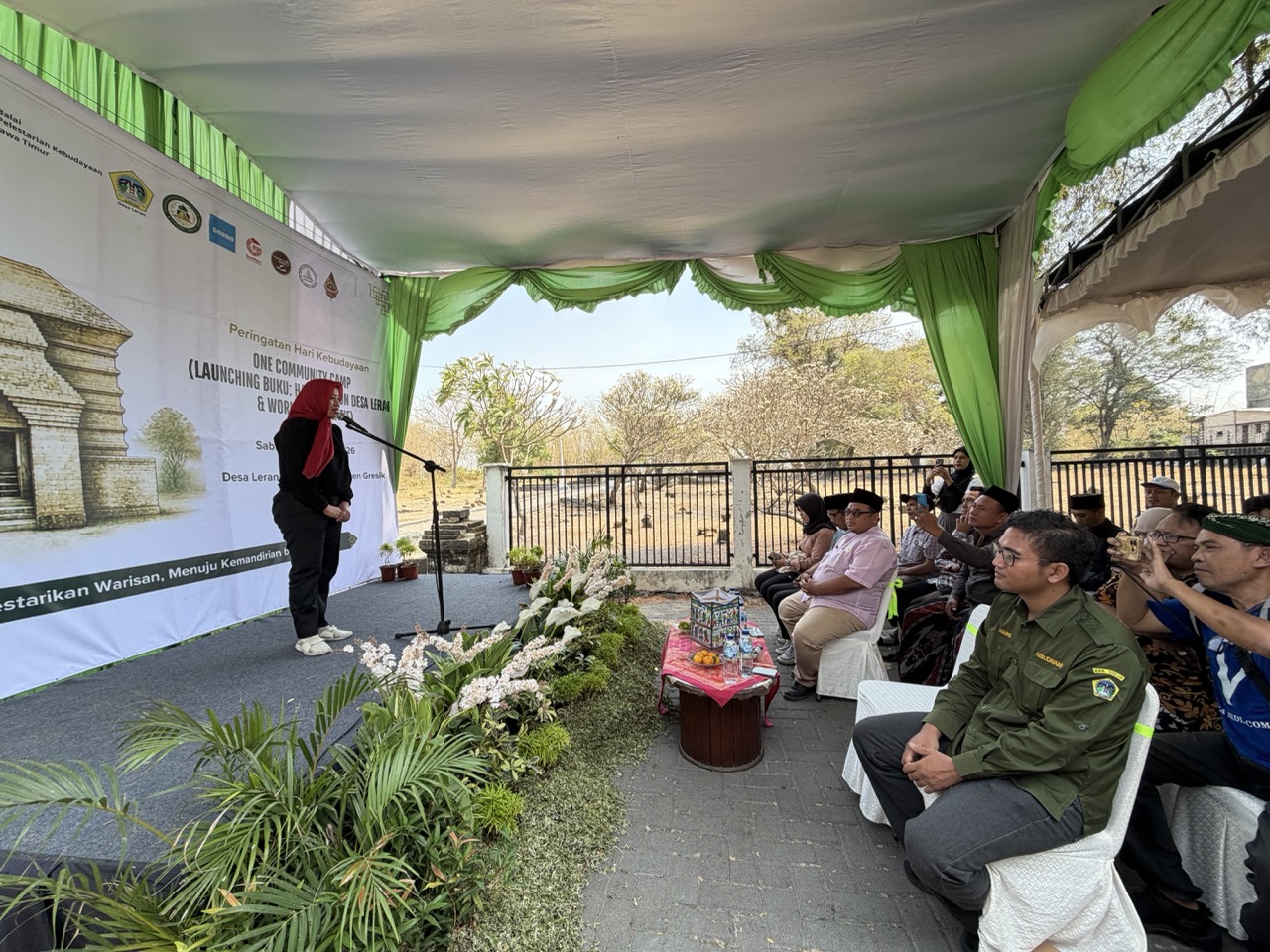
History became a shared experience in Leran, Gresik, on Saturday, October 17, as MuseeID brought residents, students and officials together for One Community Camp. A book launch, walking tour and creative workshops connected the village’s historic cemetery with the people, skills and culinary traditions that keep its heritage alive.
A Village Takes Ownership of Its Story
Held around the tomb of Siti Fatimah binti Maimun and the MuseeID/IHHCH office, the gathering marked the launch of Harta Karun Desa Leran, or The Treasure Trove of Leran Village. MuseeID presented copies to officials attending the event, placing the village’s documented history directly into the hands of local decision-makers.
Participants included the village heads of Leran and Manyar, representatives of local government units, students from Muhammadiyah Gresik and community members. Manyar Subdistrict Head M. Fither Kuntajaya and MuseeID Executive Director Nofa Farida Lestari delivered keynote addresses.
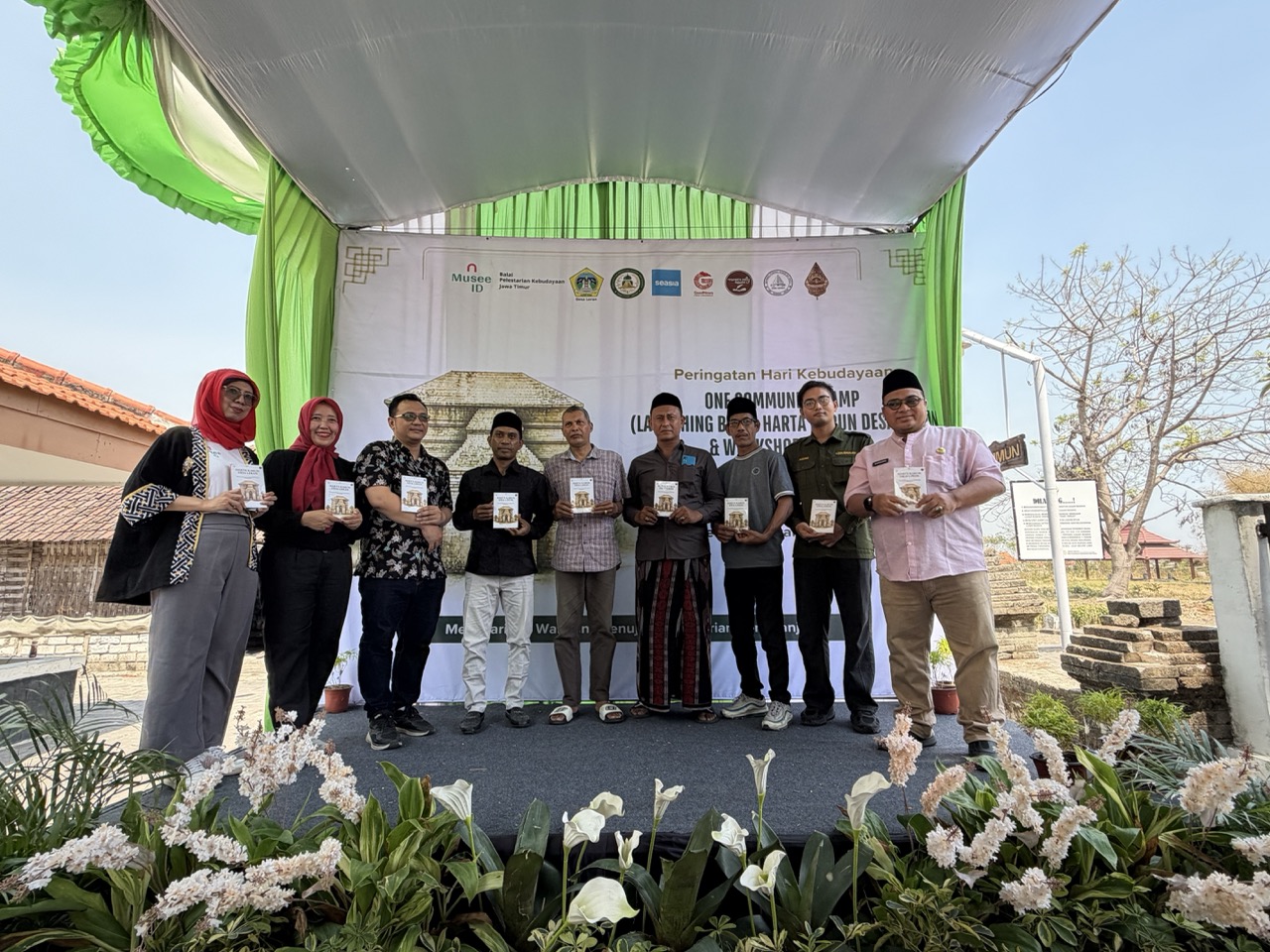
Fither welcomed the turnout, expressing happiness that residents felt encouraged and enthusiastic about participating. Project lead Ary Sulistyo explained that the book was intended to record local history and keep it available for future generations.
Together, the publication and activities offered complementary ways to engage: a written record to revisit, a landscape to explore and practical skills for sharing what participants learned.
Walking Through Centuries of History
Ary led the walking tour, introducing participants to the heritage surrounding Fatimah binti Maimun’s tomb. Windra, a participant from the local firefighting unit, appreciated the explanation, describing it as detailed, comprehensive and easy to understand.
Known locally as Pasucian, the cemetery is a protected cultural heritage site. Its main tomb chamber is built from white stone, with thick walls, a pyramidal roof and a relatively small interior. At least two layers of surrounding stone walls contribute to the compound’s distinctive appearance.
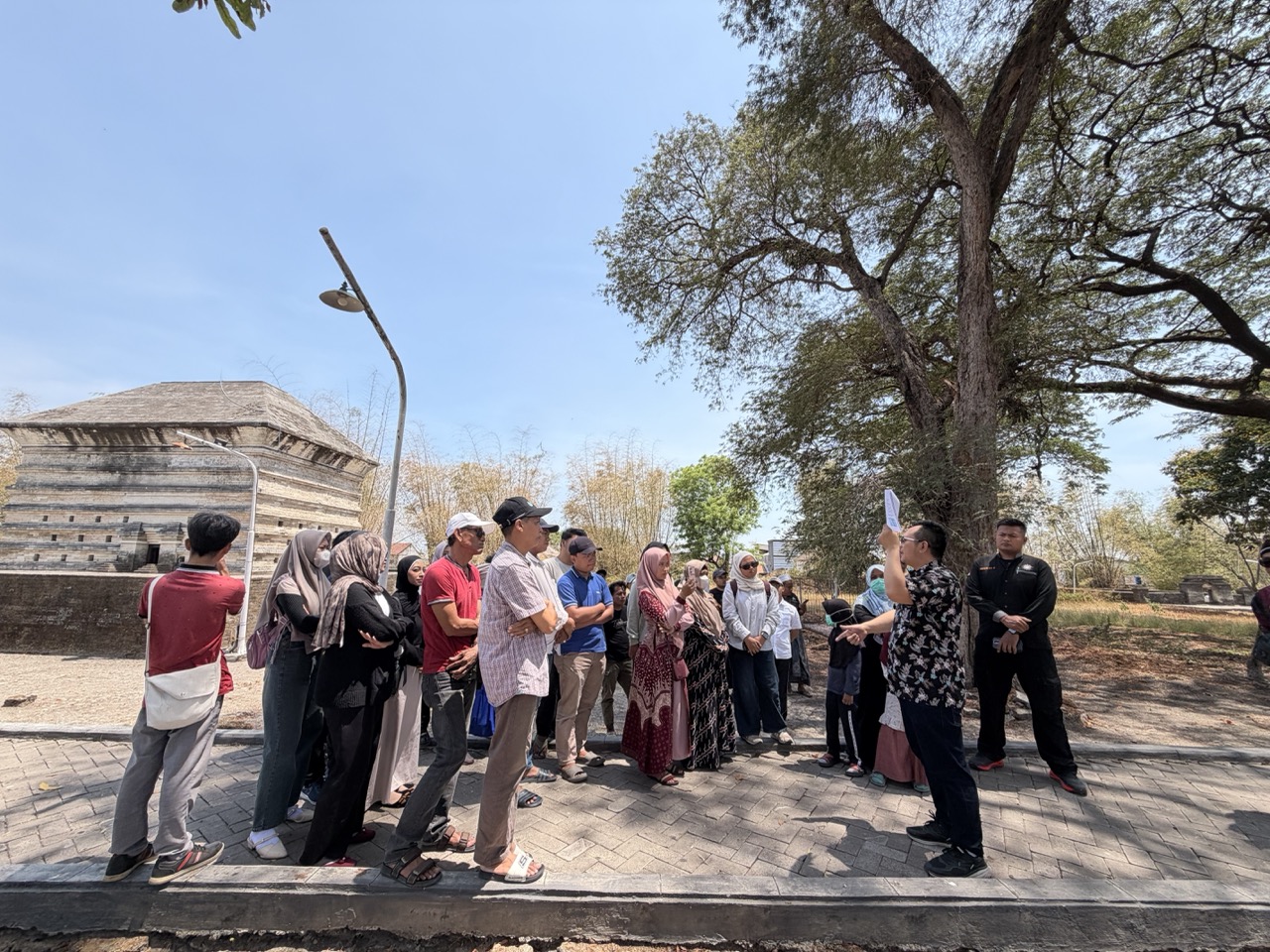
The site holds an important place in discussions of early Islam in Java. Indonesia’s cultural preservation agency cites the inscription associated with Fatimah binti Maimun as dating to 475 Hijri, or 1082 CE. Other published accounts give a later reading, making careful attribution preferable to presenting a single date as universally accepted. Leran is best described as an important early source of evidence, rather than conclusively the oldest Muslim cemetery across Southeast Asia.
Its significance also becomes clearer alongside other East Javanese sites. The same preservation agency records a gravestone dated 1376 at Troloyo in Trowulan and the 1419 gravestone of Maulana Malik Ibrahim in Gresik. Together, these remains help researchers examine Islamic presence across different periods and communities.
Turning Curiosity into Stories
The programme continued with a news and article-writing workshop led by senior journalist Nanang Purwono and a photography workshop facilitated by the MuseeID team. These activities connected heritage exploration with the ability to communicate it to others.
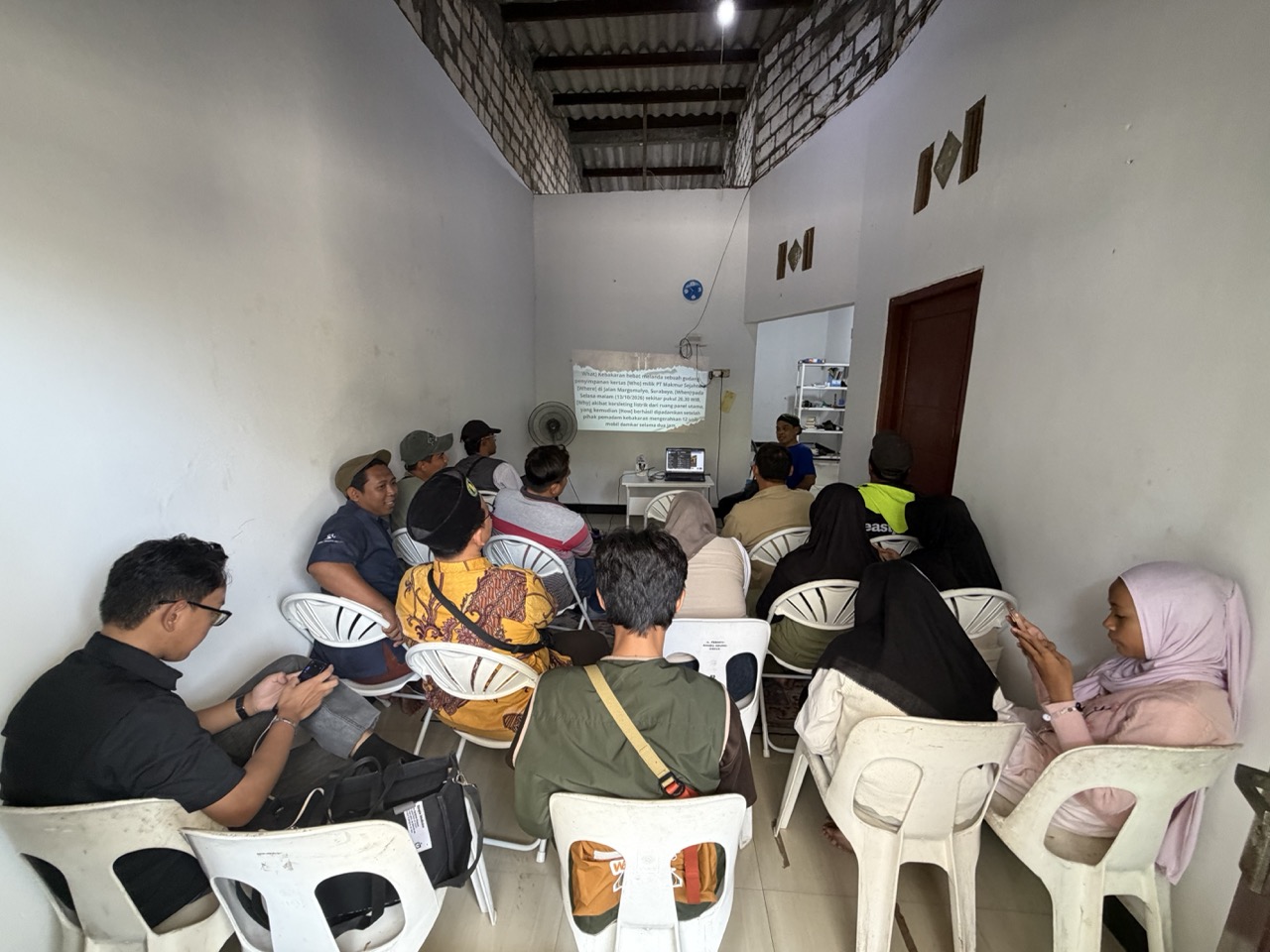
For students and residents, the combination offered a practical starting point: observe a place, listen to people who know it, document its details and develop a story that preserves context. Historical interpretation requires particular care when inscriptions, archaeological findings and oral traditions offer different kinds of evidence.
The approach builds on earlier community engagement in Leran. During a village training programme in June 2026, Nanang described the aim as creating “a learning process from residents to residents.” That earlier statement captures the value of helping communities become active interpreters of their own surroundings.
Heritage Served at the Table
Local women led the culinary workshop, preparing dadar kampat, lontong alur, urap alur and iced kawisto—foods and a drink identified by the organisers as distinctive parts of Leran’s culinary identity.
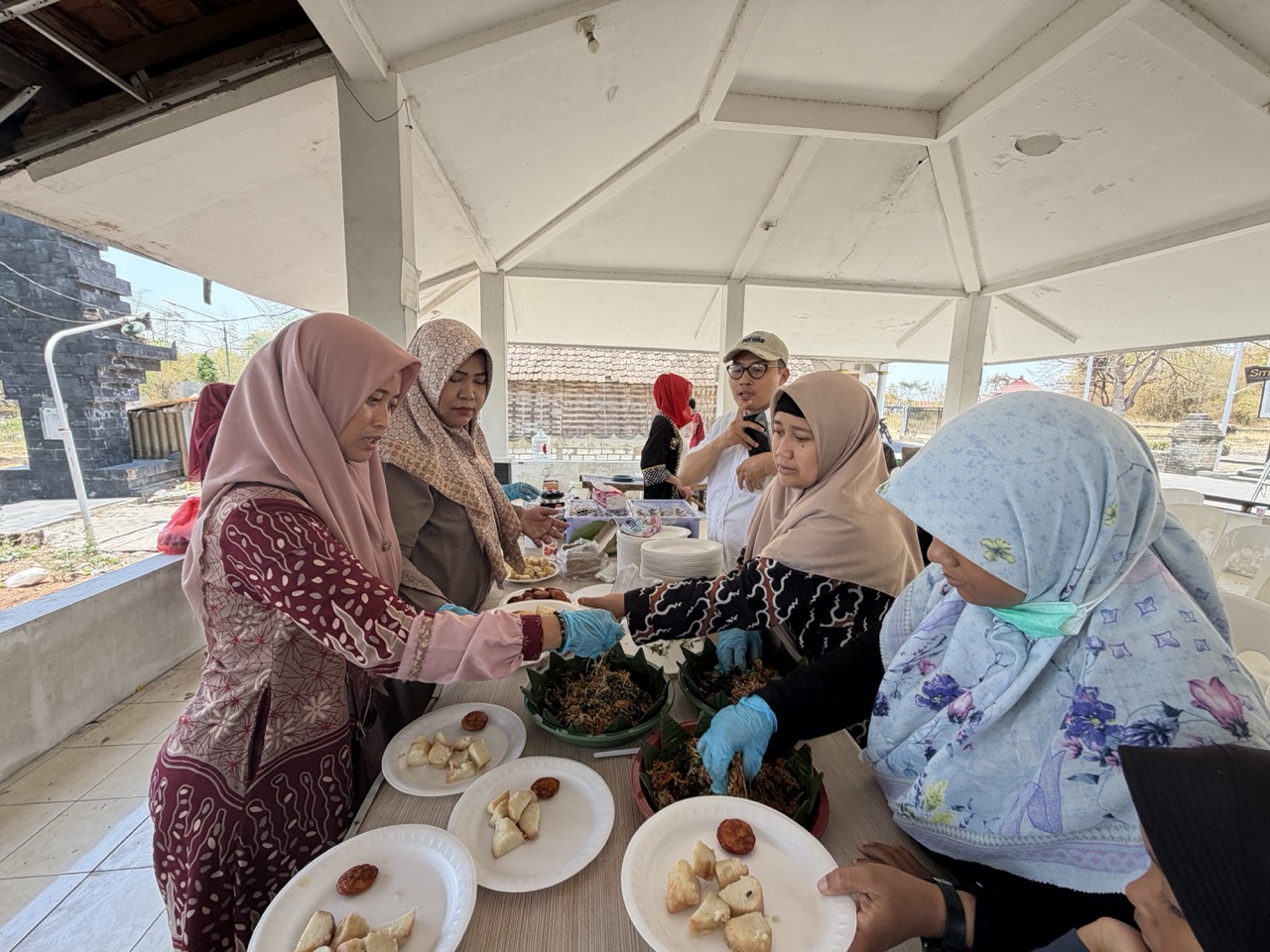
Their involvement broadened the event’s understanding of heritage. Alongside stone monuments and written records, recipes and cooking skills preserve knowledge through practice. Preparing familiar dishes together gave participants another way to encounter the village, with local women taking the lead as knowledge holders.
The culinary session also connected preservation with everyday livelihoods. Documenting recipes, explaining local food traditions and introducing them to visitors can create opportunities for residents, provided that the people maintaining those traditions remain central to their presentation.
Caring for the Place Behind the Story
Nofa’s message brought the discussion back to the village’s immediate surroundings. She emphasised cleanliness and avoiding litter as Leran works towards its ambition of becoming a heritage village.
That aspiration requires continuing care beyond a single event. A welcoming environment, respectful behaviour around graves and reliable historical information all contribute to how residents and visitors experience the site.
In an earlier discussion reported by RRI, Nofa expressed the broader philosophy: “We believe museums and heritage are not merely historical archives, but living spaces that empower communities.” Saturday’s programme gave that idea a local expression through learning, documentation and participation.
Leran’s treasure trove extends from its historic stones to the people who explain, cook, photograph and write about the village. Through One Community Camp, MuseeID helped connect those forms of knowledge—and encouraged the community to carry them forward.


