


ASEAN’s electricity demand is expected to surge over the coming decades. Industrial growth, the adoption of electric vehicles, and the expansion of the digital economy will all require significantly more power.
One emerging driver is data centres, whose electricity consumption is projected to rise from around 47 terawatt-hours (TWh) in 2025 to 815 TWh by 2060. This surge in demand presents a particular challenge for ASEAN’s energy transition. The region must ensure that using more electricity does not also mean generating more emissions.
This means ASEAN must expand its electricity supply while changing how power is generated and distributed.
That challenge was among the issues discussed in our interview with Dato' Ir. Ts. Razib Dawood, Executive Director of the ASEAN Centre for Energy (ACE), on the region’s energy future.
Drawing on The 9th ASEAN Energy Outlook (AEO9), Razib explained that alongside accelerating renewable energy development, ASEAN must address rising electricity demand from emerging sectors such as data centres and strengthen cross-border connectivity through the ASEAN Power Grid.
Data Centres and the Competition for Electricity
The growth of the digital economy carries a consequence that often goes unnoticed: the more digital services people use, the more electricity is needed to power them. Behind cloud computing, artificial intelligence, and data storage services are physical facilities that must operate around the clock: data centres.
Their electricity consumption comes from two main sources. Beyond powering servers and other IT equipment, data centres require cooling systems to keep their hardware running. As a result, expanding data centre capacity can create substantial electricity demand concentrated in particular locations.
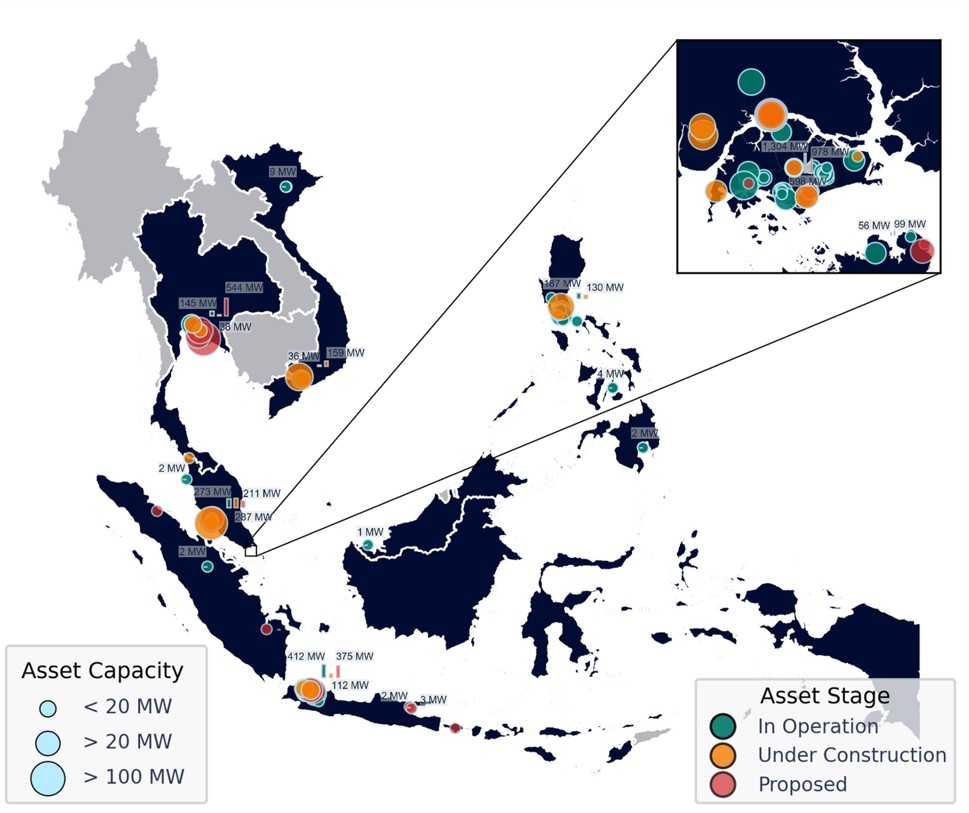
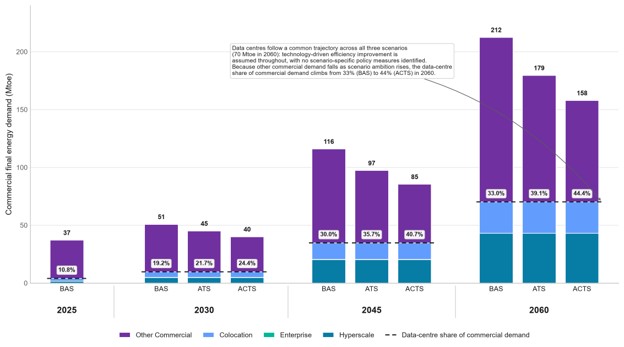
AEO9 estimates that data centre electricity consumption in ASEAN reached around 4 million tonnes of oil equivalent (Mtoe), or 47 TWh, in 2025. This is projected to rise to 9.7 Mtoe, or 113 TWh, by 2030, before reaching approximately 70 Mtoe, or 815 TWh, by 2060.
The impact is already significant in terms of demand growth. Data centres are expected to account for 20.7% of ASEAN’s increase in electricity demand between 2025 and 2030. This share is projected to fall to 8.1% between 2030 and 2040, as demand from industry and transport takes up a larger share.
However, a declining contribution to demand growth does not mean data centre electricity consumption will shrink. By 2060, the sector is projected to account for around 11.4% to 17.5% of ASEAN’s total electricity demand, depending on the scenario.
Meeting this demand involves more than simply adding generating capacity. Data centres require a stable power supply, but their facilities tend to cluster in specific locations. Where local grid capacity is limited, their expansion can intensify competition for access to electricity.
This competition also has an economic dimension. If demand grows faster than the power system can supply it, electricity costs may rise, making power less affordable for other users.
In other words, the expansion of the digital economy could put pressure on sectors that also depend on electricity to sustain essential activities.
Yet data centres do not have to become an additional source of pressure. Razib points to the possibility of turning their growth into an opportunity:
“However, due to its profitability potential with right policies the emergence of data centers can be designed as a method to accelerate renewable energy adoption in the region.”
One way to do this is to make data centre electricity consumption more flexible. Non-urgent computing activities, for instance, could be scheduled when renewable energy supply is abundant. Batteries and more efficient cooling systems could also help manage electricity demand without disrupting operations.
To make this possible, AEO9 highlights the need for energy efficiency standards, demand flexibility measures, and guidance on data centre siting. Rules governing grid connections and infrastructure cost allocation are also important to ensure that the expansion of new facilities does not shift additional costs onto other electricity users.
The ASEAN Power Grid and the Challenge of Connecting Electricity Supply
Pressure on electricity networks is not confined to areas where data centres are located.
As electricity demand rises across sectors, countries may find it increasingly difficult to rely solely on their domestic power supply. Energy resources, power generation facilities, and centres of consumption are not always located in the same place, or even within the same country.
This is where the ASEAN Power Grid (APG) comes in. The initiative aims to connect the electricity networks of ASEAN member states, allowing power to be traded across borders.
Countries with surplus electricity can supply those facing shortages, while importing countries gain access to power sources beyond their own borders.
The benefits extend beyond electricity trade. Interconnection allows ASEAN countries to draw on complementary energy resources and share system flexibility and reserves. This would enable the region to manage electricity demand through a more integrated system, rather than relying solely on separate national plans.
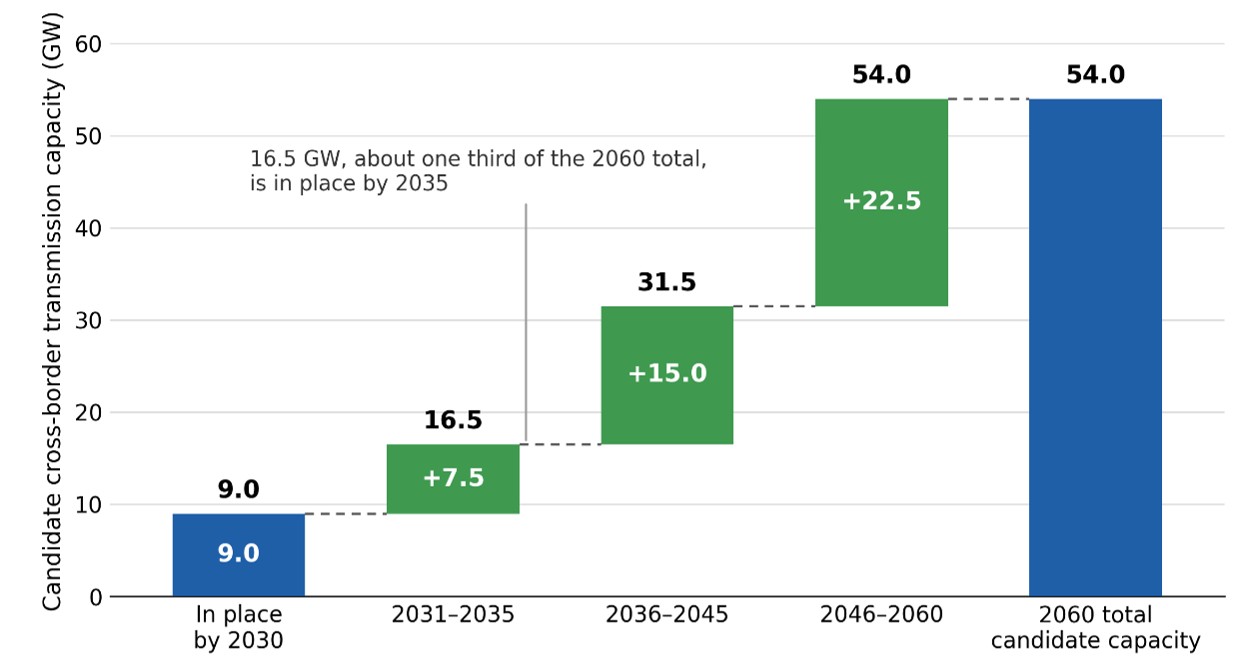
Under the ASEAN Coordinated Transition Scenario (ACTS), candidate cross-border transmission capacity is projected to increase from around 9 gigawatts (GW) in 2030 to 54 GW by 2060. These figures are modelled projections, not a reflection of infrastructure already in place. They nevertheless indicate the scale of infrastructure needed to expand regional electricity trade.
The challenge is that building physical connections does not automatically create a functioning cross-border electricity market. Member states still need to agree on rules governing network access, pricing, wheeling charges, technical standards, system security, and dispute resolution.
Without such agreements, interconnected grids may not necessarily be used effectively for electricity trade.
Financing presents another challenge. A transmission line may be built in one country but benefit several others. As a result, its costs cannot be allocated solely according to where the infrastructure is physically located. Razib emphasises this point:
“Cross-border infrastructure creates benefits in more than one jurisdiction, so costs cannot necessarily be allocated simply according to where an asset is physically located.”
AEO9 does not prescribe a single regional tariff or cost-sharing formula for all member states. Instead, countries need to agree on how project benefits and risks should be distributed, giving each participant an incentive to invest in and operate shared infrastructure.
Turning Regional Plans into Real Projects
Agreements on rules and financing must ultimately translate into projects that can be built. This is a considerable undertaking, as cross-border electricity infrastructure involves multiple governments, system operators, regulators, and investors, each with their own interests and decision-making processes.
ASEAN has the ASEAN Plan of Action for Energy Cooperation (APAEC) as a framework for maintaining continuity in regional energy cooperation.
Meanwhile, the ASEAN Interconnection Masterplan Study (AIMS) helps identify the needs and opportunities for developing cross-border electricity connections. Further work on the study is needed to clarify technical options and prepare projects for the next stages of development.
AEO9 also stresses the importance of more detailed planning. ASEAN needs to explore different scenarios and develop a clearer picture of the region’s power grid so that its interconnection vision can be translated into concrete technical plans and financing arrangements.
This would give the APG a measurable path towards implementation, rather than leaving it as a regional ambition.
Ultimately, ASEAN’s growing electricity demand shows that the energy transition is about more than how much electricity the region can generate.
ASEAN must also manage concentrated demand from emerging sectors, keep electricity affordable, and ensure that cross-border networks can deliver power where it is needed. The region’s ability to bring these three challenges together will shape the future of its integrated energy system.


