What do coal, nuclear, biomass, geothermal and solar thermal power plants have in common? They all use heat to make electricity, and in many cases, that means boiling water.
Yes, even a nuclear power plant can be described, in very simplified terms, as a very sophisticated way of boiling water.
A nuclear reactor produces heat through nuclear fission. That heat turns water into steam, the steam spins a turbine, and the turbine drives a generator that produces electricity. A coal plant does almost the same thing. The difference is what produces the heat, instead of nuclear fission, coal is burned.
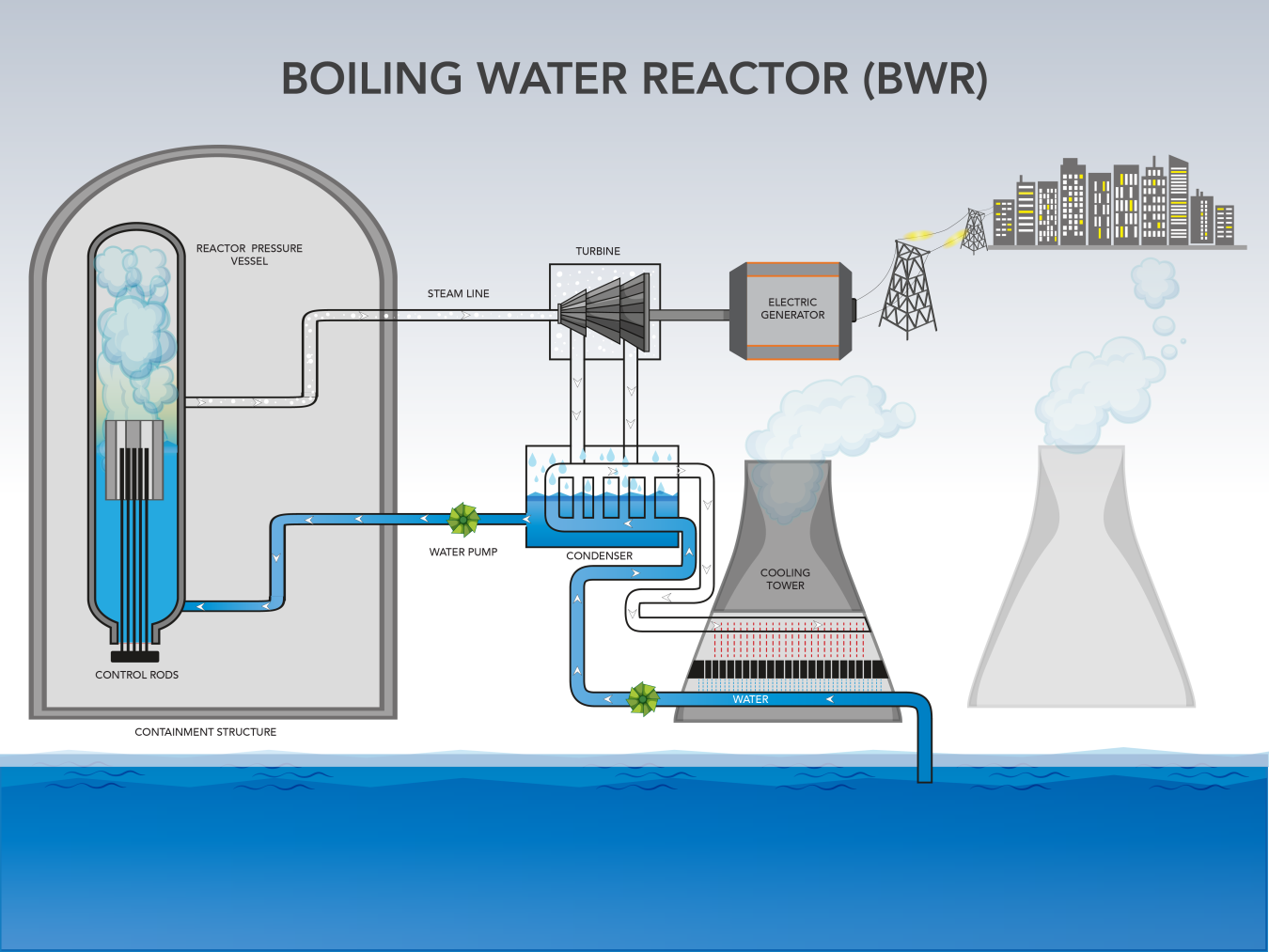
The same basic idea also appears in biomass, geothermal and solar thermal power plants. Different energy sources. Same basic trick, heat the water, make steam, spin a turbine.
According to the U.S. Energy Information Administration (EIA), steam turbines accounted for 42.5% of U.S. utility scale electricity generation in 2022. Coal and nuclear power alone accounted for 19.4% and 18.2%, respectively, through steam turbines.
So, Why Water?
The important part is not actually the water. It is the steam.
When water is heated and becomes high pressure steam, the steam can flow through a turbine and push its blades. The turbine spins a shaft connected to a generator, and the generator converts that mechanical energy into electricity.
Afterward, the steam is cooled back into water and can be sent through the system again. That means a power plant can spend enormous amounts of energy producing electricity while repeatedly moving the same basic ingredient through a loop:
water → steam → turbine → electricity → water
The heat source is what changes.
- In a coal fired plant, burning coal provides the heat.
- In a nuclear plant, fission provides the heat.
- In a biomass plant, organic material provides the heat.
- In a geothermal plant, heat from inside the Earth can provide the steam or heat a working fluid.
- In a solar thermal plant, mirrors can concentrate sunlight to generate heat that produces steam.
The EIA lists fossil fuels, nuclear energy, biomass, geothermal energy and solar thermal energy among the sources that can be used with steam turbines.
But Then What About Gas, Wind and Solar?
This is where the story gets interesting. Not every power plant needs to boil water.
A simple cycle natural gas plant can burn gas and send the resulting hot gases directly through a turbine. There is no steam turbine in that process. But many gas plants use combined cycle technology, which brings water back into the picture.
First, natural gas is burned to spin a gas turbine. The exhaust coming out of that turbine is still extremely hot, so instead of letting all that heat go to waste, the plant uses it to produce steam.
That steam then spins another turbine.
In 2022, combined cycle plants generated about 33.8% of U.S. utility scale electricity, making them the country's largest generation technology by share that year.
Other power plants skip the steam completely.
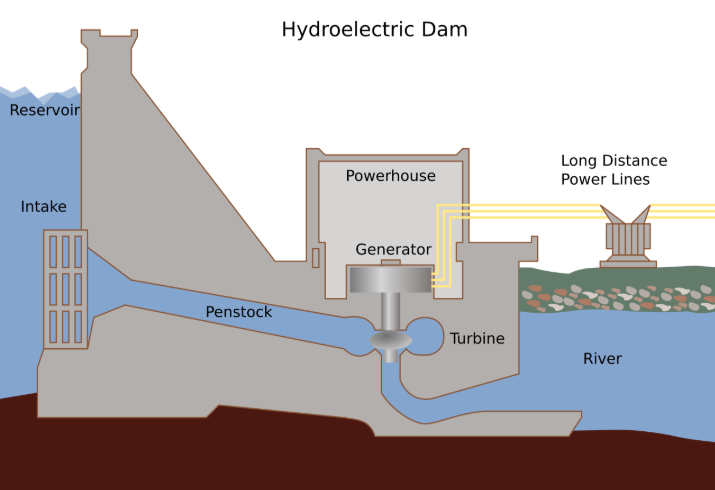
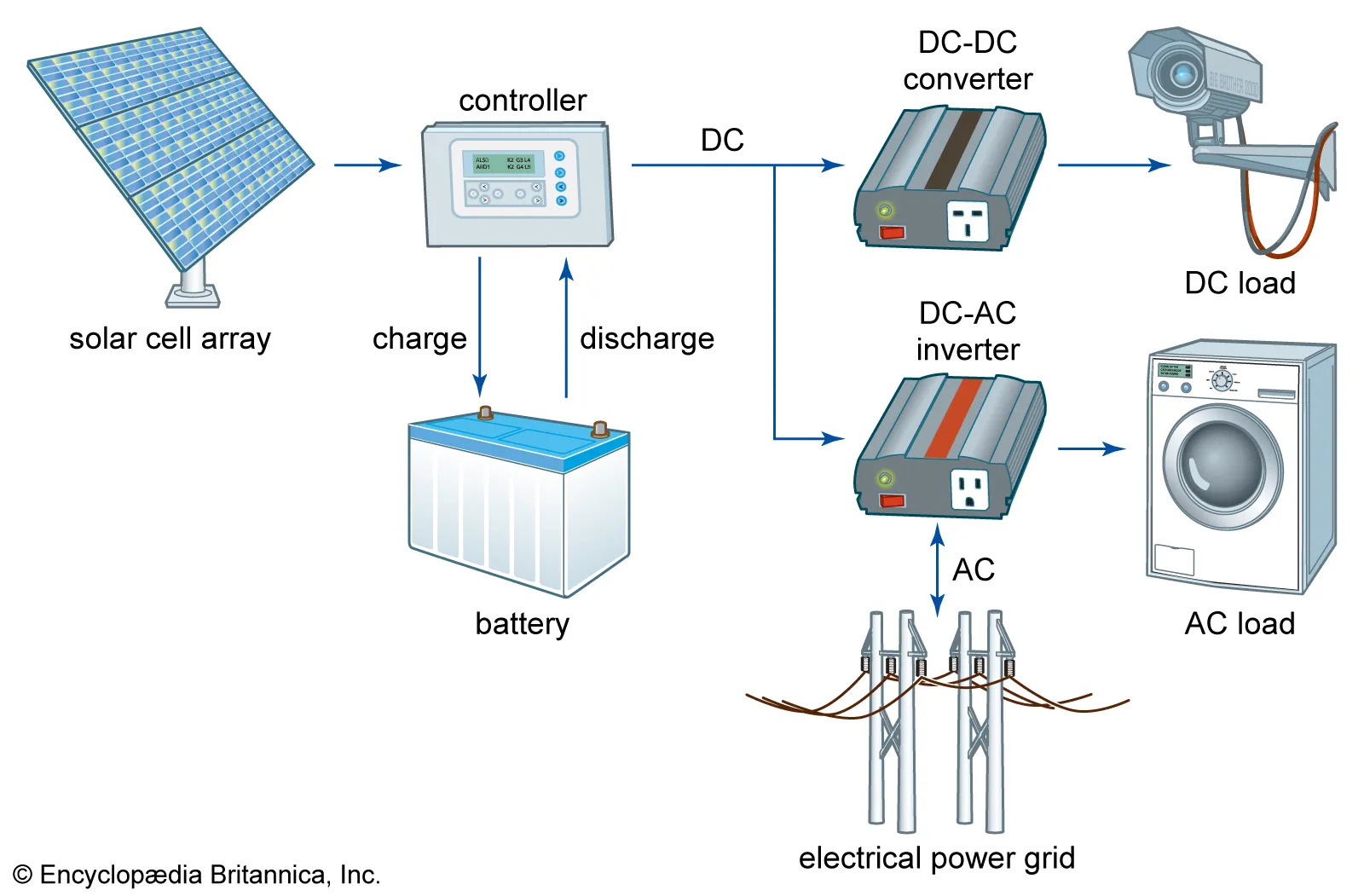
Hydropower uses moving water to spin turbines. Wind turbines use moving air. Solar photovoltaic panels convert sunlight directly into electricity without first turning water into steam.
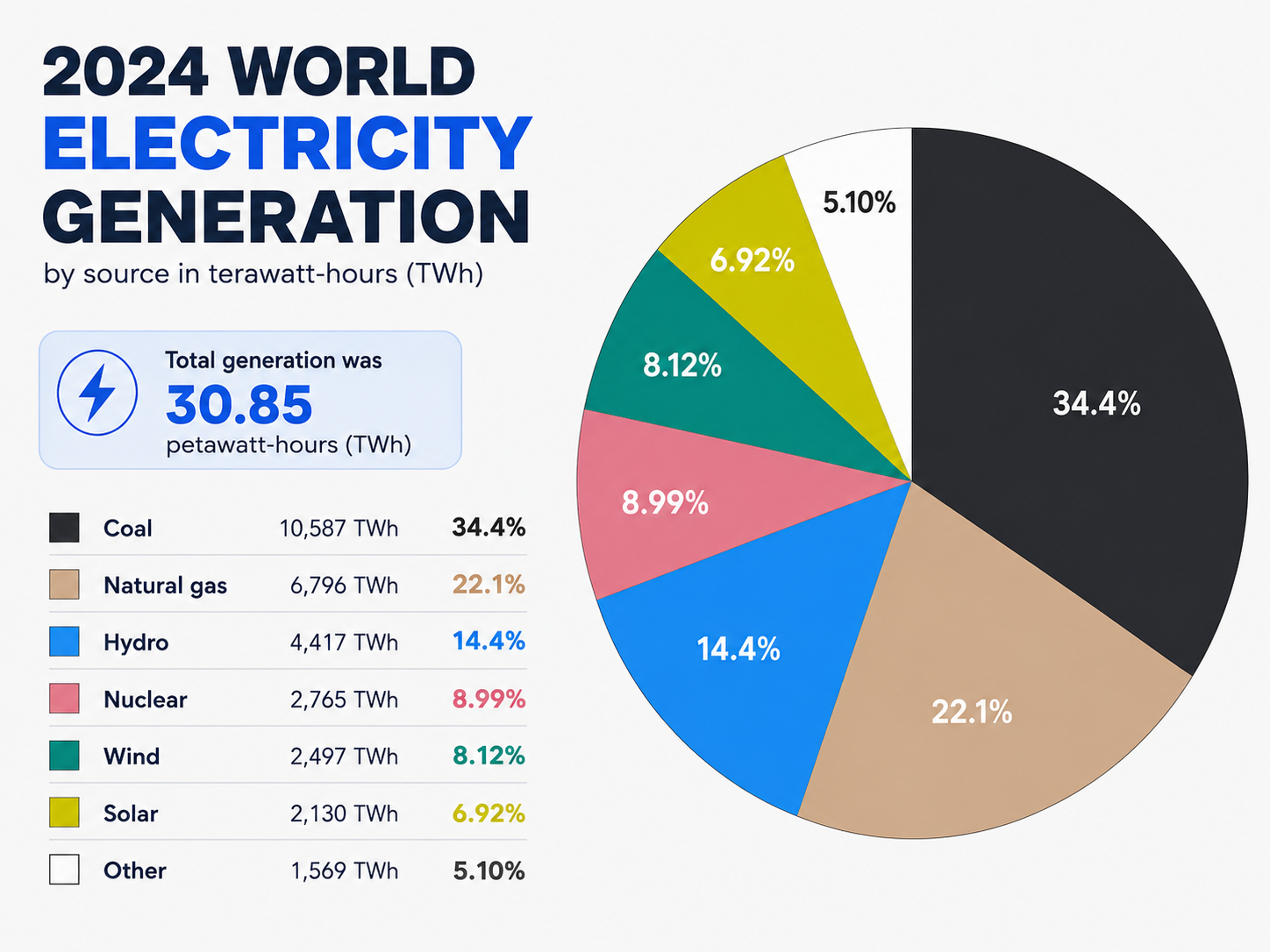
Globally, wind and solar PV together produced 17% of electricity in 2025, according to the International Energy Agency (IEA). Renewables as a whole supplied 34%, while coal supplied 34% and natural gas 21%.
So the next time you see a huge cooling tower, a nuclear reactor or a coal fired power station, there is a chance that behind all the pipes, turbines and complicated machinery, the basic idea is surprisingly simple:
make heat, boil water, spin a turbine, generate electricity.
Humanity built some incredibly complicated machines just to boil water and spin a turbine.