


A shaded walk to school, a home protected from flooding, a bus that arrives on time: these everyday experiences reveal how well a city serves its people. As Southeast Asia marks World Cities Day on October 31, the region’s urban future is being shaped through decisions about housing, water, mobility and the neighbourhoods residents call home.
The 2026 theme, “Regenerating the City: Adequate Housing for All,” places those needs at the centre of the discussion. For Southeast Asia, it offers an opportunity to connect ambitious development with a practical question: who benefits when a city grows?
Building Growth Around Everyday Life
The scale of the challenge is considerable. ASEAN’s 2022 Sustainable Urbanisation Report projected that almost 56% of the region’s population would live in urban areas by 2030. Its emphasis on secondary cities highlights how urban transformation extends beyond familiar capitals and megacities. Smaller centres also need investment in housing, sanitation, transport and public institutions.
Adequate housing connects these priorities. A dwelling may be structurally sound yet remain difficult to live in if residents face unreliable water supplies, dangerous heat or expensive journeys to work. Regeneration therefore requires attention to entire neighbourhoods, including the markets, schools and social networks that sustain them.
For lower-income households, improvements should also protect the ability to remain in well-connected areas. Renovated streets and attractive waterfronts offer limited progress if rising costs push established communities farther from their livelihoods.
Making Room for Water
Bangkok offers a tangible example of how public space can serve several purposes. Opened in 2017, the 4.4-hectare Chulalongkorn University Centenary Park combines recreation with wetlands, a rain garden and underground water-management infrastructure. Its design gives rainfall somewhere to collect rather than immediately overwhelming surrounding streets.
“Centenary Park gives room for people and room for water, which is exactly what we and our cities need,” Thai landscape architect Kotchakorn Voraakhom said in remarks reproduced by NPR’s TED Radio Hour.
The lesson travels beyond Bangkok. Flood adaptation works best when drainage, open space, housing and maintenance are considered together. A park can help manage runoff, but it needs functioning waterways and wider infrastructure around it.
The same distinction is important when discussing Jakarta. Land subsidence and sea-level rise are separate processes that compound coastal flood exposure. Developing Nusantara does not remove the need to improve water services, drainage and housing conditions for Jakarta’s residents. The future of an existing city still depends on sustained investment in the people living there.
Turning Smart Systems into Better Services
Regional cooperation provides another route forward. The ASEAN Smart Cities Network, established with 26 pilot cities in 2018, had expanded to 38 cities by January 2026. Its stated purpose is to improve residents’ lives, with technology supporting that goal.
That distinction helps set meaningful standards. A transport application becomes valuable when passengers receive dependable information. Flood sensors need to connect with warnings that reach vulnerable households. Digital public services should remain accessible to people without smartphones or reliable internet connections.
Singapore’s NEWater programme illustrates how technical innovation can address an essential urban need. Advanced membrane treatment and ultraviolet disinfection turn treated used water into high-grade recycled water, diversifying the city-state’s supply.
Such systems also involve trade-offs. Singapore’s water agency recognises that increasing reliance on NEWater and desalination raises energy demands, making efficiency and decarbonisation part of water security itself. Sustainable infrastructure requires continued improvement after construction.
Connecting Homes with Opportunity
Public transport gives housing policy a wider reach. Rail networks in Jakarta, Bangkok and Kuala Lumpur provide useful settings for considering how homes connect with employment, education and healthcare. Their social value depends on fares, reliable connections and safe access to stations.
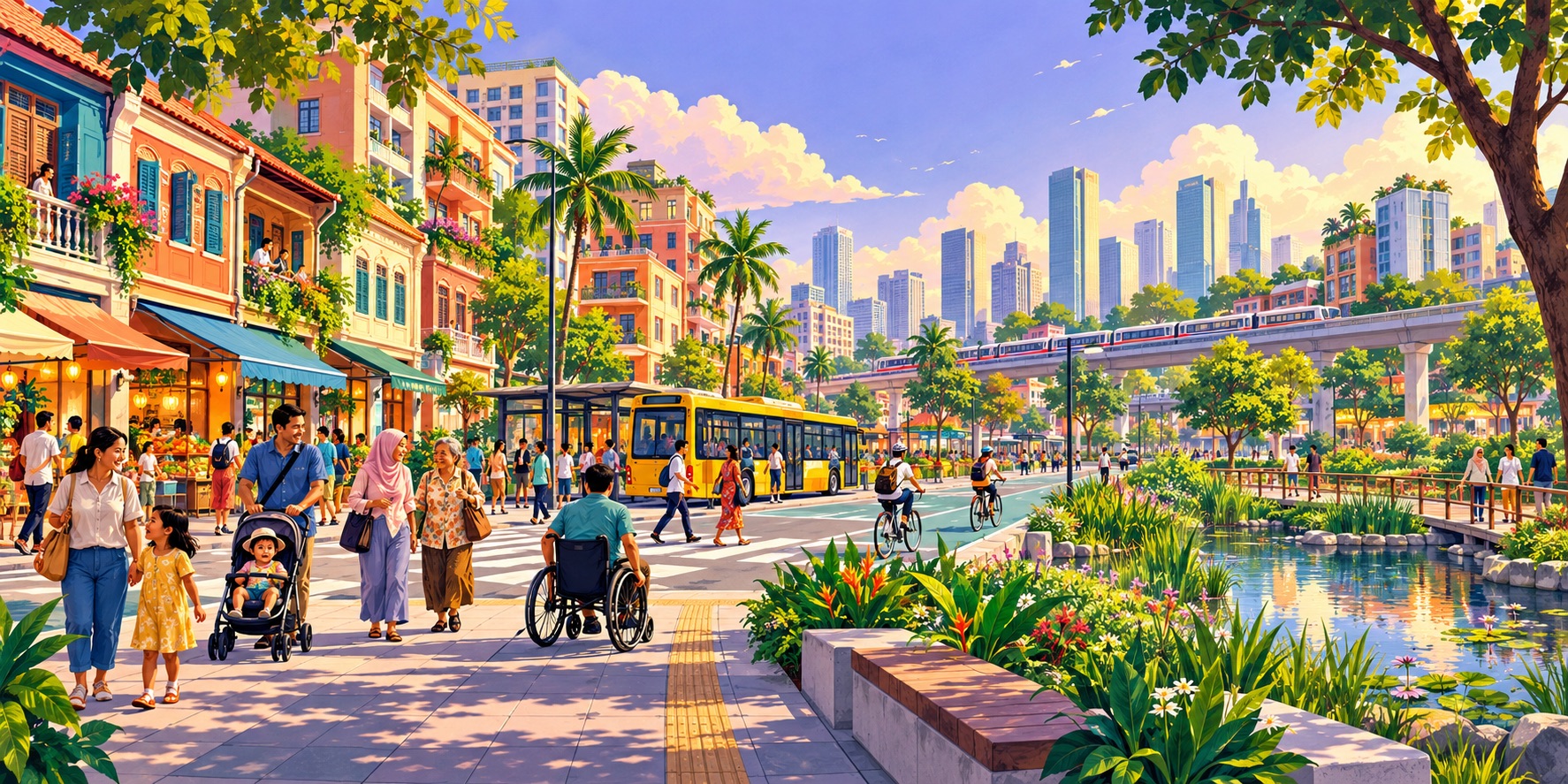
A short journey can still be difficult for an older person facing broken pavements, a wheelchair user encountering steps, or a parent crossing a busy road with children. Shaded footpaths, accessible vehicles and feeder services help make major infrastructure useful at neighbourhood level.
Singaporean planner Liu Thai Ker captured the balance required through his call for “the mind of a scientist, the heart of a humanist and the eyes of an artist.” His architectural practice preserves that advice as part of his planning legacy.
Evidence, empathy and thoughtful design belong together. Travel times and construction totals tell part of the story; residents’ ability to move safely and affordably completes it.
Keeping Heritage Neighbourhoods Alive
Regeneration also involves protecting places that already hold cultural and economic value. Melaka and George Town, jointly inscribed on UNESCO’s World Heritage List in 2008, reflect more than 500 years of trading and cultural exchange. Their significance includes living traditions alongside historic architecture.
Adapting existing buildings can create space for contemporary uses while retaining a neighbourhood’s identity. Successful conservation should also support residents, traditional businesses and everyday services. Historic districts remain meaningful when people can continue living and working within them.
This World Cities Day, Southeast Asia’s strongest measure of progress is close to home: neighbourhoods that become safer, more accessible and more affordable as they develop. Building that future requires sustained cooperation—and listening carefully to the people who already give each city its life.


