The Palawan Peacock-Pheasant (Polyplectron napoleonis) is an endemic bird species from the Phasianidae family that inhabits the Palawan Archipelago, Philippines. The bird is a close relative of junglefowl and peafowl. It serves as the official identity fauna of Puerto Princesa City on Palawan Island.
Below are five facts about the Palawan Peacock-Pheasant:
1. An Endemic Bird from Palawan Island
The Palawan Peacock-Pheasant has a limited natural distribution in its native habitat in the Philippines. The bird lives in the wild exclusively on the mainland of Palawan Island and a few surrounding smaller islands.
In its native habitat, the bird inhabits primary and secondary forests at elevations below 800 meters above sea level. The bird's largest population resides within protected areas such as the Puerto Princesa Subterranean River National Park. Additionally, populations of Palawan Peacock-Pheasant are also recorded around Mount Mantalingahan and Cleopatra's Needle.
2. Becoming the Symbol of Puerto Princesa City
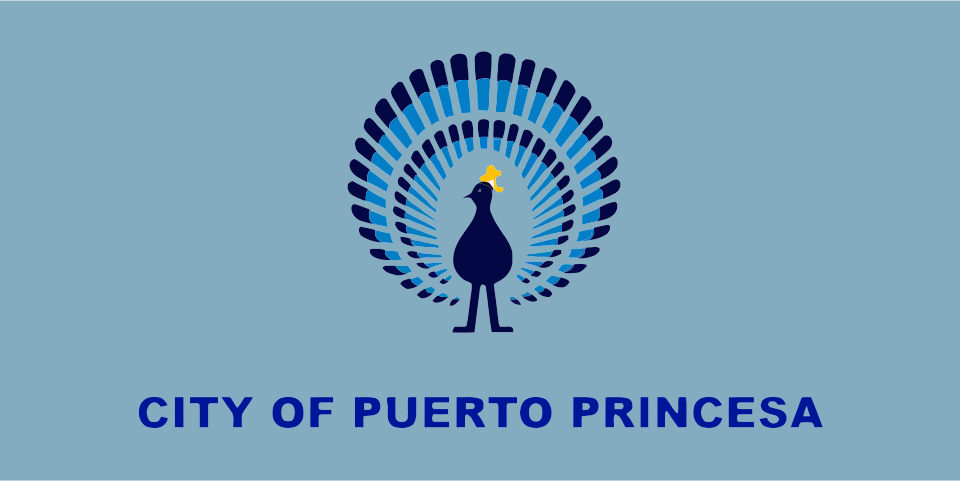
The Palawan Peacock-Pheasant plays an important role in the identity structure of Palawan Island, particularly in Puerto Princesa City. Local residents know the endemic bird by its local name, Tandikan. The city government officially designated the Palawan Pecock-Pheasant as the city bird.
An illustration of the Palawan Peacock-Pheasant is featured directly on the official seal of Puerto Princesa City. On the emblem, the image of the bird sits alongside other natural landmarks, namely the Puerto Princesa Subterranean River and the Almaciga tree (Agathis philippinensis).
3. The Appearance of Males and Females Looks Strikingly Different
The Palawan Peacock-Pheasant exhibits sexual dimorphism, which clearly distinguishes the appearance of males from females. Male birds possess iridescent blue plumage on their back and chest areas. The male's head features an erect crest that is longer than that of the female.
Meanwhile, female birds have predominantly brown plumage across their entire body. The brown coloration serves as natural camouflage when on the ground. Females utilize the color scheme to conceal themselves while incubating eggs behind bushes.
Beyond color differences, adult male bodies are larger than those of females. The male's tail feathers feature circular eye-like patterns known as ocelli. The patterns reflect a blue-green hue when exposed to direct sunlight.
4. Displaying Tilted Tail Feathers During Mating Rituals
Male birds perform courtship displays during the breeding season in the wild. The display aims to attract females within their daily territory. The process relies on the specific movement of their tail feathers.
Unlike typical peafowl, males of the bird do not fan their tail feathers symmetrically upward. Instead, the tail is fanned laterally at an angle of up to ninety degrees toward one side of the body. The tail fan is positioned vertically facing the female's view.
Next, the male walks in a circle while lowering one wing toward the ground. The tilted movement displays the shimmering reflection of the ocelli on the tail feathers directly toward the female. The female observes the coloration before selecting a mate.
5. Its Existence Is Increasingly Threatened by Deforestation and Poaching
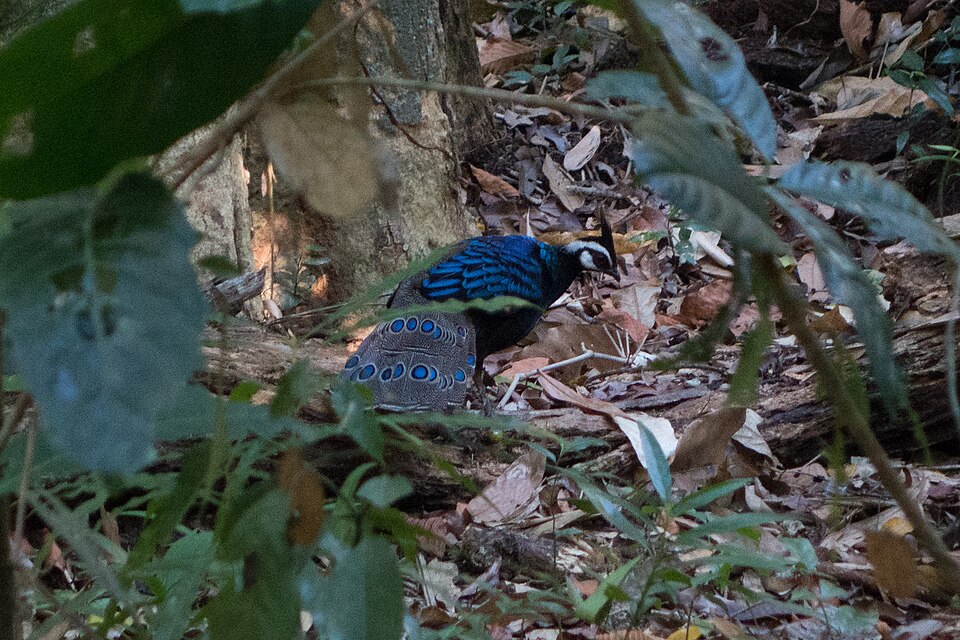
Palawan Peacock-Pheasant populations are threatened due to the loss of primary lowland forests. Land clearing in the central and southern regions of Palawan Island is the primary cause of natural habitat loss. Nickel mining activities and oil palm plantation expansion on the island accelerate the loss of forest cover.
In addition to habitat loss, the bird's population is affected by poaching. The bird is hunted for sale as a commodity in the exotic pet trade.
Based on the threats, the international conservation organization IUCN has classified the bird as Vulnerable since 1994. The population's survival now depends entirely on the remaining protected forest areas on Palawan Island.