Australia is bigger than all 11 countries of Southeast Asia put together. The region’s 11 sovereign states are Indonesia, Malaysia, Thailand, Vietnam, the Philippines, Myanmar, Laos, Cambodia, Timor-Leste, Brunei and Singapore.
All area figures below are land area from World Bank data for 2023, which comes from the Food and Agriculture Organization of the United Nations (FAO).
Land area excludes inland water such as major rivers and lakes, and it excludes sea claims such as exclusive economic zones. Australia’s land area is 7,692,020 square kilometers. The 11 Southeast Asian countries together have about 4,424,304 square kilometers.
That leaves a gap of roughly 3.27 million square kilometers. Australia is about 1.7 times the size of the whole region. The gap alone is bigger than India, which has a land area of about 2.97 million square kilometers.
Indonesia Makes Up Nearly Half of Southeast Asia
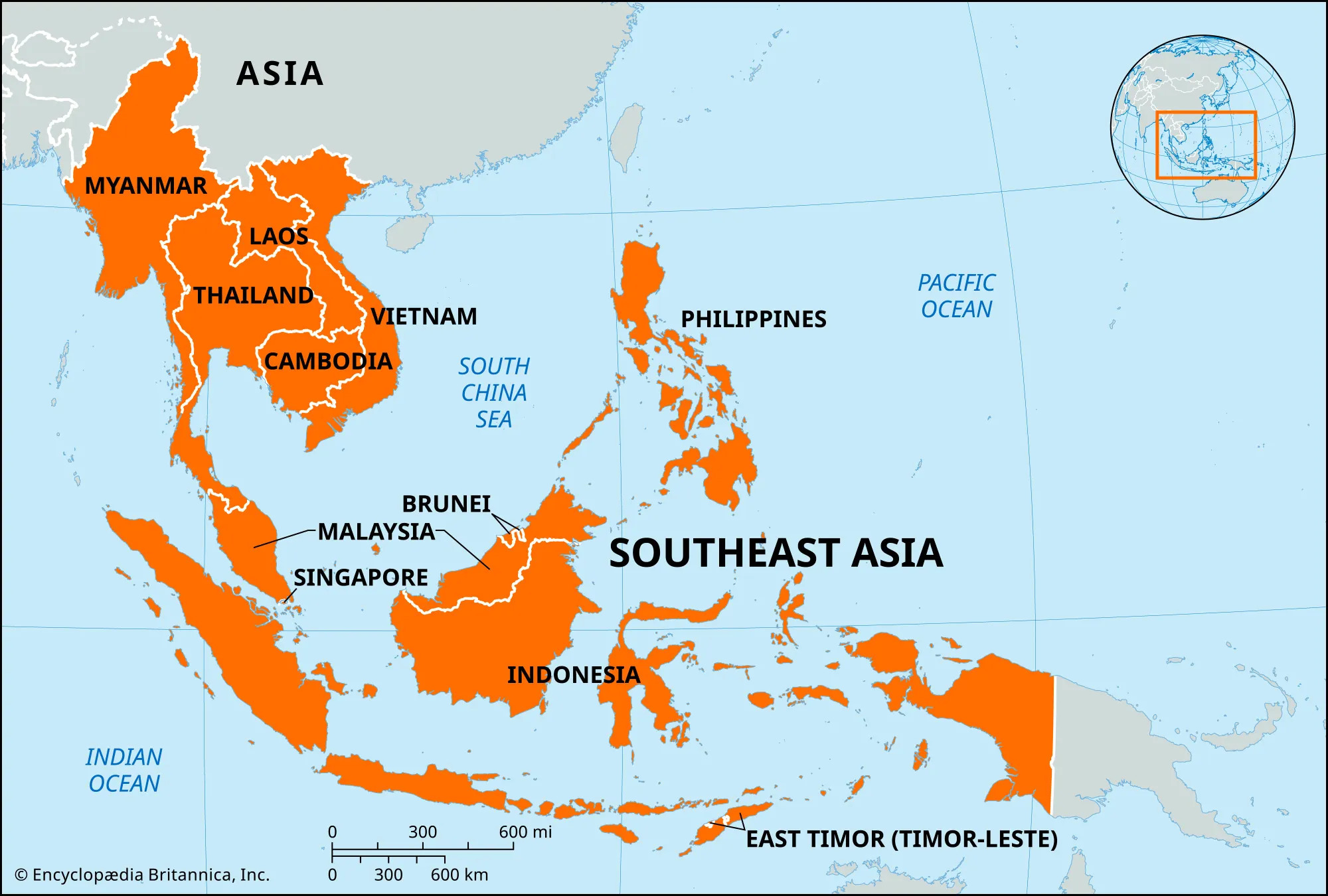
Indonesia is by far the biggest, with about 1.89 million square kilometers, or 42.8 percent of the region’s land. It is also an archipelago of about 17,000 islands.
Myanmar comes next at around 652,670 square kilometers, then Thailand at 510,890. These three countries make up about 69 percent of Southeast Asia.
The other eight share the remaining 31 percent. Malaysia has about 328,550 square kilometers, Vietnam 313,429 and the Philippines 298,170. Laos has 230,800 and Cambodia 176,520. The three smallest are Timor-Leste at 14,870, Brunei at 5,270 and Singapore at 724.8.
Indonesia’s share of people is close to its share of land. Its 284.67 million residents in 2025 are about 42 percent of the region’s more than 680 million.
Big as it is, Indonesia is still only about a quarter of Australia. The other ten countries together cover about 2.53 million square kilometers, almost the same as the total area of Western Australia, one of Australia’s six states.
Australia Is the World’s Sixth-Largest Country
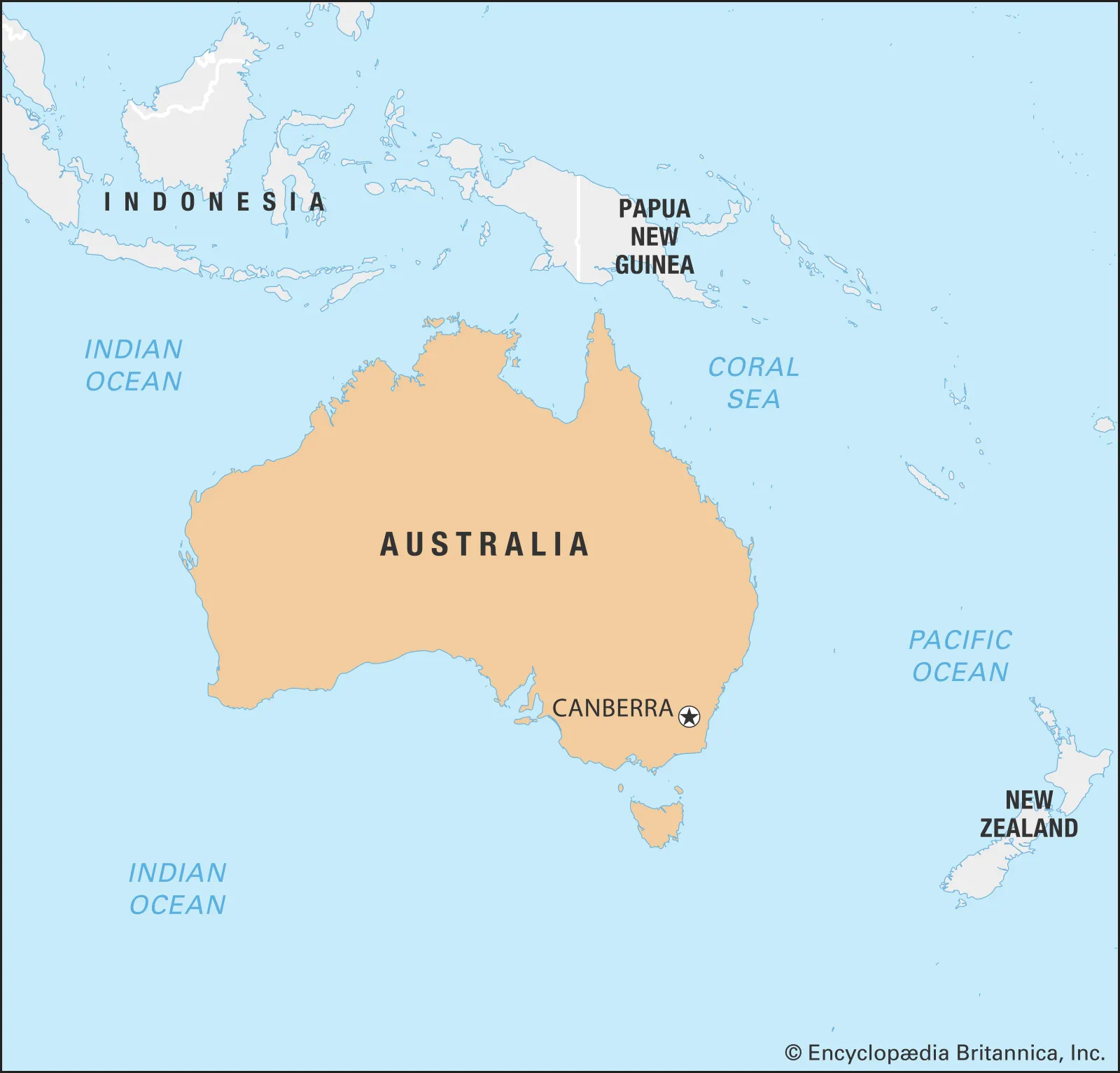
Australia is the sixth-largest country in the world by area, according to Geoscience Australia. Only Russia, Canada, China, the United States and Brazil are bigger.
Its area of about 7.69 million square kilometers is roughly five percent of all the land on Earth. The Australian continent is the smallest continent in the world.
Western Australia alone covers about 2.53 million square kilometers, more than Indonesia, Southeast Asia’s biggest country. The whole country is divided into six states and two mainland territories, plus about 8,000 islands.
The land also holds some of the world’s largest deserts. The Great Victoria Desert, for example, covers about 348,750 square kilometers across Western Australia and South Australia.
Very few people live in all that space. Australia has about 27.9 million people, while Southeast Asia has more than 680 million, roughly 24 times as many. That works out to about 3.6 people per square kilometer in Australia, against about 154 in Southeast Asia.
Why the Numbers Need Context
Australia being bigger on land does not mean it has more sea territory than Southeast Asia. Indonesia and the Philippines alone hold about 8.4 million square kilometers of exclusive economic zone, more than Australia’s roughly 8.1 million.
The seas around their islands are a big part of their geography, but land-area figures leave them out. Even so, 11 countries across the mainland and islands still add up to less land than Australia.