Today, high-speed trains are part of everyday life in many countries. People take them to work, to visit family, or to skip a short flight. But there was a time when no country had built a commercial one, and nobody knew if it would be worth the cost.
Japan was the first to try. In the late 1950s, its busiest railway line could no longer keep up with the number of passengers, so the country decided to build a new one from scratch. It needed different tracks, new technology, a loan from abroad, and far more money than first planned.
When the railway opened in 1964, trains ran between Tokyo and Osaka at 210 kilometers per hour. Even some of the people who made it happen were not there to see it.
Japan Needed a New Railway
After World War II, Japan’s economy grew fast, and more people needed to travel.
The Tokaido Line linked Tokyo with Osaka, the center of commerce and industry in West Japan. It was almost full and could not keep up with the growing traffic.
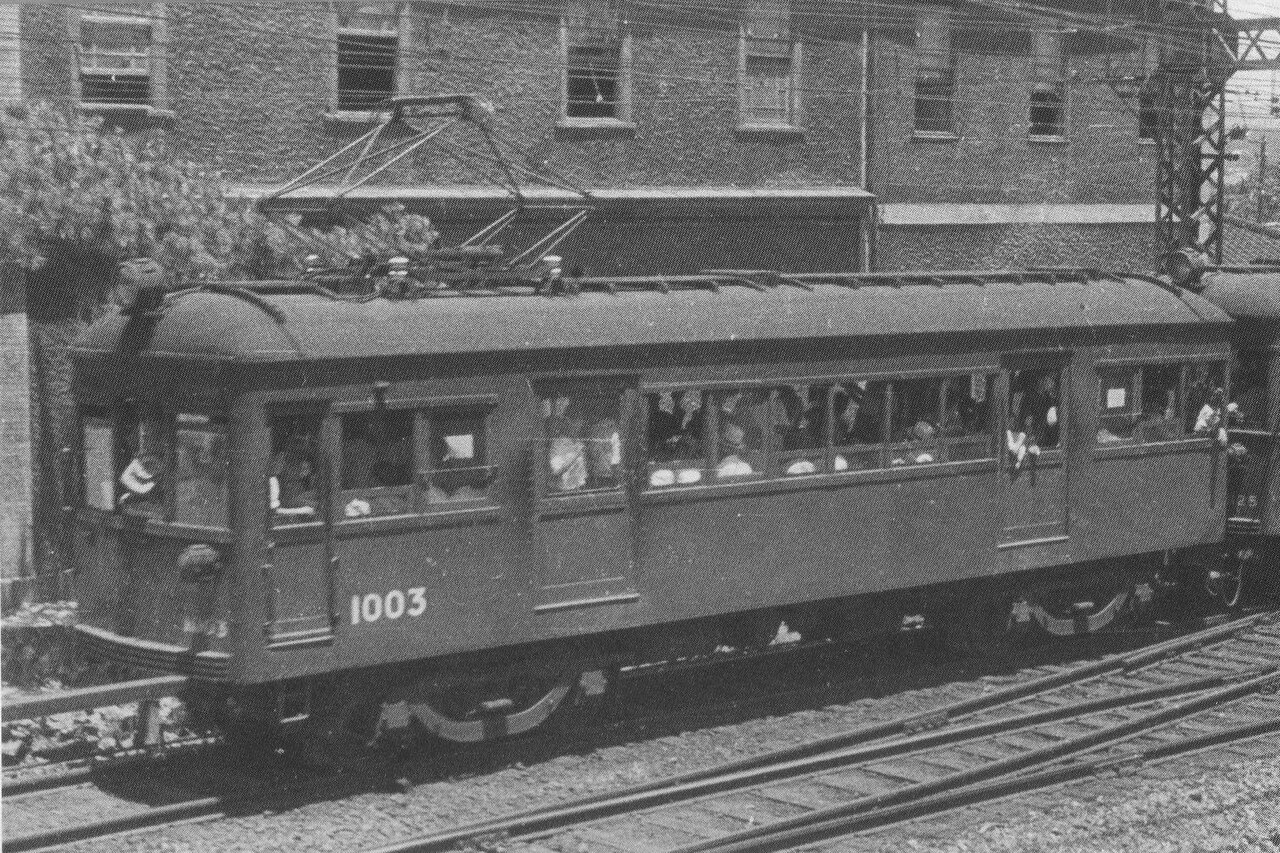
Birth of the Shinkansen-A Memoir, published in the Japan Railway & Transport Review, reported that the Tokaido Line carried about 24% of all Japanese National Railways (JNR) passengers and 23% of its freight after it was fully electrified in autumn 1956.
Despite handling such a large share of traffic, the line accounted for only around 3% of JNR’s total service kilometers. With traffic volumes growing by approximately 7.6% annually, the transport capacity of the Tokaido Line was considered to need doubling.
Opinions split three ways. One group wanted a narrow-gauge line parallel to the existing one, another wanted a narrow-gauge line along a completely different route, and the third wanted a standard-gauge line like the major railways in Europe.
The Cabinet decided in December 1958 to construct a separate standard-gauge trunk line along the Tokaido Line.
A Different Kind of Railway
Most trains in Japan ran on rails set 1,067 millimeters apart. The new line used 1,435 millimeters, a wider gap that is the standard in much of the world. Construction began on April 20, 1959. The trains were designed to run at up to 210 kilometers per hour.
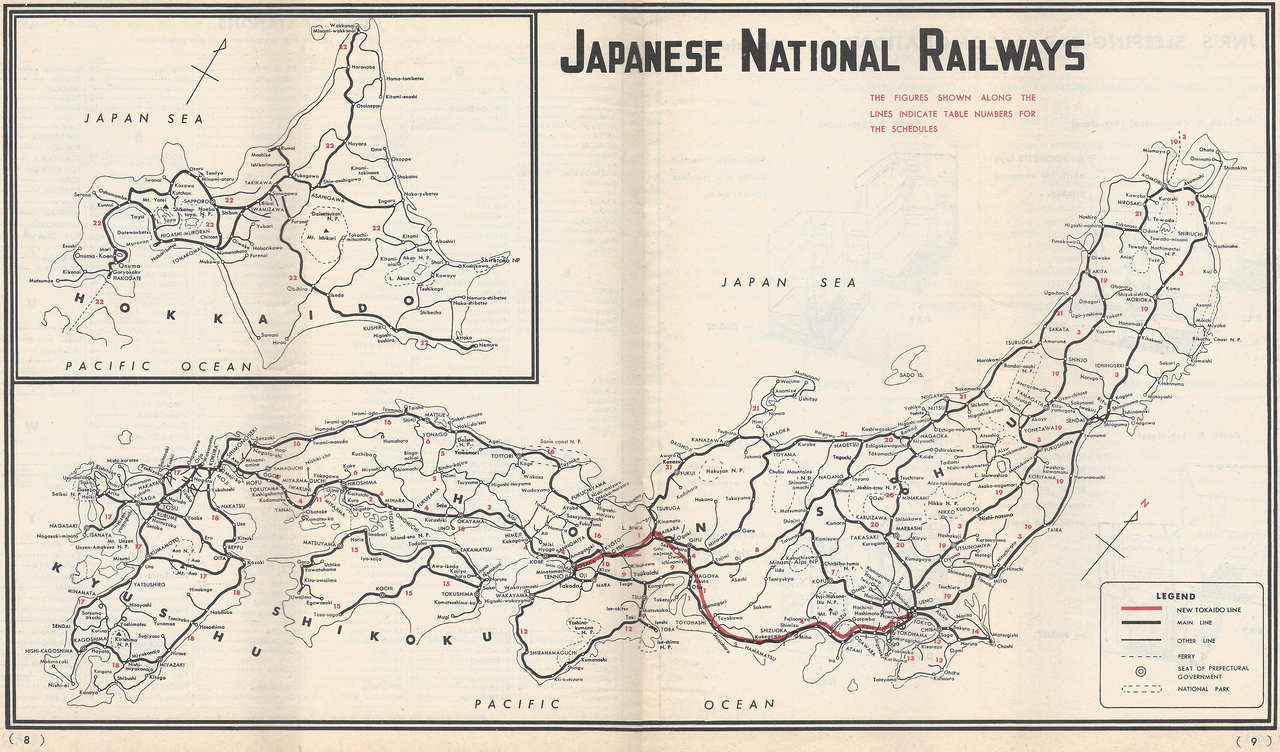
Speed was not the only thing that was new. The line ran on 25,000-volt alternating current from overhead wires, used Automatic Train Control (ATC) to manage train speed, and had no level crossings, so no road crossed the tracks at ground level.
Building all this across about 515 kilometers meant digging tunnels, putting up bridges and elevated tracks, and buying large amounts of land.
The Billion-Dollar Gamble
Hideo Shima, JNR’s Vice President for Engineering, wrote in his memoir that raising enough construction money was JNR’s biggest worry. According to a March 1961 World Bank appraisal, the New Tokaido Line was estimated to cost ¥197.193 billion, equivalent to US$548 million.
By the time the railway opened in October 1964, the budget had been raised to ¥380 billion. At the appraisal’s exchange rate of ¥360 per US dollar, that is about US$1.055 billion, around 93% more than the original estimate. Adjusted for inflation, that would be roughly ¥1.9 trillion (US$12.1 billion) in 2026.
According to London Rail, the cost rose because land became more expensive, the government and local authorities asked for design changes, the prototype trains needed improvements after test runs, and prices for labor and materials went up.
Japan also sought international financial support from the World Bank. Shima wrote that he was sent to the United States in early 1960 to explain the technical feasibility of the Shinkansen. He recalled that the questions covered JNR’s financial condition, the profitability of the line, the reason for using standard gauge, and the need for foreign funding.
The World Bank did not lend money for experimental technology. Shima convinced the bank the Shinkansen used only technology that had already been proven.
The World Bank authorized the US$80 million loan on May 2, 1961. The loan covered only a portion of the project’s total cost. Shima wrote that the government had to guarantee completion of the project to use the World Bank funds, and London Rail says JNR could fully proceed with construction once the loan was secured.
Shinkansen Opened Without Its Two Lead Figures
Shinji Sogo, JNR’s president, came up with the idea of the Shinkansen, and Shima helped design it, according to his memoir. But the budget had to be raised twice. In 1963, Sogo resigned to take responsibility for the cost overruns, and Shima left JNR along with him.
The Tokaido Shinkansen opened on October 1, 1964, linking Tokyo and Shin-Osaka, about 515 kilometers apart. Shima later recalled that neither he nor Sogo attended the opening ceremony.
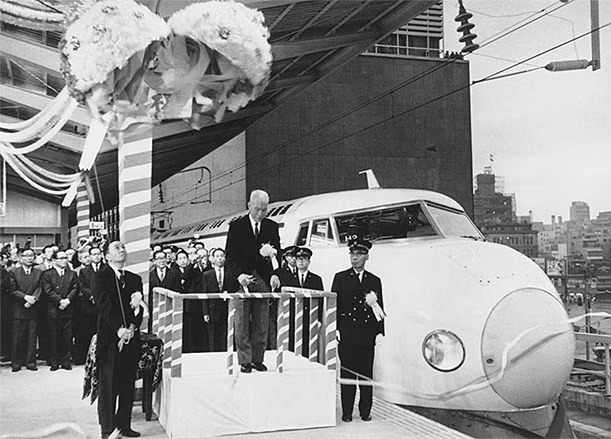
The first trains, known as the 0 Series, ran at up to 210 kilometers per hour. The trip took around four hours, compared with about six and a half hours on conventional express trains. On November 1, 1965, the fastest services cut it to three hours and ten minutes.
The line opened nine days before the 1964 Tokyo Olympics, and visitors from abroad could see Japan’s new railway for themselves. It was the first commercially operated high-speed railway in the world.