North Korea operates under a dedicated ideological system known as Juche. The ideology has served as the primary foundation for state governance since the mid-20th century.
North Korean founder Kim Il-sung first introduced the term on December 28, 1955. He delivered a speech titled On Eliminating Dogmatism and Formalism and Establishing Juche in Ideological Work before propaganda officials of the Workers' Party of Korea.
The statement emphasized the importance of eliminating dogmatic orientation toward external influences. The move was taken to strengthen domestic political positioning amid ideological rifts between the Soviet Union and the People's Republic of China.
State Ideology Formation Through the Juche Concept
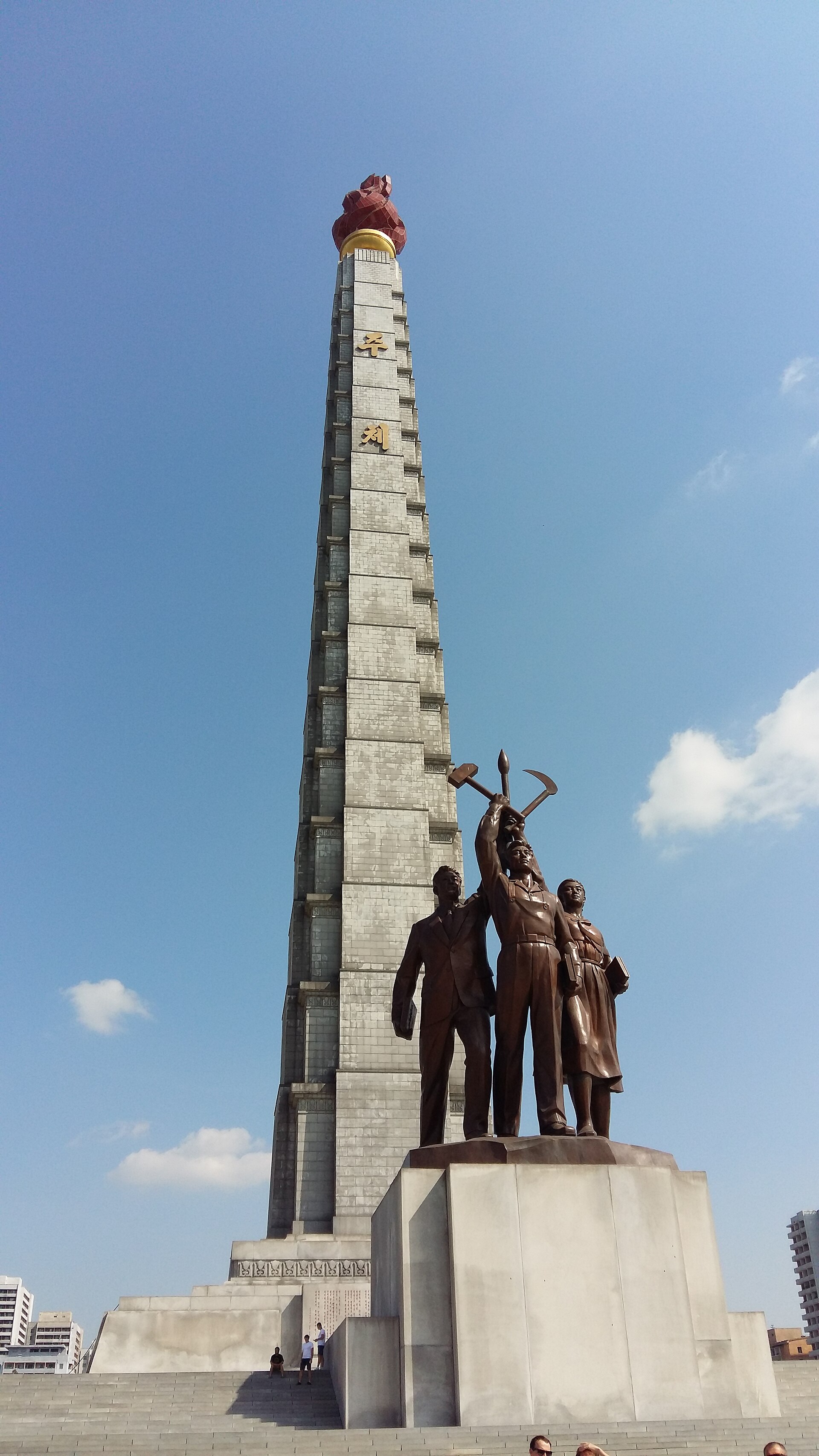
The early development of Juche stemmed from the reinterpretation of Marxist-Leninist teachings. The Pyongyang government adjusted classical Marxist theory to fit the socio-political conditions of the peninsula after the 1950 to 1953 Korean War.
A Kim Il-sung University philosopher named Hwang Jang-yop led the formulation of the theoretical framework. The doctrine placed human beings as masters of decisions as well as their surrounding environment.
As a supplement, Kim Jong-il published a treatise titled On the Juche Idea in 1982. The document codified three primary pillars consisting of political sovereignty (Chaju), economic self-reliance (Charip), and self-reliant defense (Chawi).
The government subsequently consolidated the status of the doctrine in 1974 through the emergence of the Kimilsungism thought system. The step fully separated local ideological tradition from the orthodox Marxist theoretical framework.
The Korean Academy of Social Sciences was subsequently tasked with publishing official textbooks. The publication of the literature transformed the teachings into mandatory material across all educational levels.
Implementation of the Chaju Pillar in Pyongyang Political System
The execution of Juche in the political sector manifested through an independent sovereignty pillar named Chaju. The principle demands the rejection of foreign intervention in domestic policymaking.
The government refused the establishment of joint military pacts with neighboring countries or external bloc groups. Political decisions were determined centrally by the State Affairs Commission as well as leadership of the Workers' Party of Korea.
Domestic political actions coincided with internal factional purges during the August Plenary Session of 1956. The government eliminated the pro-China Yan'an faction alongside the Soviet faction to secure a unified leadership structure.
As an expression of foreign diplomacy, North Korea registered as a member of the Non-Aligned Movement in August 1975 in Lima, Peru. The membership served to maintain distance from Cold War rivalry.
Execution of the Charip and Chawi Pillars in the Economic and Defense Sectors
The economic and military sectors implemented two self-reliance pillars named Charip and Chawi. The strategy focused domestic resource allocation on building heavy industry, heavy equipment, machinery manufacturing, as well as self-reliant defense capabilities.
The government launched the Chollima Movement in 1956 and the Taean Work System in 1961. The two programs regulated labor mobilization along with centralized factory management.
Additionally, the government launched a parallel development policy combining the industrial and defense sectors in 1962. The policy reinforced the Chawi pillar by mandating significant state budget allocations for domestic defense equipment.
Despite promoting self-reliance, international trade activities continued on a limited basis with the Soviet Union, China, and members of the Council for Mutual Economic Assistance. Transactions were conducted using barter arrangements and special prices between socialist nations.
The termination of subsidies and the dissolution of the Soviet Union in 1991 triggered a national energy supply crisis. The condition sparked the famine period from 1994 to 1998, which drove the emergence of the Jangmadang informal market system.
Codification of Juche in North Korean Constitutional Articles
The status of the ideology was legally ratified by the Supreme People's Assembly through the enactment of the Socialist Constitution on December 27, 1972. Article 3 of the document established Juche as the official guide for state governance, replacing the 1948 Constitution.
Article 11 of the Socialist Constitution also designated the Workers' Party of Korea as the leading authority over all state activities. The affirmation ensured party doctrine materialized across regional and central regulations.
The 1992 constitutional amendment officially removed references to Marxism-Leninism from state regulatory texts. The government later incorporated the Songun military-first principle into the subsequent 2009 constitutional amendment.
The 2019 constitutional revision reaffirmed the position of Juche alongside Kimilsungism-Kimjongilism as the sole guiding principle of legal governance. To this day, the provision binds executive, legislative, and judicial institutions under the supreme authority of the state.