A hospital can lose its protected status. A captured soldier cannot be paraded before cameras. And a civilian death does not automatically mean a crime was committed. Each of these sounds wrong to many people. All three come from the same body of law.
That body of law is International Humanitarian Law (IHL), also called the laws of war or the law of armed conflict. It is designed to limit the effects of armed conflict for humanitarian reasons, particularly by protecting people who are not, or are no longer, taking part in the fighting.
The International Committee of the Red Cross (ICRC) explains that IHL applies during armed conflicts, whether between states or within a country. It does not determine whether starting a war is lawful. Instead, it regulates how the parties conduct themselves once a conflict begins.
The Geneva Conventions Bind Every State
The four Geneva Conventions were adopted on August 12, 1949, and according to the ICRC, all 196 states have ratified them. They remain the backbone of modern IHL.
| Convention | Who it protects |
|---|---|
| First Convention | Wounded and sick soldiers on land, plus medical personnel and facilities |
| Second Convention | Wounded, sick, and shipwrecked members of armed forces at sea |
| Third Convention | Prisoners of war |
| Fourth Convention | Civilians, including those in occupied territory |
These obligations bind every side in a conflict. States are bound by the conventions directly. Non-state armed groups are bound through Common Article 3 and customary international humanitarian law. And no party can excuse its own violations by pointing to the enemy’s. If one side breaks the rules, the other is still bound by them.
Two Additional Protocols from 1977 supplement the conventions, though not every state has ratified them. Many of their core rules, including distinction and proportionality, still bind all parties as customary law.
Civilian Protection
Parties to a conflict must distinguish between those who take part in the fighting and those who do not. This distinction between civilians and combatants is one of the most fundamental principles of IHL.
Civilians must not be directly targeted. The same goes for civilian objects such as homes and schools, which are protected as long as they do not qualify as military objectives.
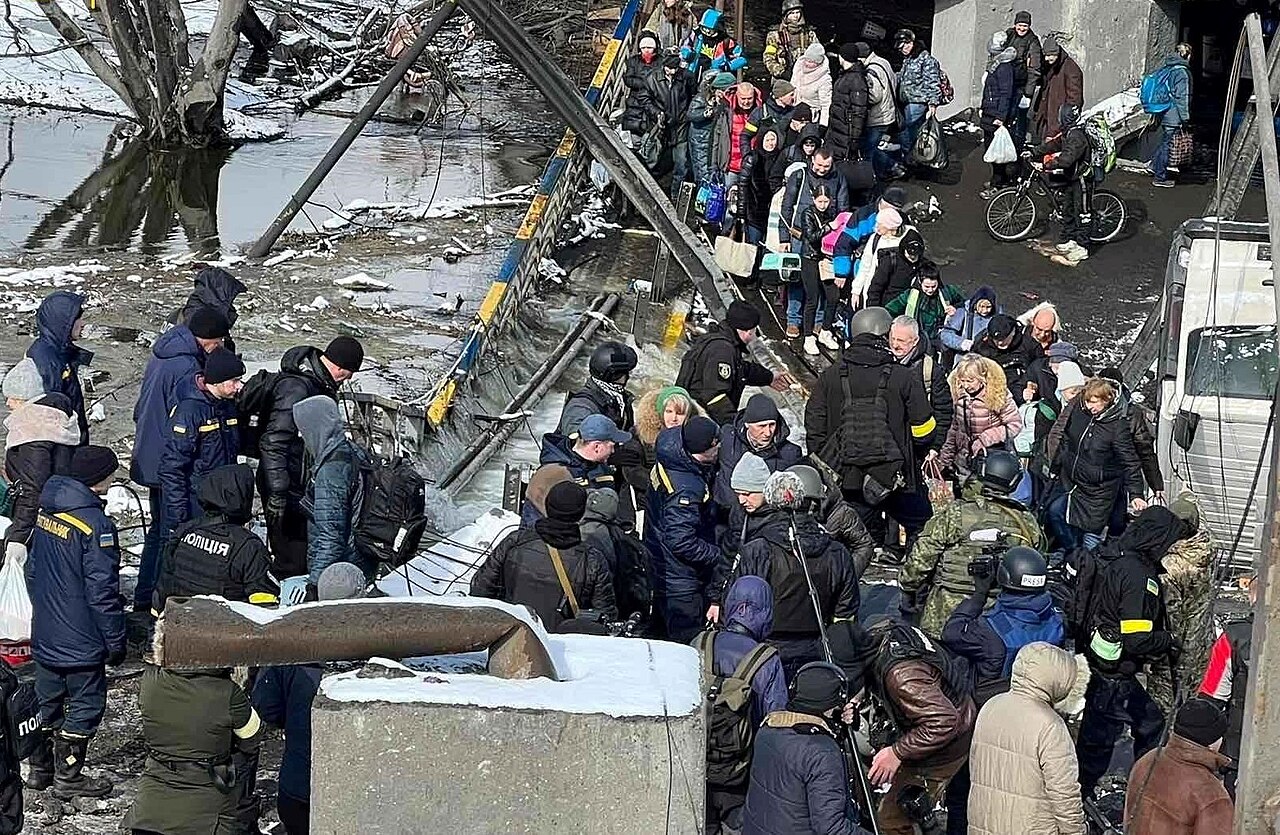
A civilian death alone does not make an attack unlawful. The question is whether the rules on distinction, proportionality, and precautions were followed.
Proportionality bans attacks where the expected civilian harm would be excessive compared to the concrete military advantage. Having a legitimate military target does not allow unlimited civilian casualties.
Parties must also take all feasible precautions to avoid or minimize civilian harm. That can mean verifying targets, choosing appropriate weapons and methods, and giving advance warnings when circumstances permit.
Hospitals and Prisoners of War
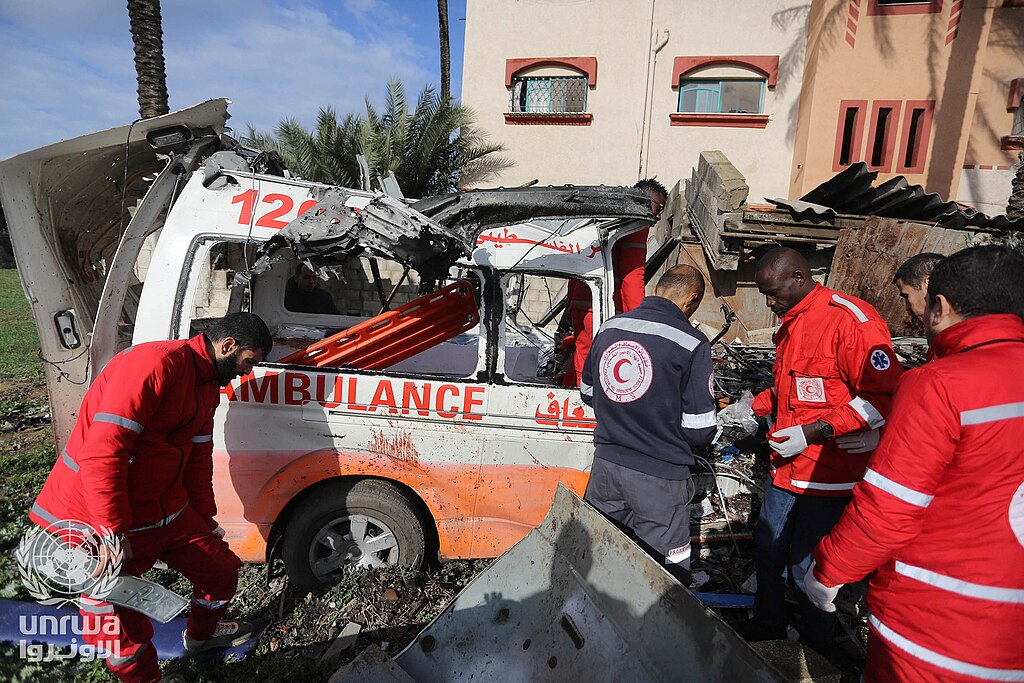
Hospitals and medical units must be respected and protected. They cannot be attacked for treating wounded members of an opposing armed force.
Their protection can end only under specific legal conditions, such as when they are used for acts harmful to the enemy outside their humanitarian function, and even then the rules generally require a warning and a reasonable chance to comply.
Prisoners of war are protected under the Third Geneva Convention. In international armed conflicts, captured combatants who qualify as prisoners of war must be treated humanely and protected from violence, intimidation, and public humiliation.
They must also receive adequate food, accommodation, clothing, hygiene, and medical care.
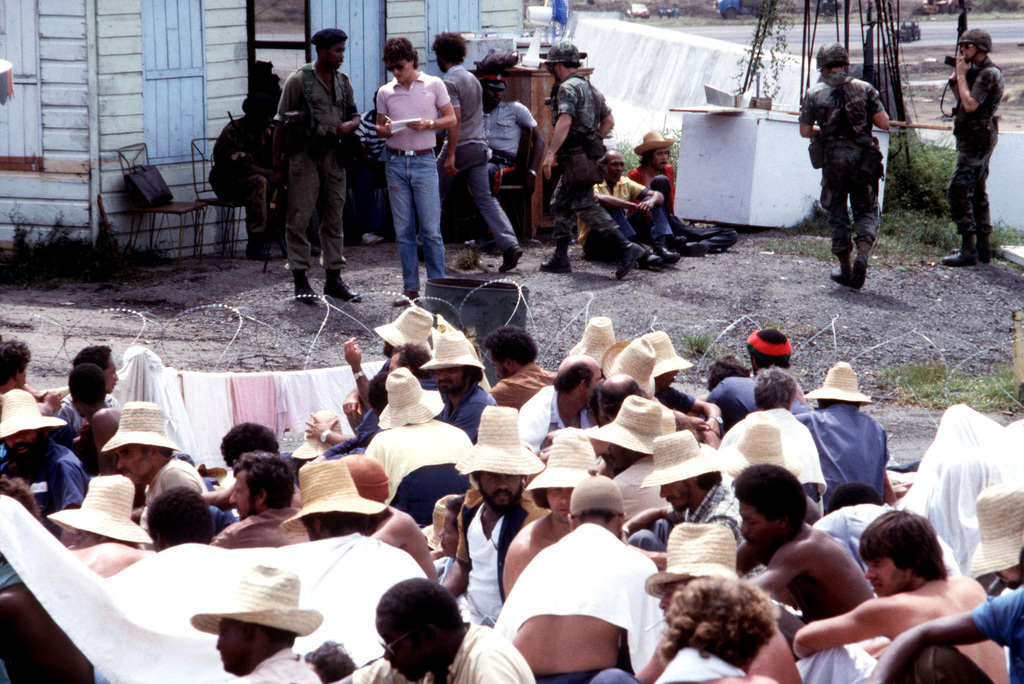
Prisoner of war status does not automatically apply in non-international armed conflicts, such as fighting between a government and an armed group. Detainees in those conflicts are still entitled to humane treatment and other protections under humanitarian law.
Banned and Restricted Weapons
International law limits the weapons that parties can use. The rules rest on the principle that weapons should not cause unnecessary suffering or strike military targets and civilians without distinction.
The ICRC identifies several weapons that are prohibited or restricted under international treaties and customary international humanitarian law.
| Weapon | International rule | What it covers |
|---|---|---|
| Chemical weapons | Chemical Weapons Convention (1993) | Bans development, production, stockpiling, transfer, and use |
| Biological weapons | Biological Weapons Convention (1972) | Bans development, production, acquisition, and stockpiling for hostile purposes |
| Expanding bullets | Hague Declaration (1899) | Bans bullets that expand or flatten in the body |
| Blinding laser weapons | Protocol IV to the CCW (1995) | Bans lasers designed to cause permanent blindness |
| Anti-personnel landmines | Anti-Personnel Mine Ban Convention (1997) | Bans use, production, stockpiling, and transfer (for states party) |
| Cluster munitions | Convention on Cluster Munitions (2008) | Bans use, production, stockpiling, and transfer (for states party) |
| Incendiary weapons | Protocol III to the CCW (1980) | Restricts use, especially against civilians |
| Nuclear weapons | Treaty on the Prohibition of Nuclear Weapons (2017) | Bans development, testing, possession, use, and threats of use (for states party) |
These rules do not all work the same way. Some treaties ban a weapon outright, while others restrict only how it may be used. The Ottawa Treaty, the Convention on Cluster Munitions, and the 2017 nuclear weapons treaty bind only their member states, and the use of nuclear weapons must still be assessed under the broader rules of IHL.
The Biological Weapons Convention does not cover use. The use of biological weapons in war is prohibited separately by the 1925 Geneva Protocol.
Weapons not named in any treaty can still be unlawful if their effects are indiscriminate or cause unnecessary suffering.
War Crimes and Accountability
Violations of IHL can lead to criminal responsibility. The most serious ones are classified as war crimes, including willful killing, torture, and intentionally causing great suffering to protected people.
The Rome Statute, which established the International Criminal Court (ICC), lists war crimes among the crimes under the court’s jurisdiction. The ICC can investigate and prosecute individuals accused of war crimes, genocide, and crimes against humanity. Its jurisdiction over the crime of aggression is narrower and subject to separate conditions under the Kampala amendments.
But the ICC does not have automatic jurisdiction over every conflict or alleged violation. Its authority depends on legal conditions, including which countries are involved and how a case is referred. National courts also bear the primary responsibility to investigate and prosecute these crimes.
The real challenge of IHL is making sure violations are investigated, perpetrators are held accountable, and protections are respected on the ground.