Sukhothai is an ancient city area located in the northern region of central Thailand, near the Yom River valley. In Sanskrit, the name Sukhothai comes from the word Sukhodaya, which means the dawn of happiness.
In the 13th century CE, the river valley area developed into the center of the Sukhothai Kingdom. The ancient kingdom stood for two centuries from 1238 to 1438 CE. Its existence is recorded in Thai history as an early independent kingdom of the Thai people.
The Founding of Sukhothai After Breaking Away from Khmer Rule
Before becoming an independent kingdom, the Sukhothai territory was under the control of the Khmer Empire in the early 13th century. The city served as an outpost in the northwestern part of the Khmer domain. A Khmer commander named Khlon Lamphong led the control of the city.
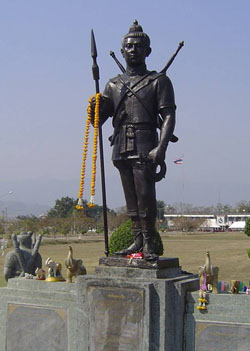
The condition of foreign rule triggered resistance from two local Thai leaders. The two figures were named Pho Khun Bang Klang Hao and Pho Khun Pha Mueang. They deployed joint forces to seize the city of Sukhothai from the Khmer commander.
According to the Wat Si Chum Inscription, the joint attack succeeded in driving the Khmer garrison out of Sukhothai. Modern historians set the year 1238 CE as the marker of the founding of the new kingdom. Pho Khun Bang Klang Hao was subsequently crowned as the first king with the title Sri Indraditya.
The Birth of the Thai Script During the Reign of King Ramkhamhaeng
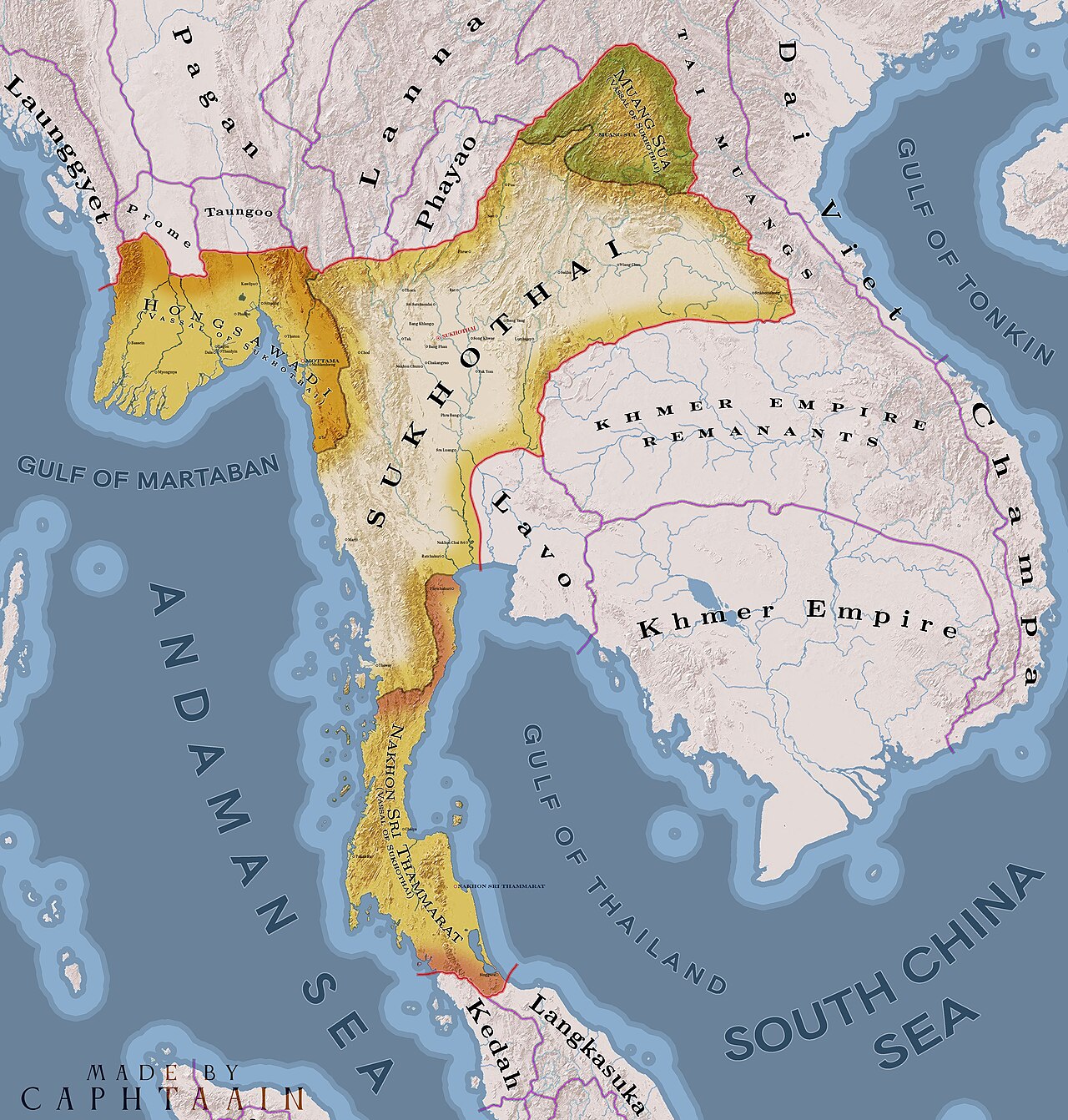
The Sukhothai Kingdom reached the peak of its territorial expansion during the reign of its third ruler named King Ramkhamhaeng. The youngest son of Sri Indraditya led the kingdom from 1279 to 1298 CE. His territory stretched from northern Thailand to parts of the Malay Peninsula.
Beyond expanding the territory, King Ramkhamhaeng created the first writing system for the Thai language in 1283 CE. The early script system was named Lai Sue Thai. Its letterforms were adapted from the Old Khmer script and the Mon script already known in the Southeast Asian region.
King Ramkhamhaeng adjusted the letter structure to align with the spoken sounds of the Thai language. He placed vowel marks on the same horizontal line as the consonants. The writing system was also equipped with two tone markers to distinguish word meanings in the Thai language.
Records of Sukhothai on the Ramkhamhaeng Inscription
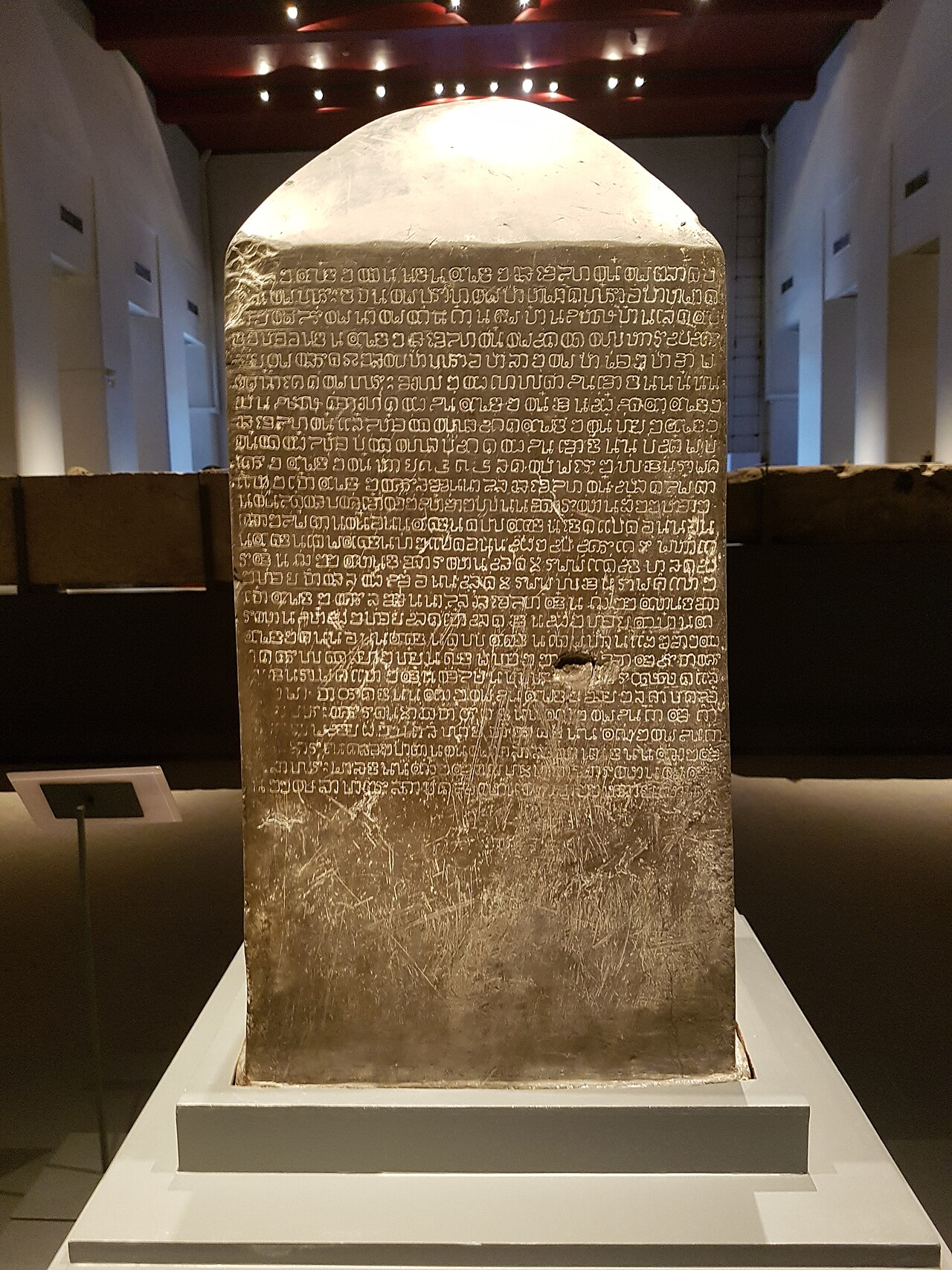
The oldest physical evidence of the use of the Lai Sue Thai script is recorded on the Ramkhamhaeng Inscription. The four-sided stone pillar inscription was carved in 1292 CE. The script on its surface contains direct records regarding the social conditions of the Sukhothai people in the late 13th century.
The text on the inscription records that the Sukhothai government exempted trade taxes for people inside the city. People were also allowed to bring goods freely to the market without duty fees. The inscription further notes their freedom to trade elephants and horses alongside silver and gold within the kingdom
Aside from trade matters, the inscription records legal complaint rules for common people. A bell was hung in front of the palace gate so people could ring it when seeking justice from the king. The stone record also documents the introduction of Theravada Buddhism as the main faith of the Sukhothai people.
The Integration of Sukhothai Territory into the Ayutthaya Kingdom
Sukhothai's political power gradually declined after King Ramkhamhaeng died in 1298 CE. His successors struggled to maintain control over conquered territories in peripheral areas. At the same time, a new center of power named the Ayutthaya Kingdom began to rise in the southern region.
Military pressure from the south forced Sukhothai to submit as a vassal state of the Ayutthaya Kingdom in 1378 CE. The limited autonomy status continued for the next several decades. The Sukhothai territory was eventually fully merged into the administration of the Ayutthaya Kingdom in 1438 CE.
Although its political rule ended, the legacy of the writing system from the Sukhothai era remained in use by the Thai people. The Lai Sue Thai script underwent shape adjustments over centuries until it became the official script of modern Thailand.