The black bat flower (Tacca chantrieri) is a stemless plant that grows beneath the canopy of Southeast Asian forests. Its dark flowers are arranged in an unusual inflorescence, with two large bracts that resemble the wings of a flying bat. This distinctive appearance has earned the plant several common names, including the bat plant and devil flower.
Anatomy of Dark Bracts with Long Filaments
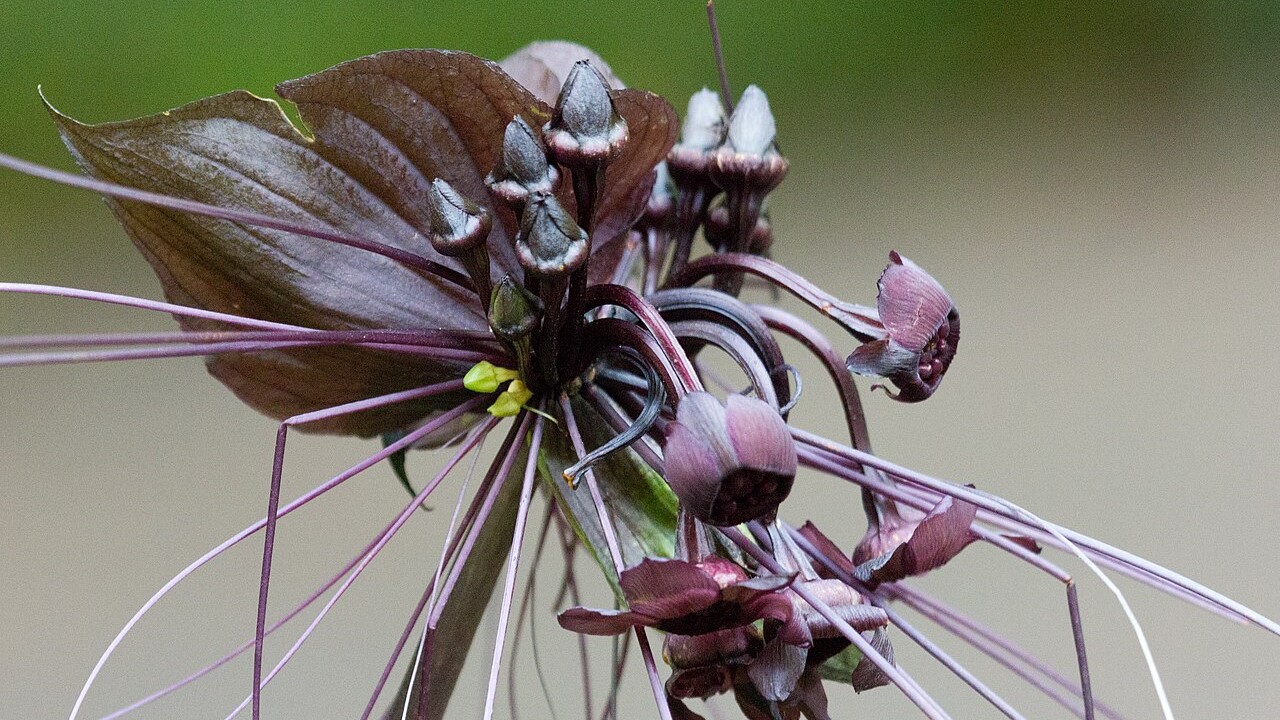
Each inflorescence of the plant possesses four dark-purple involucral bracts around the flowers. The protective structure consists of two large bracts along with two smaller bracts. The four bracts separate from one another right when the flowering period begins.
Many long whisker-like filaments sit right at the base of the inflorescence. The total number of the thread-like filaments ranges from 17 to 26 per inflorescence. An average of around 21 filaments appears on each individual inflorescence. The presence of the long threads makes the entire inflorescence look like the whiskers of a tiger.
A single inflorescence of the plant produces between 7 and 27 flowers. Each flower displays a dark-purple to near-black color with six stamens inside. The flowers are radially symmetrical and bear both male and female reproductive organs. The flower produces neither nectar nor any odor that is detectable by humans.
Autonomous Self-Pollination Mechanism Behind the Floral Display
The black bat flower reproduces primarily through autonomous self-pollination rather than relying on insects. Its dark blossoms fail to attract fly pollinators. Stingless bees from the genus Trigona only visit occasionally to collect pollen and do not drive reproduction.
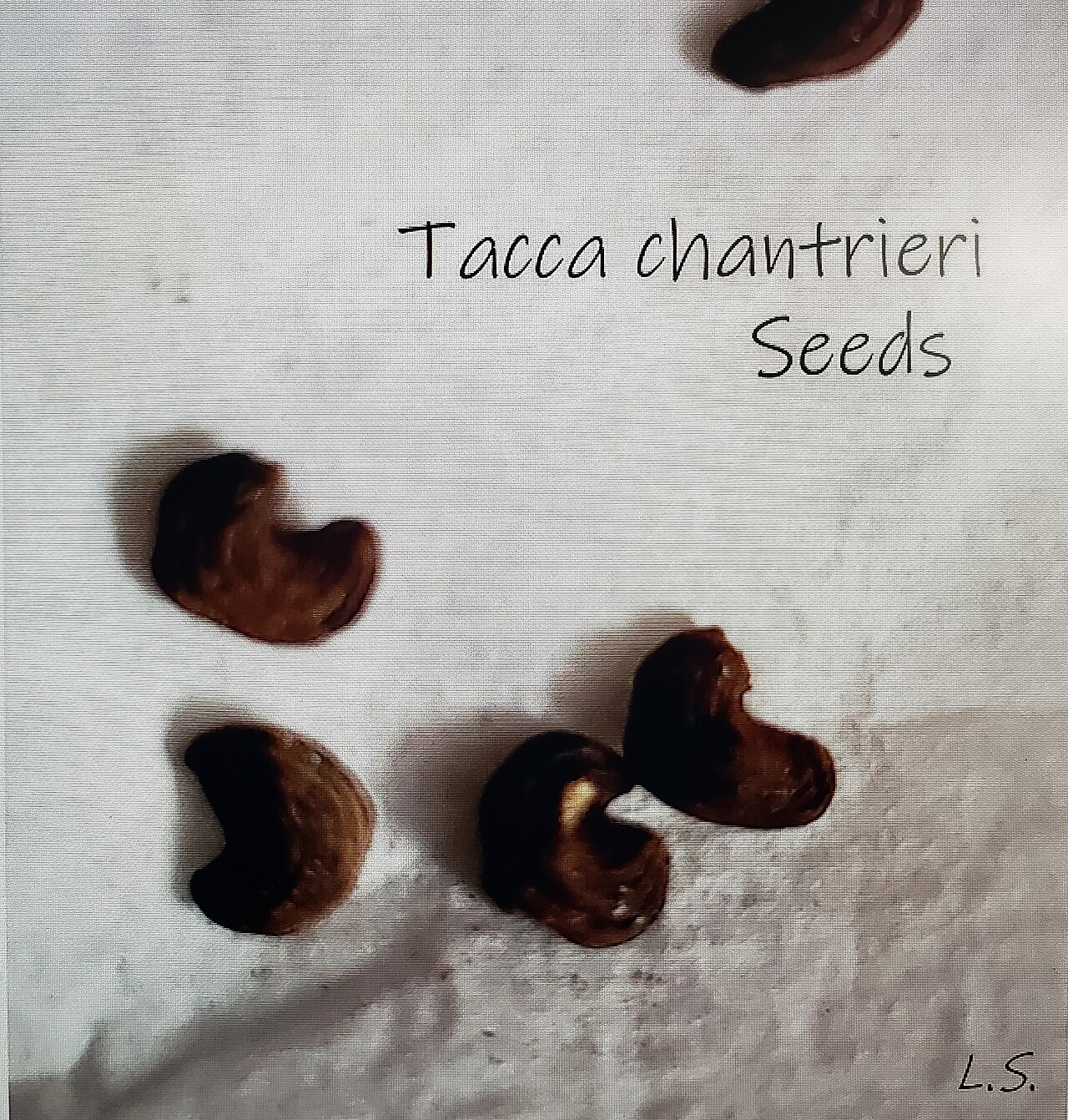
Inside each downward-facing blossom, the stamens curve directly over the stigma. The physical arrangement allows pollen to transfer straight onto the female reproductive organ within the same flower. Seed production continues reliably even in shaded forest understories where pollinators remain scarce.
The anthers split open to release pollen four hours before the buds even unfurl. Because the male and female organs sit in close proximity, pollen grains land directly on the stigma surface before the flower opens.
Individual blossoms begin opening between ten and eleven in the morning and remain active for two days. One to four flowers bloom daily on a single inflorescence over a period of 6 to 14 days. During the first evening, the flower stalks bend further downward beneath the bracts. Gravity and the downward angle deposit additional pollen onto the stigma to complete fertilization.
Even when the large bracts and long filaments are removed, the plant still produces fruits and seeds normally. The dramatic dark structures do not drive pollination, confirming that reproduction depends entirely on internal self-fertilization.
Rhizomatous Plant Structure Beneath the Canopy Shade
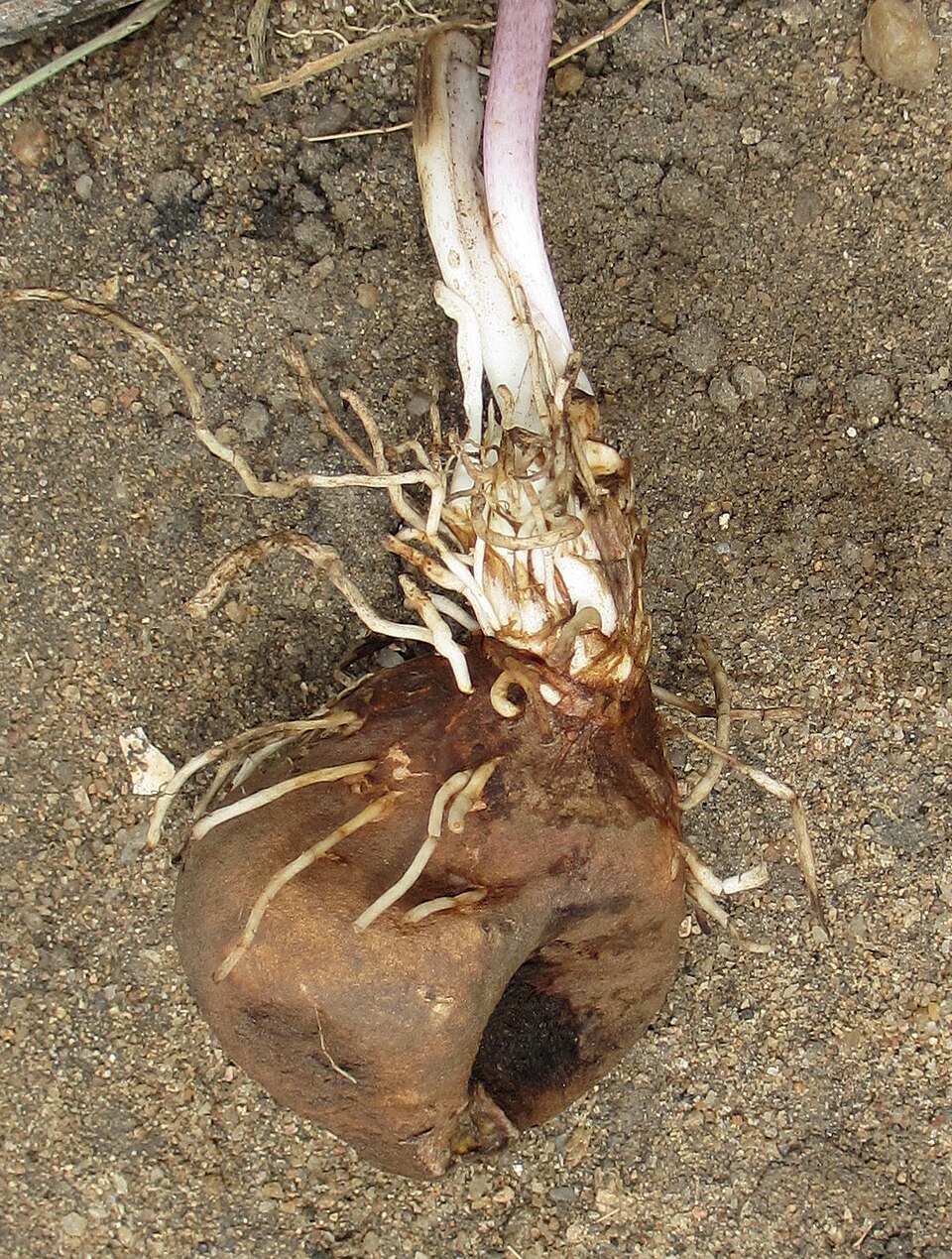
Morphologically, the total height of the black bat plant ranges from 50 to 100 centimeters. Its underground structure consists of tubers or creeping rhizomes. Above ground, the elliptic leaf blades feature smooth margins and grow in an alternate arrangement.
Natural populations spread across shaded and moist tropical forest floors beneath dense canopies in Southeast Asia. The distribution range covers forest regions from Thailand to Malaysia and extends northward into Yunnan Province in southern China. Within these native habitats, the seasonal flowering period runs from early April to July.
While wild populations face conservation threats in parts of their native range, nurseries cultivate the species widely for the horticultural trade due to its unusual floral structures.
Reference:
Zhang, L., Barrett, S. C. H., Gao, J.-Y., Chen, J., Cole, W. W., Liu, Y., Bai, Z.-L., & Li, Q.-J. (2005). Predicting mating patterns from pollination syndromes: The case of "sapromyiophily" in Tacca chantrieri (Taccaceae). American Journal of Botany, 92(3), 517–524. https://doi.org/10.3732/ajb.92.3.517