The bamboo orchid (Arundina graminifolia) is an orchid plant native to tropical regions of Asia. The plant from the Orchidaceae family is popularly known as the bamboo orchid. The name refers to the physical shape of the stems that resemble the structure of bamboo plants.
As a single species, the plant stands as the only recognized member within the genus Arundina. Its presence is naturally distributed across warm-climate regions. The vegetative growth forms clumps of upright, slender stems.
Physical Appearance Resembling Bamboo Clumps
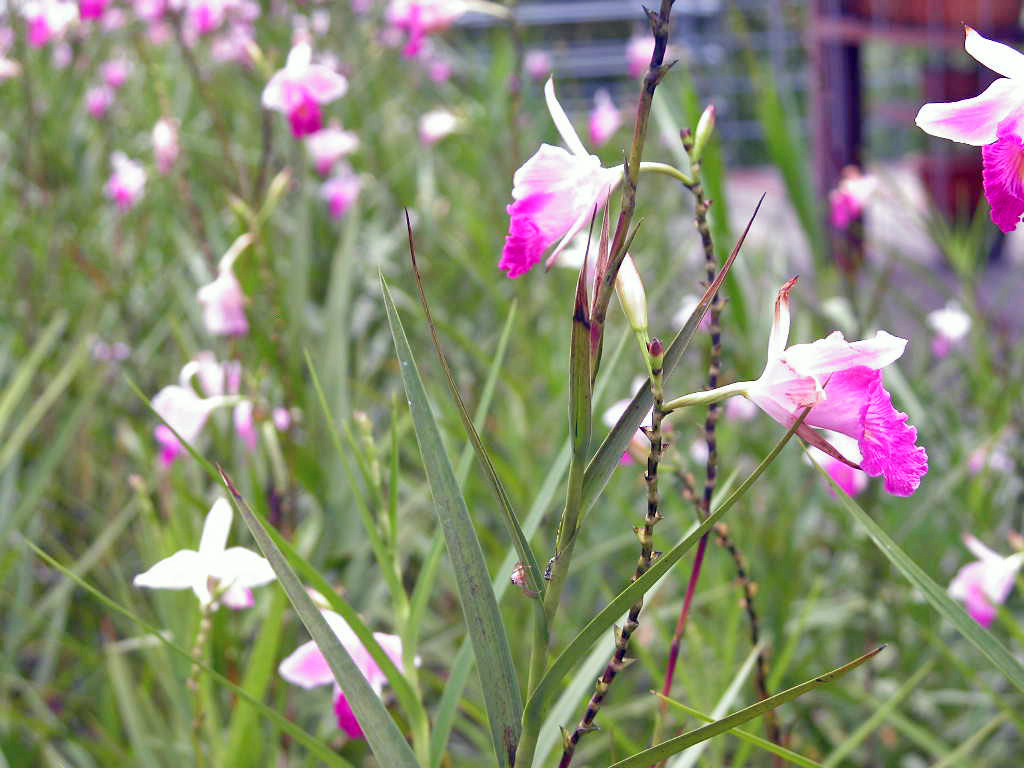
Stems of Arundina graminifolia grow upright with stiff, jointed nodes. Leaf blades are arranged alternately along the stem from base to tip. The leaves are elongated and ribbon-like with a slender width.
Although the stem structure resembles grass or bamboo, the floral organs retain the distinct characteristics of the Orchidaceae family. Inflorescences emerge at the terminal tip of the main stem. Flowers bloom sequentially along a single main raceme.
The floral crown features an arrangement reminiscent of the genus Cattleya. Petals are dominated by shades of pink grading into purple. Beyond the outer petals, the lip or labellum displays a significantly deeper color pattern.
The blooming pattern occurs sequentially over a specific timeframe. The trait allows the flowering process to proceed continuously. The physical appearance gives the plant a distinctive character in the wild.
Terrestrial Growth Habit on Land
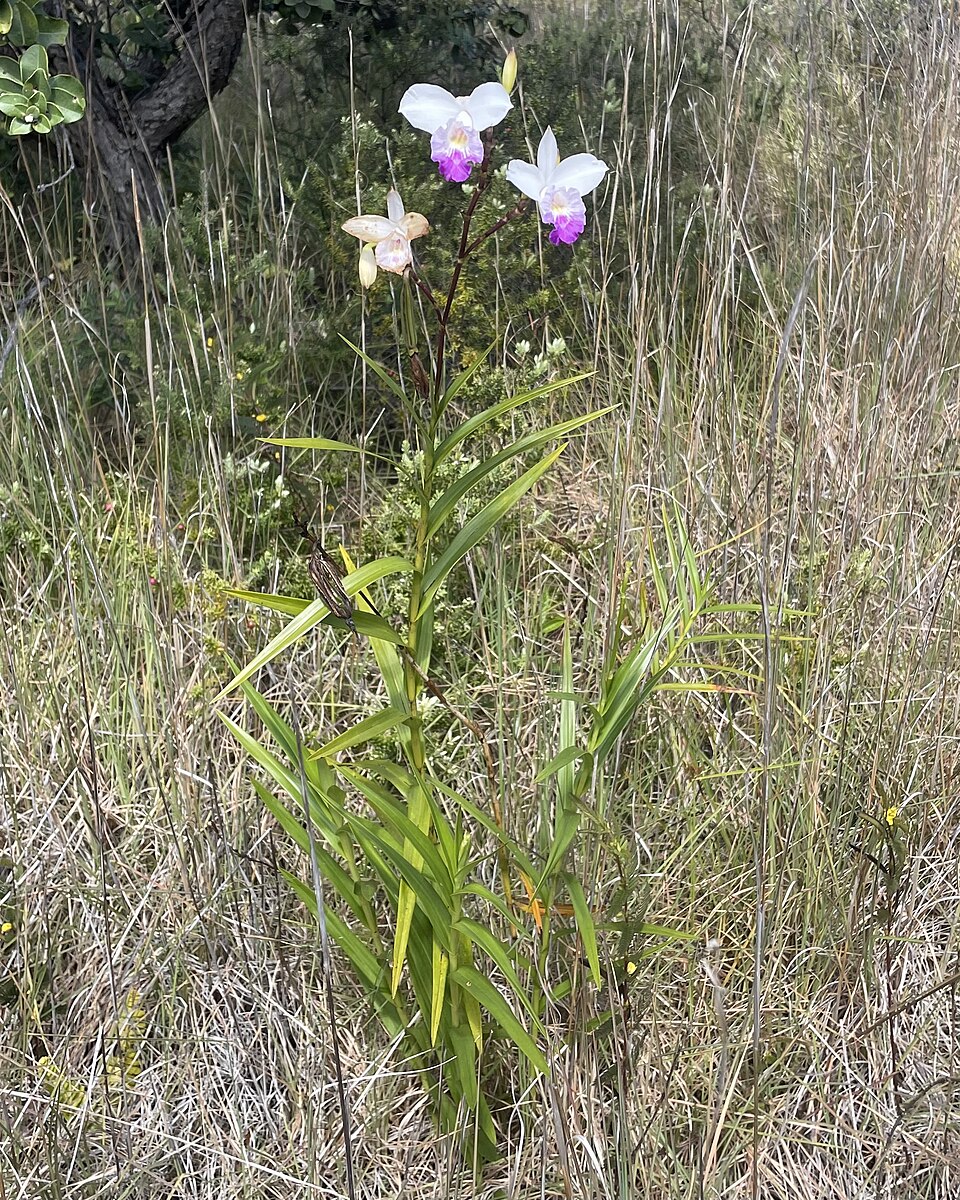
Roots of Arundina graminifolia grow directly into the soil. The terrestrial growth habit differs from most orchids that grow epiphytically on tree trunks. The root system absorbs water and nutrients independently from the soil medium.
As an open-land plant, the plant requires direct sunlight exposure to encourage flowering. Adequate light intensity triggers flower bud development at the terminal stem tips. The vegetation also exhibits high tolerance toward warm temperatures in lowland areas.
In environmental adaptation, the plant can thrive on steep slopes and open grasslands. The dense root structure helps stabilize soil surfaces against erosion risk.
Flowering occurs periodically throughout the year in tropical climates. Peak flowering typically takes place between September and January. New shoots continuously emerge from the base of the clump to expand the growing area.
Traditional Applications of the Bamboo Orchid
Purple flowers and bamboo-like stems make Arundina graminifolia a popular ornamental plant. The plant is cultivated in home gardens and open landscapes. Elongated stem clumps serve as natural boundary hedging in outdoor spaces.
Beyond ornamental uses, the plant holds documented value in Asian traditional medicine. The Dai people in Yunnan process fresh rhizomes and aerial stems into herbal detoxifiers and antidotes.
In clinical applications, the underground rhizomes serve as the primary raw material for liver treatments. Since 1999, Xishuangbanna Dai Medical Hospital has processed rhizome extracts into Baogan capsules to treat liver damage. Indian researchers initiated the chemical analysis of these root structures in the early 1990s.
Furthermore, A 2022 study in the South African Journal of Botany confirmed that phenanthrene compounds derived from the rhizomes exhibit antibacterial properties by disrupting bacterial cell walls, along with proven radical-scavenging antioxidant activity.
Reference:
Kaur, H., Sena, S., Jha, P., Lekhak, M. M., Singh, S. K., Goutam, U., Arencibia, A. D., & Kumar, V. (2022). Arundina graminifolia (D.Don) Hochr. (Orchidaceae): A review of its medicinal importance, phytochemistry and pharmacology activities. South African Journal of Botany, 150, 956–964. https://doi.org/10.1016/j.sajb.2022.08.048