

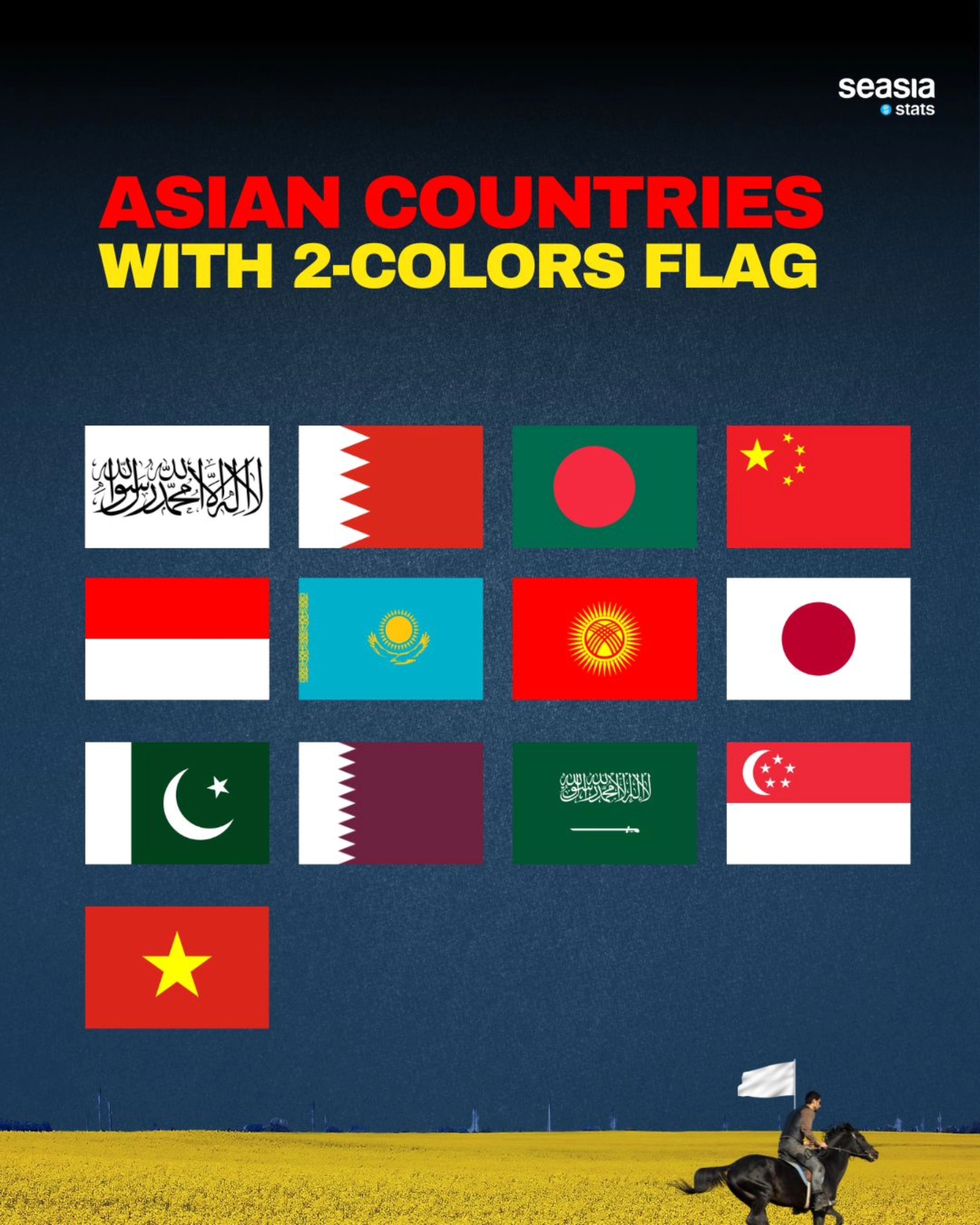
Flags are a crucial symbol of national identity, with their designs often reflecting the history, culture, and values of a country. In Asia, several nations have opted for flags with two primary colors, each carrying significant symbolism. Below is a detailed look at these flags and the stories behind their designs.
Afghanistan: Simplicity with Religious Emphasis
Afghanistan's flag features a simple black and white design. It prominently displays the Shahadah (Islamic creed) in black Arabic script on a white background. This minimalistic design reflects the deep connection to Islamic traditions and the central role of religion in the country’s governance and cultural identity.
The white background signifies peace and purity, while the black script emphasizes the enduring faith of the Afghan people. The choice of these two colors makes the flag visually distinct among the region’s more colorful counterparts.
Bahrain and Qatar: Serrated Designs Reflecting Islamic Values
Bahrain’s flag consists of red and white, with a serrated white band featuring five points. The red symbolizes the country’s historical struggles and battles, while the white represents peace. The five points on the serration refer to the five pillars of Islam, grounding the flag in its Islamic heritage.
Similarly, Qatar’s flag uses a maroon field and a white serrated band with nine points. This design highlights Qatar’s historical treaties and its status as the ninth member of the reconciled emirates. The maroon shade reflects the country’s history of conflict, while white symbolizes peace.
Bangladesh: Symbol of Independence and Sacrifice
The flag of Bangladesh is green with a red circle slightly off-center. The green field represents the country’s lush landscapes and its commitment to Islam. The red circle symbolizes the sun rising over Bengal and honors the sacrifices made during the war of independence in 1971.
This two-color design is simple yet impactful, encapsulating both the natural beauty and the historical resilience of the nation. The flag serves as a unifying emblem for the Bangladeshi people.
China and Viet Nam: Revolutionary Tones
China’s flag is a red field with five yellow stars, with the larger star symbolizing the Communist Party and the smaller ones representing the Chinese people. Red is a traditional color of revolution and unity, deeply tied to the country’s modern history.
Similarly, Viet Nam’s flag features a red field with a central yellow five-pointed star. The red symbolizes the blood shed during the struggle for independence, while the star’s five points represent workers, farmers, soldiers, intellectuals, and youth. Both flags reflect the revolutionary pasts of these nations.
Indonesia, Singapore, and Japan: Red and White Motifs
Indonesia’s flag is a horizontal bicolor of red and white, symbolizing courage and purity. The simple design has roots in the Majapahit Empire, making it one of the oldest flag concepts in Southeast Asia.
Japan’s flag also employs red and white, with a central red disc representing the sun. The white field signifies purity and honesty. Similarly, Singapore’s flag combines red and white with symbols of unity and progress, showcasing a modern interpretation of these traditional colors.
Kazakhstan and Kyrgyzstan: Vibrant Yellow Accents
Kazakhstan’s flag is light blue with a yellow sun and eagle. The blue field represents peace and the sky, while yellow signifies prosperity and the nation’s bright future. This flag reflects the open landscapes and aspirations of the Kazakh people.
Kyrgyzstan’s flag also features red and yellow. The red background symbolizes valor, while the yellow sun with 40 rays represents the unity of 40 Kyrgyz tribes. These flags use their two-color designs to emphasize cultural identity and unity.
Pakistan and Saudi Arabia: Green and White Themes
Pakistan’s flag incorporates a green field with a white crescent moon and star, along with a white vertical stripe. The green represents Islam, while the white stripe signifies religious minorities. The crescent and star reflect progress and light, making the flag an emblem of both faith and inclusivity.
Saudi Arabia’s flag is green with white Arabic script featuring the Shahadah and a sword. Green signifies Islam, while the sword represents justice. Both flags prioritize Islamic themes, reflecting their nations' religious foundations.


