

Reading remains one of the most powerful tools for personal development, education, and cultural enrichment. Across Southeast Asia, reading habits vary widely depending on factors such as education systems, literacy initiatives, digital access, and cultural attitudes toward books. While some countries have developed strong reading cultures supported by libraries and national campaigns, others continue working to improve literacy engagement among their populations.
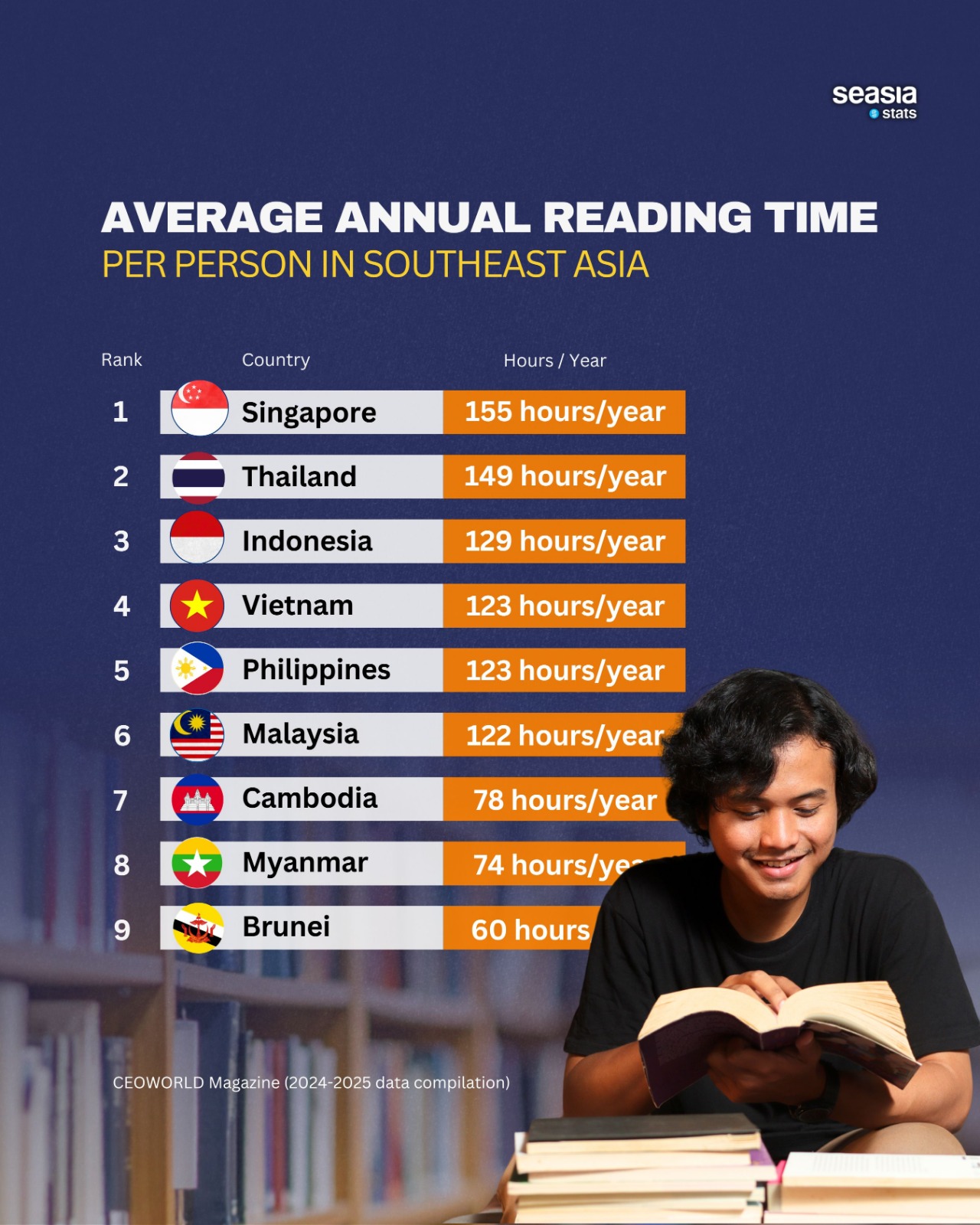
Recent data compiled by CEOWORLD Magazine for 2024–2025 provides insight into how much time people in Southeast Asia spend reading each year. The findings reveal a diverse regional landscape, with some countries demonstrating particularly strong reading habits while others show room for growth.
Singapore Leads the Region in Reading Culture
At the top of the Southeast Asian ranking is Singapore, where the average person spends approximately 155 hours per year reading. This strong performance reflects the country’s long-standing emphasis on education, literacy, and lifelong learning.
Singapore’s extensive public library system, modern education policies, and national reading campaigns have played an important role in cultivating a reading culture. Programs led by the National Library Board frequently promote reading among children, students, and adults, while digital libraries and e-book services have made reading even more accessible.
Beyond formal education, reading in Singapore is often integrated into daily routines, with many residents reading during commutes or through digital platforms such as mobile devices and tablets.
Thailand Close Behind in Second Place
Following closely behind is Thailand, where the average annual reading time reaches 149 hours per person. Thailand has invested heavily in literacy promotion and book accessibility over the past decade.
Public initiatives such as mobile libraries, reading festivals, and school-based literacy campaigns have helped boost reading engagement across the country. Book fairs in Bangkok and other major cities have also become major cultural events, attracting large audiences and encouraging book consumption among younger generations.
Thailand’s growing publishing industry and increasing popularity of translated international literature have further supported the country’s rising reading culture.
Indonesia and the Regional Middle Tier
Indonesia ranks third in Southeast Asia with an average reading time of 129 hours per year. As the region’s largest country by population, Indonesia faces unique challenges in promoting reading across thousands of islands and diverse communities.
However, national literacy programs, community reading parks known as Taman Bacaan, and the expansion of digital reading platforms have gradually strengthened the country’s reading culture. Book festivals, independent publishing houses, and growing literary communities have also contributed to increasing reading engagement among Indonesians.
Following Indonesia, a closely grouped middle tier includes Vietnam and the Philippines, both recording 123 hours of reading per year. These figures suggest relatively consistent reading habits across these two nations.
In Vietnam, reading remains closely tied to education and academic success, while a growing publishing sector has expanded access to both domestic and international titles. Meanwhile, the Philippines has seen rising interest in literature through community book drives, school-based programs, and the increasing popularity of online reading platforms.
Malaysia ranks just slightly behind with 122 hours per year, reflecting a steady reading culture supported by multilingual publishing and national reading campaigns.
The Lower Tier of the Ranking
The final positions in the ranking show a more noticeable drop in reading engagement. Cambodia ranks seventh with an average of 78 hours per year, followed by Myanmar with 74 hours annually.
In both countries, reading culture is gradually expanding through education reforms and literacy initiatives, though challenges such as limited library infrastructure and access to books still affect overall engagement levels.
At the bottom of the ranking is Brunei, where residents average 60 hours of reading per year. While the country has high literacy rates, reading habits appear to be less frequent compared to its regional neighbors.
Bridging the Reading Gap Across Southeast Asia
The data reveals a significant gap between the highest and lowest reading nations in the region. Singapore’s residents read more than twice as many hours per year as those in Brunei, illustrating how education policies, access to books, and cultural priorities can shape reading habits.
Across Southeast Asia, governments and educational institutions are increasingly recognizing the importance of cultivating reading cultures. Expanding libraries, supporting local authors, promoting digital reading platforms, and integrating reading programs into schools are all strategies that can help strengthen literacy engagement.
As Southeast Asia continues to grow economically and technologically, fostering a strong reading culture will remain essential for building informed societies, encouraging creativity, and supporting lifelong learning throughout the region.


