

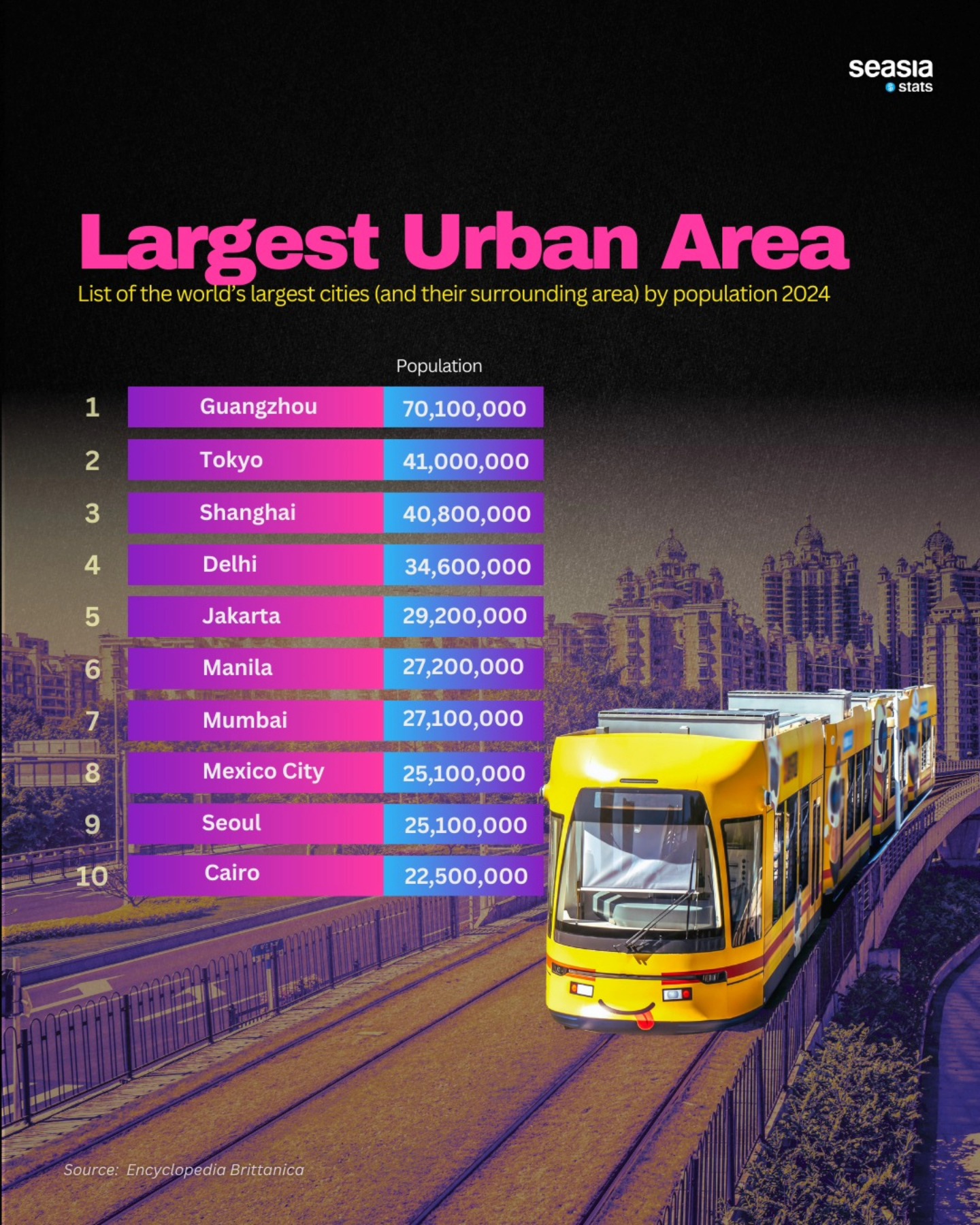
In 2024, urbanization continues to drive the growth of the world’s largest cities, each emerging as key centers for economic, cultural, and social activity. The following overview highlights the top 10 largest urban areas by population, shedding light on the scale and impact of this rapid urban growth.
1. Guangzhou, China – 70.1 million
Guangzhou stands at the top, with a staggering 70.1 million residents. This growth is fueled by China's aggressive industrialization and urban expansion, positioning Guangzhou as a major economic and trade hub in southern China.
2. Tokyo, Japan – 41 million
Tokyo remains a leading global financial center, with 41 million people. The city combines deep-rooted traditions with cutting-edge modernity, making it an important cultural and business powerhouse, despite its aging population and space constraints.
3. Shanghai, China – 40.8 million
Shanghai, a key commercial and financial center, comes in third with 40.8 million residents. Its rapid urban growth has been linked to China's economic rise, with the city becoming a global leader in finance, technology, and trade.
4. Delhi, India – 34.6 million
Delhi's population of 34.6 million reflects India’s rapid urbanization. The city is a growing political and economic powerhouse, grappling with the challenges of overcrowding, pollution, and infrastructure demands as it evolves.
5. Jakarta, Indonesia – 29.2 million
As Southeast Asia’s most populous city, Jakarta boasts 29.2 million residents. It is the economic and political heart of Indonesia, although it faces significant urban challenges, including congestion, flooding, and environmental issues.
6. Manila, Philippines – 27.2 million
Manila, with 27.2 million people, ranks sixth, tied with Mumbai. As the capital of the Philippines, it is a vibrant mix of history, culture, and rapid economic growth, though it contends with problems like overcrowding and environmental sustainability.
7. Mumbai, India – 27.1 million
Mumbai, India’s financial capital, closely follows Manila, with 27.1 million people. The city is a melting pot of economic activity, culture, and innovation, though it faces a range of social and infrastructural challenges.
8. Mexico City, Mexico – 25.1 million
Mexico City, with 25.1 million residents, is Latin America’s largest city. Known for its rich history, cultural heritage, and economic importance, Mexico City is rapidly evolving into a modern metropolis while grappling with issues like traffic congestion and air quality.
9. Seoul, South Korea – 25.1 million
Seoul, also with 25.1 million residents, blends ancient tradition with high-tech modernity. The South Korean capital is a global leader in innovation, technology, and culture, but struggles with overcrowding and limited space for expansion.
10. Cairo, Egypt – 22.5 million
Rounding out the list, Cairo is Africa’s largest city with 22.5 million residents. The city has long been a cultural and economic hub in the region, but like other major cities, it faces challenges such as rapid population growth, infrastructure strain, and environmental concerns.
As these cities continue to grow, they share common challenges related to managing infrastructure, sustainability, and livability. The need for innovative and sustainable urban planning is critical to ensure they remain vibrant, resilient, and capable of supporting their increasing populations.


