

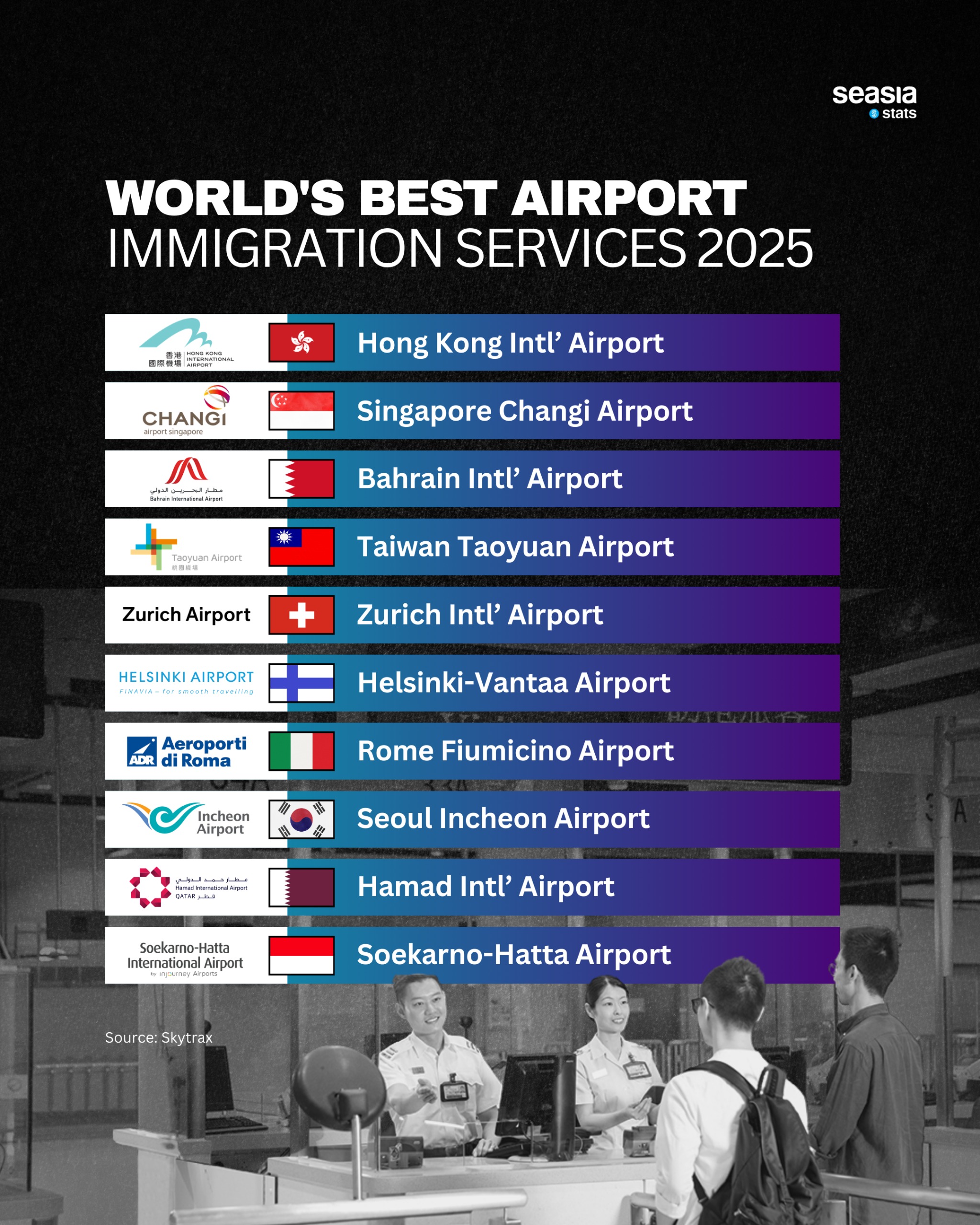
For international travelers, the first real test of a journey isn’t the flight—it’s the immigration line. In 2025, efficiency, technology, and human service defined the world’s best airport border experiences, with Asian hubs leading the way. According to the Skytrax World Airport Awards, Hong Kong International Airport once again claimed the top spot for immigration services, underscoring the region’s dominance in smart border control.
Hong Kong Sets the Gold Standard
Winning the title for the fifth time, Hong Kong International Airport excels in what matters most to passengers: speed, clarity, and professionalism. Short waiting times, intuitive queuing systems, and widespread use of automated e-channels allow eligible travelers to clear immigration in minutes. Staff training and clear signage further reduce stress for first-time visitors.
The airport’s approach reflects a broader strategy—combining advanced biometrics, real-time passenger flow monitoring, and efficient staffing to keep lines moving even during peak hours.
Singapore’s Seamless Smart Gates
Coming in second, Singapore Changi Airport continues to set regional benchmarks. Changi’s biometric passport clearance and fully automated lanes for many travelers have transformed border control into a near-touchless experience. The system integrates facial recognition with travel documents, allowing passengers to move from plane to city with minimal friction.
Singapore’s broader digital infrastructure supports this efficiency, linking immigration with customs and security data to streamline the entire arrival process.
Strong Global Contenders
Third place went to Bahrain International Airport, recognized for its modern facilities and well-managed passenger flow. Other top performers included Taiwan Taoyuan International Airport, Zurich Airport, Helsinki Airport, Rome Fiumicino Airport, Seoul Incheon International Airport, and Hamad International Airport—all praised for blending automation with courteous service.
These airports share common strengths: high e-gate adoption rates, priority lanes for families and premium travelers, and staff trained to manage surges without bottlenecks.
Indonesia’s Breakthrough Moment
A major milestone for Southeast Asia came with Soekarno-Hatta International Airport in Jakarta entering the global top 10 for the first time. The achievement reflects years of investment in terminal upgrades, expanded automated gates, and improved queue management.
Indonesia’s immigration modernization is particularly significant given the scale of its passenger volumes. Faster processing not only improves traveler satisfaction but also strengthens the country’s competitiveness as a tourism and business destination.
Southeast Asia’s Rising Standards
Beyond Singapore and Indonesia, several ASEAN airports are quietly improving their border experiences. Kuala Lumpur International Airport has expanded its autogate system for foreign visitors, while Suvarnabhumi Airport in Bangkok is rolling out biometric screening to reduce queues. Ngurah Rai International Airport in Bali has also introduced more automated lanes to handle surging tourist arrivals.
These upgrades show a regional shift toward smart immigration—where digital identity, biometrics, and real-time data replace manual processing.
The Future of Border Control
The 2025 rankings highlight a clear trend: the best immigration experiences are no longer defined by manpower alone, but by how effectively technology and human service work together. Biometric verification, pre-arrival digital clearance, and AI-driven crowd management are becoming standard features at leading airports.
For Southeast Asia, where tourism is a major economic engine, faster and friendlier border control is more than a convenience—it’s a competitive advantage. As more ASEAN airports invest in smart systems, travelers can expect the region’s gateways to become not just entry points, but showcases of efficiency and innovation.


