

Running has become one of the most universal forms of exercise in the modern world. From professional athletes training for marathons to casual joggers seeking a healthier lifestyle, millions of people rely on quality running shoes to support their performance and comfort. As the global running culture continues to grow, so does the competition among brands striving to win the loyalty of runners.
According to the SportOnSocial Global Running Culture 2025 report by Redtorch, the global running shoe market remains strongly dominated by a handful of major brands. However, the industry is also becoming increasingly diverse as specialized companies carve out niche communities among runners seeking unique technologies and performance features.
Nike’s Global Dominance
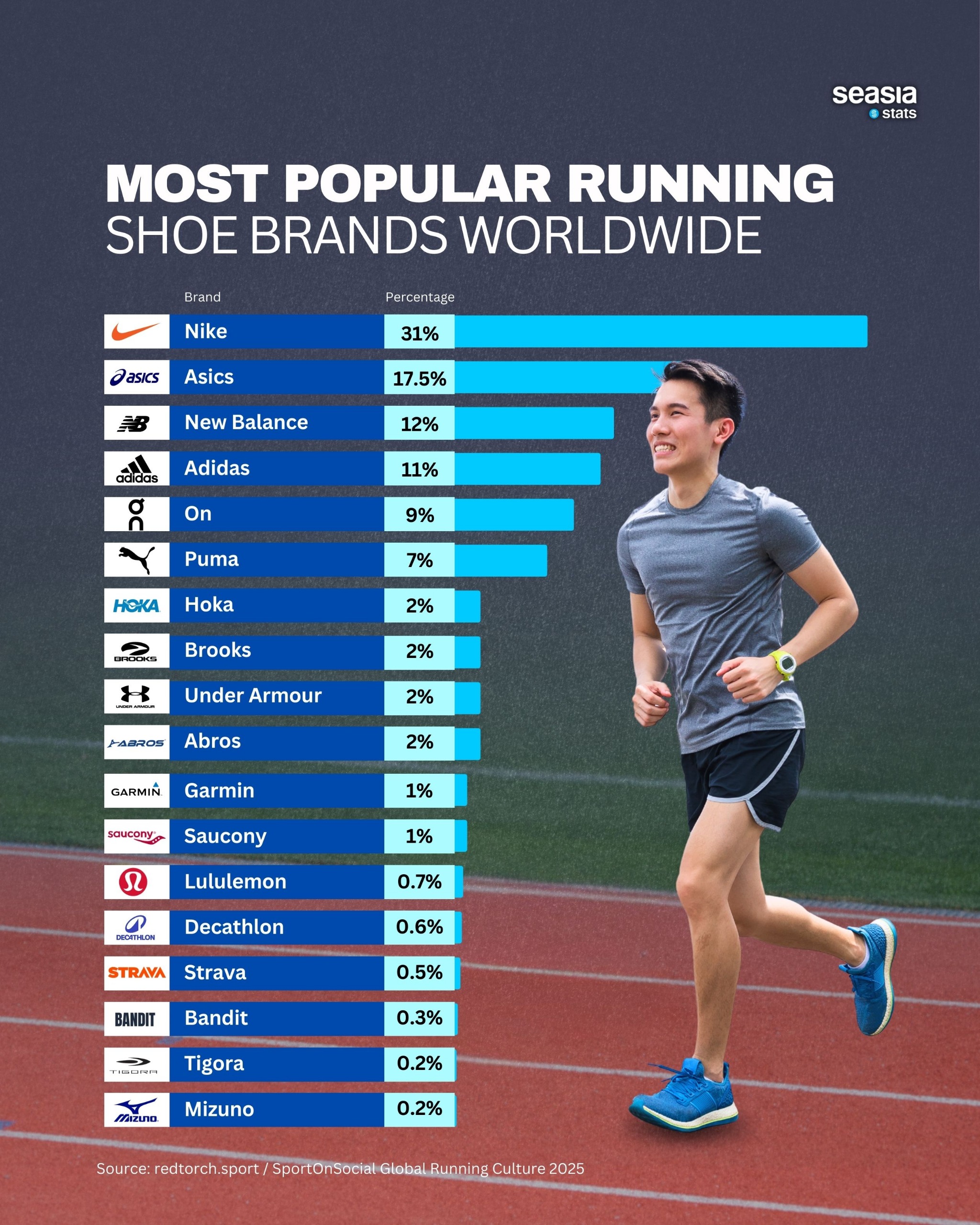
Leading the pack is Nike, which commands a remarkable 31% share of the global running shoe market. The American sportswear giant has maintained its dominance through powerful branding, constant innovation, and a lineup of iconic models.
Popular shoes such as the Nike Pegasus and the high-performance Nike Alphafly have become staples among runners of all levels. Nike’s strong “master-brand” identity also plays a key role in its success, as many runners continue to trust the brand for reliability, performance, and cutting-edge design.
The report shows that Nike’s influence extends across nearly every region of the world, including the rapidly growing running communities in Asia and Southeast Asia.
Strong Competition from Asics and New Balance
While Nike leads comfortably, two other brands maintain strong global followings. Asics holds 17.5% of the global market, securing second place thanks to its long-standing reputation for performance running shoes.
Known for engineering-focused designs and advanced cushioning systems, Asics has built a loyal community of runners who prioritize comfort and stability. Models such as the Novablast and Gel-Kayano remain particularly popular among serious athletes.
Meanwhile, New Balance captures 12% of the global share, placing third overall. The brand has experienced a major resurgence in recent years, combining high-performance running technology with lifestyle appeal that resonates strongly with younger consumers.
Together, Nike, Asics, and New Balance control more than 60% of the global running shoe market, highlighting the remarkable brand loyalty that exists within the running community.
Adidas and On Continue to Grow
Behind the top three, Adidas holds 11% of the market, maintaining a strong presence through both traditional performance lines and modern running innovations. Shoes such as the Adidas Duramo series have become widely accessible options for runners looking for reliability and affordability.
Swiss brand On, meanwhile, has emerged as one of the fastest-growing players in the industry. With 9% market share, the company has built its reputation around its distinctive CloudTec cushioning technology, which offers a unique running feel that appeals to many athletes.
The rise of On reflects a broader shift in the market toward product-led discovery, where specific high-performance models drive consumer interest rather than brand recognition alone.
Specialized Brands and Dedicated Communities
Beyond the top five brands, several specialized companies maintain smaller but highly dedicated followings.
Puma holds 7% of the global share, while brands such as Hoka and Brooks each capture about 2%. These companies focus on particular technologies or running experiences—such as maximum cushioning or trail performance—that resonate with specific groups of runners.
Other brands including Under Armour, Abros, Garmin, and Saucony hold between 1% and 2% of the market. Smaller niche players such as Lululemon, Decathlon, Bandit, Tigora, and Mizuno each capture less than 1%, yet still contribute to the diversity of the running shoe ecosystem.
Running Culture in Southeast Asia
The growth of global running culture is also clearly visible across Southeast Asia. Cities such as Jakarta, Singapore, Bangkok, Kuala Lumpur, and Manila have seen a surge in running clubs, marathon events, and community races over the past decade.
In countries like Indonesia, Thailand, and Vietnam, rising middle-class incomes and increased awareness of health and fitness have fueled demand for quality sports gear. International brands dominate the market, but local sports communities continue to shape regional trends through marathon festivals, city runs, and grassroots running clubs.
As the sport continues to grow worldwide, the running shoe market will likely remain highly competitive. While the biggest brands hold strong positions, innovation and specialized performance technologies will continue to shape the choices of runners across the globe.


