

One of the most pressing environmental challenges of our time is the ever-growing issue of single-use plastic waste. Every year, millions of tons of plastic waste find their way into oceans, rivers, and landfills, posing serious threats to ecosystems, wildlife, and human health. The impact of plastic waste is profound, as plastics take centuries to decompose and often break down into microplastics, which contaminate water sources and enter food chains. These microplastics pose long-term environmental and health risks.
The Asia-Pacific region, home to some of the world’s most rapidly developing economies, is a key contributor to global plastic waste. However, when examining plastic waste generation, it's essential to look at per capita figures—rather than just total waste produced—because it reveals the consumption patterns and the scale of the problem on an individual level. While countries like China and India generate massive amounts of plastic waste, their large populations lead to lower per capita figures. In contrast, smaller nations with high consumption rates can have significantly higher per capita plastic waste production.
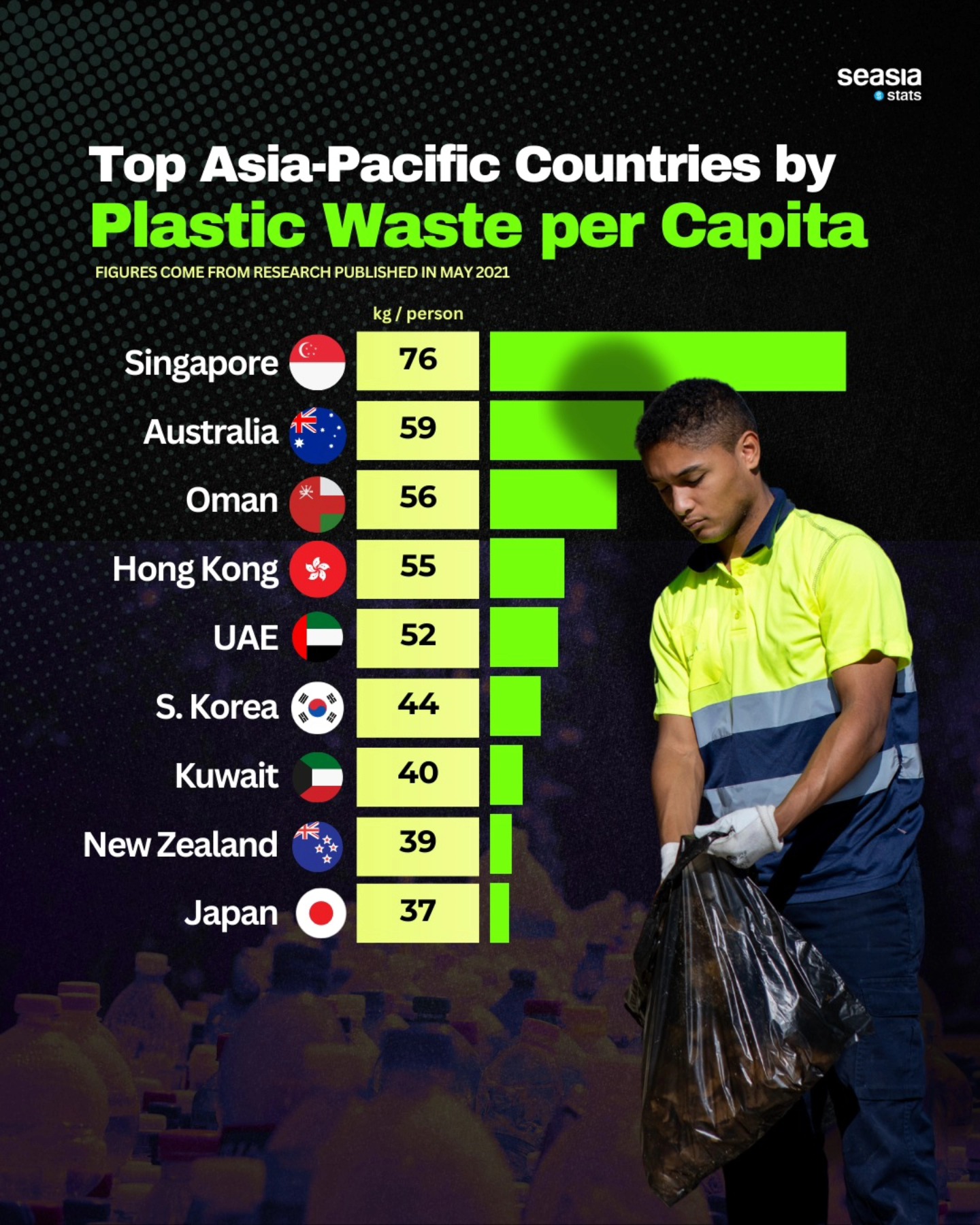
Based on research published in May 2021, the following article highlights the top 9 Asia-Pacific countries that produced the highest amounts of single-use plastic waste per capita in 2019. The figures are measured in kilograms per person, reflecting the demand for plastic materials in each country.
1. Singapore - 76 kg/person
Singapore tops the list with a staggering 76 kilograms of plastic waste per capita. Despite being a small island nation, Singapore's consumption of plastic is high, driven by its affluent population and widespread use of packaging in retail and food industries.
2. Australia - 59 kg/person
Australia ranks second with 59 kilograms of plastic waste per person. The country has a highly developed economy and a consumer-driven market that generates substantial plastic waste, particularly from packaging, food containers, and disposable products.
3. Oman - 56 kg/person
Oman comes in third, with 56 kilograms of plastic waste per capita. This relatively high number is attributed to the rapid economic growth and increased consumption in the country, which has led to a significant rise in single-use plastics.
4. Hong Kong - 55 kg/person
Hong Kong ranks fourth with 55 kilograms of plastic waste per person. As a bustling metropolis with a dense population and a major international hub for trade, Hong Kong experiences high levels of plastic consumption, particularly from packaging, retail, and food industries.
5. United Arab Emirates (UAE) - 52 kg/person
The UAE follows closely with 52 kilograms of plastic waste per capita. The country’s luxurious lifestyle and high standard of living contribute to the widespread use of plastic in everyday products, from packaging to disposable goods.
6. South Korea - 44 kg/person
South Korea, with 44 kilograms of plastic waste per person, comes in sixth. The country has seen rapid industrial growth and high levels of plastic consumption in its consumer products, especially in packaging for the food and electronics industries.
7. Kuwait - 40 kg/person
Kuwait ranks seventh with 40 kilograms of plastic waste per capita. Similar to other oil-rich nations, Kuwait's economic prosperity has led to increased consumerism, resulting in high plastic consumption, particularly in packaging and single-use plastic items.
8. New Zealand - 39 kg/person
New Zealand, with 39 kilograms of plastic waste per person, occupies the eighth position. The nation's high per capita consumption is driven by packaging waste, especially in the food and beverage sector, as well as by consumer goods.
9. Japan - 37 kg/person
Japan rounds out the top 9 with 37 kilograms of plastic waste per person. While Japan has implemented several initiatives to reduce plastic waste, the country’s high consumption rates, particularly in packaging and convenience products, still lead to substantial waste generation.
The Implications of High Plastic Waste Generation
This ranking emphasizes the need for urgent action to address the issue of plastic waste in these countries. High per capita plastic consumption can lead to greater environmental degradation, as plastic waste accumulates in landfills, enters marine ecosystems, and contributes to pollution.
As the world continues to grapple with plastic pollution, these countries must step up their efforts to reduce plastic consumption and improve waste management practices. Effective solutions may include promoting the use of biodegradable materials, encouraging recycling programs, and implementing policies to curb the production and disposal of single-use plastics.
These rankings also highlight the importance of consumer education, corporate responsibility, and governmental policies in tackling the plastic waste crisis. Sustainable alternatives to plastic products, as well as stronger enforcement of plastic reduction policies, are crucial to reducing the environmental footprint of these countries and curbing the growing issue of plastic waste.
In conclusion, addressing plastic waste at the individual level and across industries is key to ensuring a cleaner, more sustainable future for the Asia-Pacific region and the planet as a whole.


