

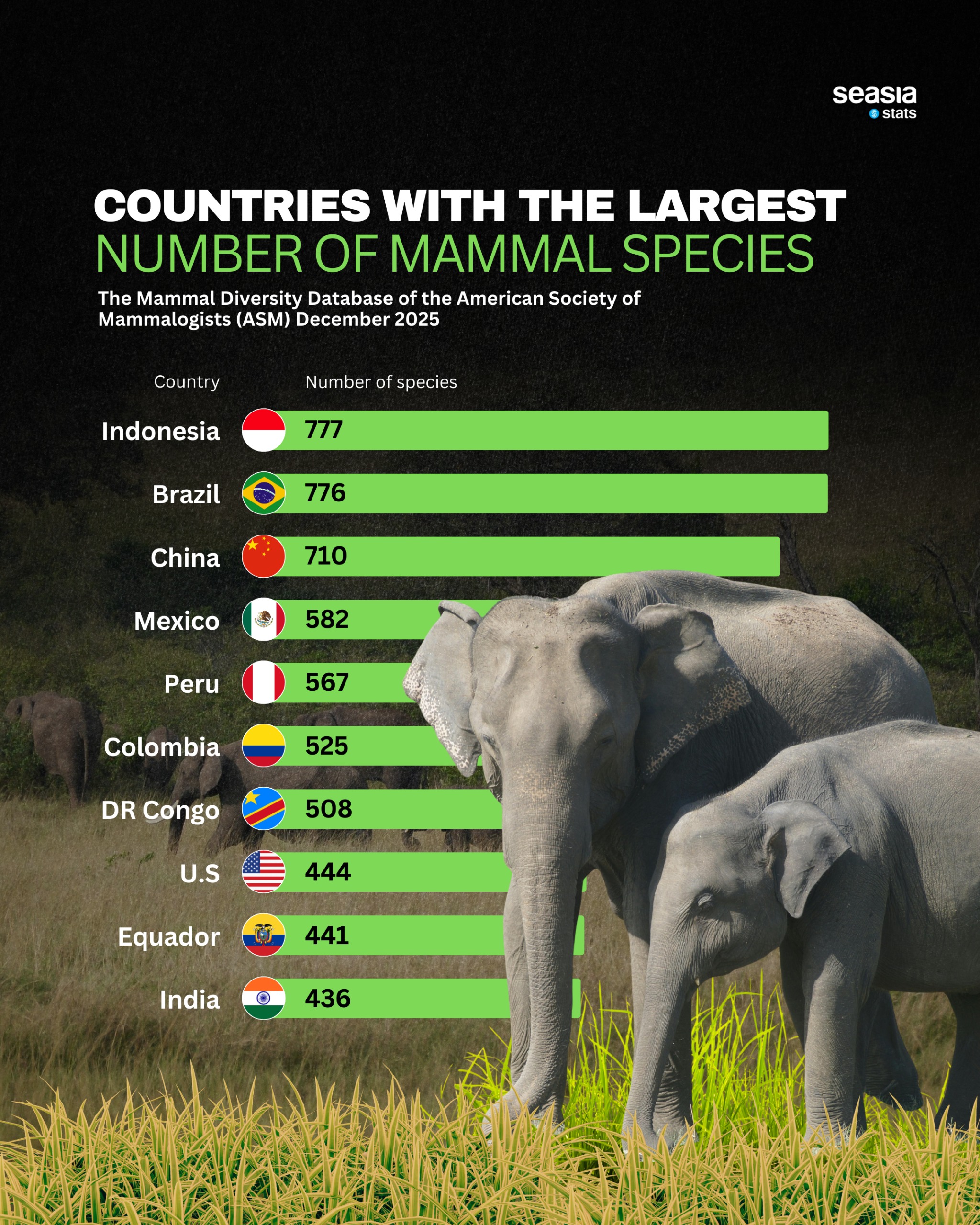
From dense rainforests and towering mountains to vast savannas and island chains, mammal diversity offers a powerful lens into the health of the planet’s ecosystems. According to the December 2025 Mammal Diversity Database published by the American Society of Mammalogists (ASM), just a handful of countries account for an extraordinary share of the world’s known mammal species. Topping the list is Southeast Asia’s biodiversity giant: Indonesia.
Indonesia and Brazil: A Photo Finish for First Place
At the very top sits Indonesia, home to 777 recorded mammal species, narrowly edging out Brazil with 776. Indonesia’s lead is no accident. Straddling two major biogeographic zones—Asia and Australasia—the archipelago hosts everything from Sumatran tigers and Javan rhinos to tree kangaroos in Papua.
Brazil’s equally impressive total is fueled by the Amazon Basin, the single largest rainforest on Earth, where bats, primates, rodents, and large mammals thrive in staggering variety. Together, Indonesia and Brazil represent the gold standard of global mammal biodiversity.
Asia’s Expanding Biodiversity Powerhouses
Asia dominates much of the top ten. China ranks third globally with 710 mammal species, reflecting its enormous geographic range—from Himalayan highlands to subtropical forests. China’s mammal diversity includes iconic species such as the giant panda, snow leopard, and golden snub-nosed monkey.
India also features prominently. India rounds out the top ten with 436 species, benefiting from its varied climates and protected forest reserves. India’s mammals range from Asiatic lions and elephants to a rich variety of bats and small carnivores.
Southeast Asia Beyond Indonesia
While Indonesia leads the region, Southeast Asia as a whole punches well above its weight in mammal diversity. Malaysia is known for its high concentration of endemic mammals in Borneo and Peninsular Malaysia, including clouded leopards, sun bears, and slow lorises.
The Philippines, though smaller in land area, stands out for endemism rather than sheer numbers. Isolated island evolution has produced unique species such as the Philippine tarsier, cloud rats, and several endemic bat species, making conservation efforts especially critical.
Meanwhile, Vietnam continues to gain attention from scientists as new mammal species are still being documented in its remote forests, including rare deer and primates discovered as recently as the past few decades.
The Americas and Africa Complete the Picture
Beyond Asia, Mexico (582 species) and Peru (567) highlight the biodiversity richness of Central and South America. Colombia and Democratic Republic of the Congo further underscore how tropical ecosystems drive mammal abundance.
Why Mammal Diversity Matters
Mammals are key indicators of ecosystem health. High species counts often reflect intact habitats, while declines can signal deforestation, climate stress, or overexploitation. Southeast Asia’s dominance—especially Indonesia’s global lead—comes with responsibility. Protecting these ecosystems isn’t just about preserving wildlife; it’s about safeguarding climate stability, food systems, and cultural heritage for generations to come.
In the race to protect global biodiversity, the world’s most mammal-rich countries are also the ones with the most to lose—and the most to protect.


