

As global travel rebounds and evolves, nightlife has emerged as one of the most defining elements of a destination’s identity. From pulsating beach clubs to neon-lit megacities, the world after dark offers a different kind of cultural experience—one driven by music, energy, and human connection.
Global Icons of the Night
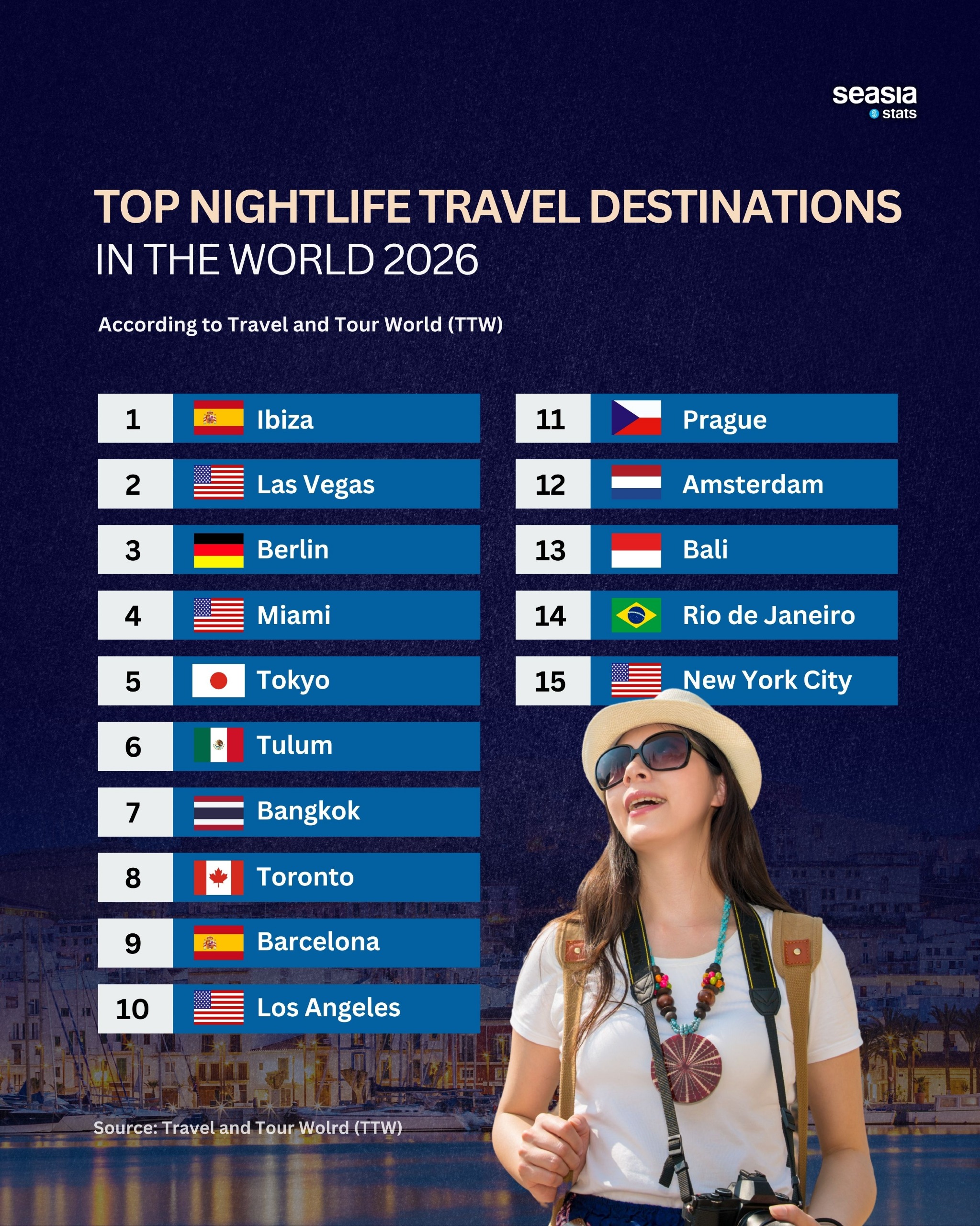
According to Travel and Tour World (TTW), the Spanish island of Ibiza continues to reign as the world’s ultimate nightlife capital in 2026. Long synonymous with electronic dance music and legendary DJs, Ibiza has perfected the formula of escapism, blending Mediterranean beauty with all-night revelry. Close behind is Las Vegas, where nightlife is amplified by spectacle, luxury, and an around-the-clock entertainment culture that rarely pauses.
Europe’s underground scene finds its strongest expression in Berlin, ranked third for its raw, unfiltered club culture. As The Guardian once described it, “Berlin nightlife isn’t about glamour—it’s about freedom, expression, and losing track of time.” Completing the top five are Miami and Tokyo, two cities that showcase how nightlife can take vastly different forms—from beachside parties to futuristic urban experiences.
Southeast Asia’s Rising Nightlife Scene
While traditional powerhouses dominate the top ranks, Southeast Asia is increasingly carving out its own space on the global nightlife map. Bangkok, ranked seventh, remains one of the region’s most dynamic after-dark cities. Its nightlife is not confined to clubs alone—it spills into rooftop bars, street markets, riverside venues, and late-night eateries that operate well into the early morning.
Further down the list, Bali stands at 13th, representing a different but equally compelling nightlife identity. Unlike the intensity of Ibiza or Las Vegas, Bali offers a more laid-back yet stylish experience, where beach clubs in Seminyak and Canggu blend sunsets, music, and social culture. As Condé Nast Traveler notes, “Bali’s nightlife thrives on atmosphere—it’s less about excess and more about experience.”
Across the region, cities like Ho Chi Minh City, Manila, and Kuala Lumpur—though not in the ranking—are rapidly gaining recognition. Their nightlife scenes reflect youthful populations, growing middle classes, and an increasing appetite for global music and lifestyle trends. In these cities, it is common to see a mix of high-end lounges, live music venues, and vibrant street-level energy coexisting in the same district.
A Blend of Culture, Tourism, and Economy
Nightlife today is more than entertainment—it is a major economic driver. Cities like Barcelona and Amsterdam have long recognized the value of nightlife tourism, carefully balancing regulation with creativity. Meanwhile, destinations such as Tulum and Rio de Janeiro highlight how natural settings can enhance the after-dark experience.
In Southeast Asia, this balance is still evolving. Governments are increasingly aware that nightlife contributes to tourism revenue, job creation, and global branding. Thailand’s continued promotion of entertainment zones and Indonesia’s development of Bali as a premium destination reflect a broader regional strategy to compete internationally.
The Future of Nights Around the World
The 2026 rankings reveal a clear trend: nightlife is no longer confined to a handful of Western cities. It is becoming more diverse, more cultural, and more global. Whether it’s the disciplined chaos of Berlin, the curated luxury of Las Vegas, or the tropical rhythm of Bali, each destination offers a unique interpretation of what it means to come alive after dark.
As Travel Weekly puts it, “Travelers today are not just chasing destinations—they are chasing experiences that extend beyond daylight.” In that sense, the world’s best nightlife cities are not just places to party—they are places where culture, creativity, and community meet long after the sun goes down.


