It is said that the best way to someone's heart is through their stomach. For Southeast Asians, who are absolute suckers for good food, this cannot be more true, especially when it comes to noodles.
There are various noodle dishes in Southeast Asia: take Thailand's pad thai, Indonesia's mi goreng, and Malaysia's laksam. From street vendors to Michelin star restaurants, noodle dishes are a Southeast Asian favorite for locals and tourists alike. Recipes for noodle dishes can also be widely found in cookbooks or culinary websites.
Though rice is the main staple food, noodles still deserve the spotlight for being a widely-loved dish in the region. This brings us to the million-dollar question: how did noodles come to be a popular cuisine in Southeast Asia?
From China to the World
The origin of noodles dates back to over 4,000 years ago in China. Though it is unknown when precisely noodles were invented, scholars tend to agree they originated in the Han Dynasty. At that time, noodles were collectively known as cake, cut and pulled by hand into long shapes.
For the Chinese, noodles aren't just food. Noodles are an art form as they require elaborate skills to make. They also symbolize cultural heritage and prayers for good health, pleasant weather, and a flavored life.
According to the article "Noodles, traditionally, and today" published in the Journal of Ethnic Foods note that noodles symbolize longevity, worldly common sense, and human nature. This is why noodles are served when people celebrate important milestones in their lives, such as moving to a new house or getting married.
Noodles spread from China through trade via the Silk Road to Europe and Southeast Asia as early as 200 B.C. Marriages between these traders and Southeast Asians pushed for acculturation, in which locals would mix in their own spices to the authentic Chinese recipes.
Even after trade through overland paths along the Silk Road declined in the 1500s because of the rise of sea voyages, noodles have been established as an important cuisine in Southeast Asia. A probable reason is that the same values of human nature and prayers for longevity – sometimes known as Asian values – led Southeast Asians to view noodles as culturally significant dishes, like the Chinese did before them.
Mixing It Up: European and Local Influences
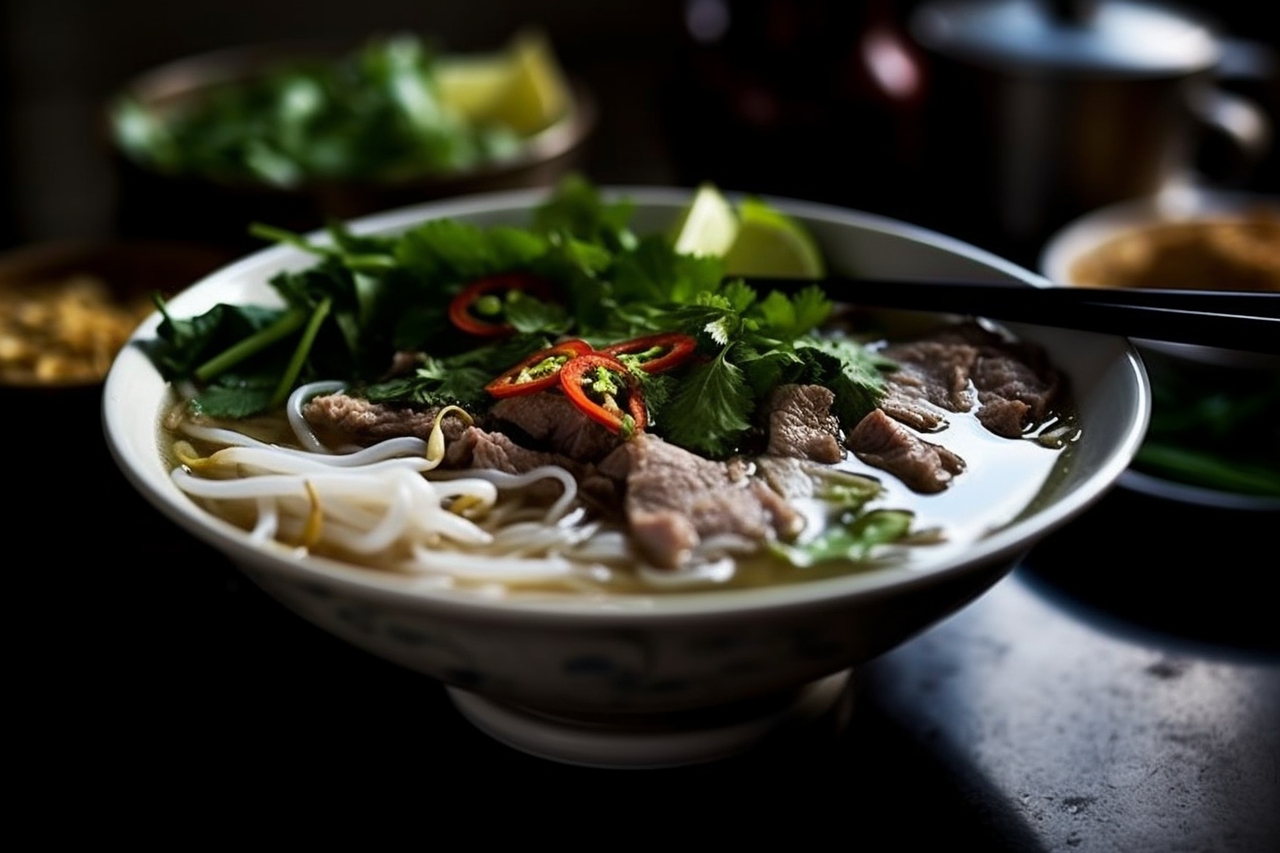
Chinese influence wasn't the sole factor shaping Southeast Asia's noodle culture. Due to years of Western colonialism, some noodle dishes in the region also inherited influences from their European counterparts.
A popular example of this is the Vietnamese beloved, pho. The dish was influenced by the French colonialists’ tradition of eating red meat. It is also believed that pho was inspired by pot au feu, a dish of meat and vegetables simmered slowly.
It wasn't just the Europeans that influenced noodle-eating culture in Southeast Asia. Locals also added in their own specialties.
In the case of pho, the Chinese did introduce the spices, chopsticks, and certain cooked methods like stir-frying (and of course, the noodles themselves). Yet, it was the Vietnamese who added in fish sauce and fresh aromatic herbs, creating the mouthwatering kick in pho.
This shows that Southeast Asian noodle dishes are not just tasty, but also showcase the rich cultures – Chinese, European, and local – that mold its culinary styles.
Noodles in a Fast-Paced World
Noodles have now become a multibillion dollar industry. With the development of manufacture industries and machinery, instant noodles are stocking up the shelves of grocery stores and supermarket chains.
Instant noodles were invented in ancient China. The dish, known as yi noodles, consisted of dried noodles, fried in hot oil, then served with soup.
In 1958, Momofuku Ando, Taiwanese-Japanese founder of Nissin Foods, invented instant noodles as a fast food. The 1960s and 1970s saw a surge in exports from Japan to other countries and regions, one of them being Southeast Asia, revolutionizing the region's noodle-eating habits.
Southeast Asia is now a leading region in the production and consumption of instant noodles. Indonesia, Vietnam, Phillipines, and Thailand all belong in the top ten nations with the most instant noodle servings in the world, according to a 2024 survey.
In fact, Indonesia ranks second place globally, coming right after China, where everything started. In 2023, there were 14,540 million servings of instant noodles, equivalent to 12% of the total global consumption.
Southeast Asian instant noodles brand, like Indomie from Indonesia, are even loved internationally. Indomie shows its versatility by adapting its flavors to local tongues. You may even find flavors – like pepper chicken in the Netherlands and tikka masala in the UK – that you can't find in Indonesia or Southeast Asia.
Noodles: An Evergreen Cuisine
The history of noodles in Southeast Asia shows that they are not just tasty, but also showcase the rich cultures that mold the region's culinary habits. Coming all the way from China, Europe, Japan, and its own locals, Southeast Asia has successfully made noodles their own.
So, the next time you travel to a Southeast Asian country and try out a new noodle dish, remember how many years it took for the bowl in front you to become what it is – and how it will continue to evolve as an evergreen piece of the region's culinary history.
References
Phillips, Delores B. “Quieting Noisy Bellies: Moving, Eating, and Being in the Vietnamese Diaspora.” Cultural Critique 73 (2009): 47–87. https://www.jstor.org/stable/25619837.
Zhang, Na and Guansheng Ma. “Noodles, traditionally and today.” Journal of Ethnic Foods 3 (2016): 209–212. https://doi.org/10.1016/j.jef.2016.08.003.
This article was created by Seasians in accordance with the writing rules on Seasia. The content of this article is entirely the responsibility of the author.