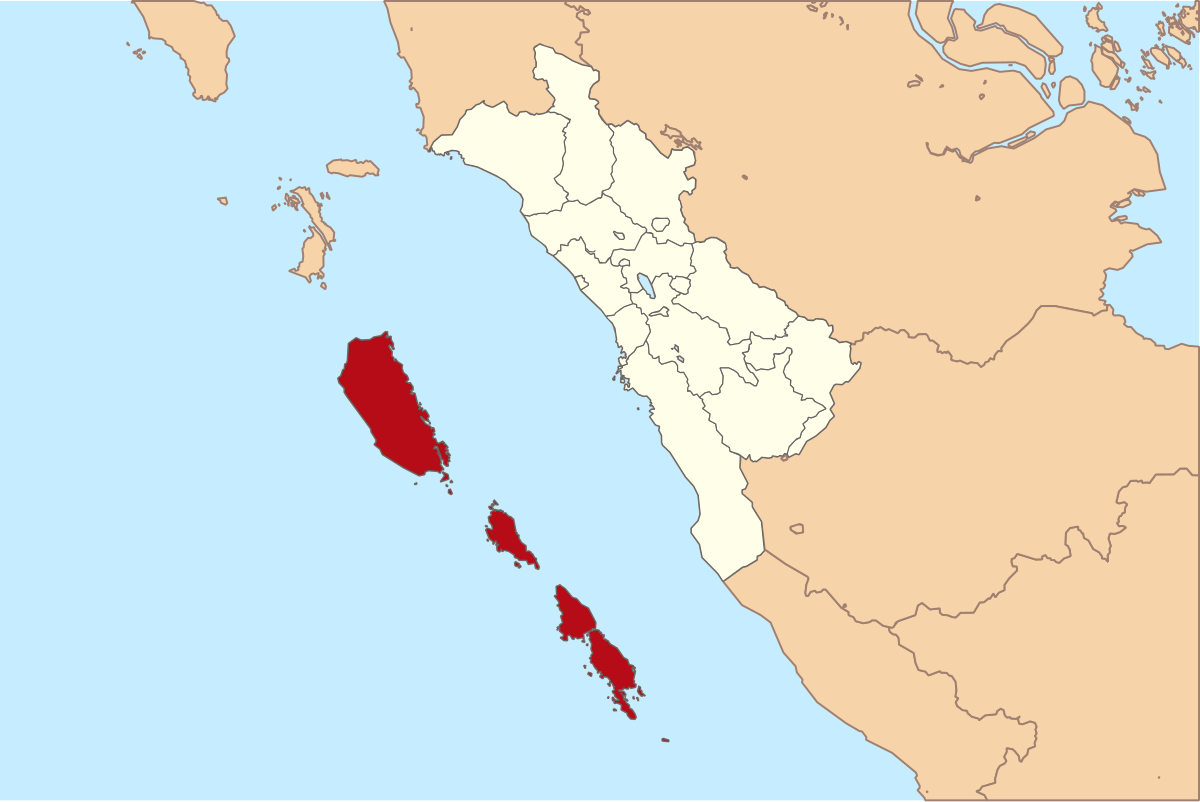
Amidst the global climate crisis, the world is racing to find solutions to save the environment. Yet, long before the terms conservation and sustainability became the modern world's agenda, several indigenous communities in remote parts of Indonesia had already lived in harmony with nature—an ethos deeply embedded in their daily lives. One such community is the Mentawai Tribe of West Sumatra, Indonesia.
The Mentawai Tribe's livelihood still depends on nature, and therefore, environmental sustainability is a crucial aspect for the Mentawai people. Humans must live in harmony with nature and protect the environment. For them, protecting forests and rivers is not simply an ecological responsibility, but part of a spiritual practice passed down through generations through an ancient belief system called Arat Sabulungan. Arat Sabulungan serves as a means of controlling life and holds a sacred place.
Arat Sabulungan comes from the word "arat" meaning tradition, while "sabulungan" comes from the words “sa (se)” meaning group and “bulung” meaning leaf. The leaves are arranged in a circle made from palm or rumbia shoots, which are believed to possess the supernatural power of kere or ketse.
For the Mentawai people, leaves—representing nature—have characteristics that guide humans toward balance in achieving well-being. Arat Sabulungan teaches a life of sufficiency and responsibility toward nature. A balanced nature will give birth to well-being.
Sacred Ecology: Nature as a Spiritual Space
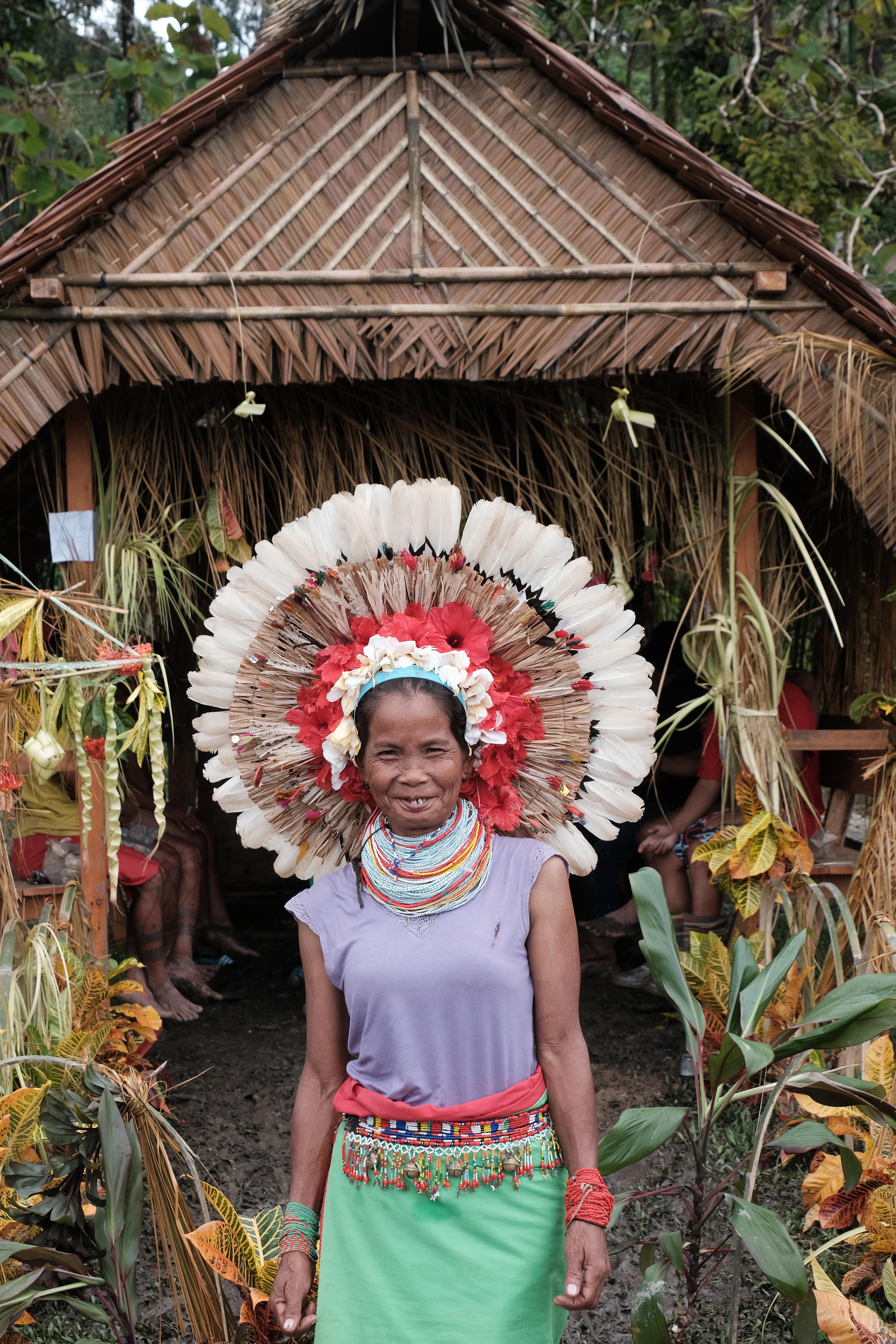
The practices of the Mentawai people reflect sacred ecology—a concept where the natural environment is viewed as part of the spiritual order. Arat Sabulungan fosters ecological awareness based on sacred values and empowers adherence to rules, thus becoming a powerful behavioral regulator.
Every activity related to nature and its environment, such as hunting, farming, or clearing land, must be undertaken with permission from spirits and ancestors, and cannot be undertaken haphazardly. Requesting permission involves praying for protection from harm by making a small offering, called panaki.
The Mentawai people believe that everything has a ruling spirit (tai), soul (simagere), spirits (ketcat), and power (bajau). They believe in six types of ruling spirits, that is: Taikamanua (spirit of the air and sky), Taikapolak (spirit of the earth), Taikabaga (spirit beneath the surface of the earth), Taikaleleu (spirit within and protecting the mountains and forests), Taikabagakoat (spirit that guards marine life), and Taikabagat-oinan (spirit of the rivers).
These spirits are guardians of the natural world. Violating their domains through reckless exploitation or pollution can result in misfortune, such as natural disasters or illness. Hence, sacred forests, springs, and rivers are to be approached with utmost respect.
Protecting Nature Through Rituals and Traditions
The values of Arat Sabulungan are passed down to the next generation through oral traditions, such as folktales and folk songs. One such leleiyo (folk song), is "Teteu Amusiat Loga" (The Grandfather, the Screaming Squirrel). This song tells of the wrath of Taikaileleu (God)—the tree spirit—against humans who destroy the forest without permission. Another example is the legend of "Si Bajak Si Kelak Kulit," which tells of humans who gain power from nature through their respect for and spiritual connection to their environment.
The Mentawai believe that when humans exploit natural resources excessively and recklessly, the ruling spirits can become angry, which can cause natural disasters. Therefore, humans must not exploit natural resources carelessly, such as by clearing land by burning or clearing land in sacred forests or around springs. Violations can result in sanctions in the form of customary fines or tulou. There are taboos that must be adhered to, namely restrictions on the use of natural resources and respect for the surrounding environment.
Unlike many modern, hierarchical societies, the Mentawai social structure is egalitarian. There is no single chief with absolute power. Two important figures—the rimata (leader of the traditional house) and the sikerei (shaman/spiritualist)—lead the community collectively.
These values of sharing and equality are also reflected in the management of natural resources. Everyone has a collective responsibility to protect forests and rivers, so consumption is carried out wisely and sustainably.
While the world is busy searching for high-tech solutions to save the earth, the Mentawai people demonstrate that the solution can come from within, from a way of life that values balance, spirituality, respect for nature, and togetherness. Arat Sabulungan is not just a traditional belief, but a time-tested ecological knowledge system.
Reference:
- Moch Zihad Islami, et.al, “Arat Sabulungan as a Sacred Ecology: Sustainable Consumption and Climate Change Adaptation Among The Mentawai Tribe”
This article was created by Seasians in accordance with the writing rules on Seasia. The content of this article is entirely the responsibility of the author.